Litha/ Midsummer Correspondces
Litha is a pagan holiday; one of their eight sabbats during the year. Litha (also known as Midsummer) occurs on the summer solstice, and celebrates the beginning of summer. The traditions of Litha appear to be borrowed from many cultures. Most ancient cultures celebrated the summer solstice in some way. The Celts celebrated Litha with hilltop bonfires and dancing. Many people attempted to jump over or through the bonfires for good luck.
Midsummer Correspondences
Litha (MidSummer)
Also known as Summer Solstice, Litha, Alban Hefin, Sun Blessing, Gathering Day, Feill-Sheathain, Whit Sunday, Whitsuntide, Vestalia, Thing-tide, St. John’s Day
In addition to the four great festivals of the Pagan Celtic year, there are four lesser holidays as well: the two solstices, and the two equinoxes. In folklore, these are referred to as the four ‘quarter-days’ of the year, and modern Witches call them the four ‘Lesser Sabbats’, or the four ‘Low Holidays’. The Summer Solstice is one of them.
Litha is usually celebrated on June 21st, but varies somewhat from the 20th to the 23rd, dependant upon the Earth’s rotation around the Sun. According to the old folklore calendar, Summer begins on Beltane (May 1st) and ends on Lughnassadh (August 1st), with the Summer Solstice midway between the two, marking MID-Summer. This makes more logical sense than suggesting that Summer begins on the day when the Sun’s power begins to wane and the days grow shorter. The most common other names for this holiday are the Summer Solstice or Midsummer, and it celebrates the arrival of Summer, when the hours of daylight are longest. The Sun is now at the highest point before beginning its slide into darkness.
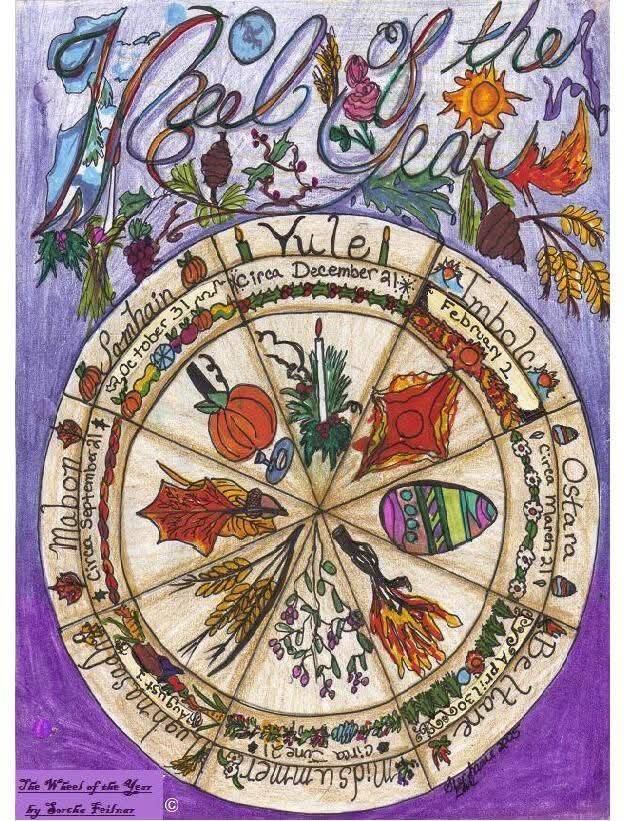
Humanity has been celebrating Litha and the triumph of light since ancient times. On the Wheel of the Year Litha lies directly across from Yule, the shortest day of the calendar year, that cold and dark winter turning when days begin to lengthen and humanity looks wistfully toward warmth, sunlight and growing things. Although Litha and Yule are low holidays or lesser sabats in the ancient parlance, they are celebrated with more revel and merriment than any other day on the wheel except perhaps Samhain (my own favourite). The joyous rituals of Litha celebrate the verdant Earth in high summer, abundance, fertility, and all the riches of Nature in full bloom. This is a madcap time of strong magic and empowerment, traditionally the time for handfasting or weddings and for communication with the spirits of Nature. At Litha, the veils between the worlds are thin; the portals between “the fields we know” and the worlds beyond stand open. This is an excellent time for rites of divination.
Those who celebrated Litha did so wearing garlands or crowns of flowers, and of course, their millinery always included the yellow blossoms of St. John’s Wort. The Litha rites of the ancients were boisterous communal festivities with morris dancing, singing, storytelling, pageantry and feasting taking place by the village bonfire and torch lit processions through the villages after dark. People believed that the Litha fires possessed great power, and that prosperity and protection for oneself and one’s clan could be earned merely by jumping over the Litha bonfire. It was also common for courting couples joined hands and jump over the embers of the Litha fire three times to ensure a long and happy marriage, financial prosperity and many children. Even the charred embers from the Litha bonfire possessed protective powers – they were charms against injury and bad weather in harvest time, and embers were commonly placed around fields of grain and orchards to protect the crops and ensure an abundant reaping. Other Litha customs included carrying an ember of the Litha fire home and placing it on one’s hearth and decking one’s home with birch, fennel, St. John’s Wort, orpin, and white lilies for blessing and protection.
The Litha Sabbat is a time to celebrate both work and leisure, it is a time for children and childlike play. It is a time to celebrate the ending of the waxing year and the beginning of the waning year, in preparation for the harvest to come. Midsummer is a time to absorb the Sun’s warming rays and it is another fertility Sabbat, not only for humans, but also for crops and animals. Wiccans consider the Goddess to be heavy with pregnancy from the mating at Beltane – honor is given to Her. The Sun God is celebrated as the Sun is at its peak in the sky and we celebrate His approaching fatherhood – honor is also given to Him. The faeries abound at this time and it is customary to leave offerings – such as food or herbs – for them in the evening.
Although Litha may seem at first glance to be a masculine observance and one which focuses on Lugh, the day is also dedicated to the Goddess, and Her flowers are the white blossoms of the elder.
Date
21/22
Purpose
Rededication to the Lord and Lady, beginning of the harvest, honoring the Sun God, honoring the pregnant Godddess
Dynamics/Meaning
Crowning of the Sun God, death of the Oak King, assumption of the Holly King, end the ordeal of the Green Man
Tools, Symbols & Decorations
The sun, oak, birch & fir branches, sun flowers, lilies, red/maize/yellow or gold flower, love amulets, seashells, summer fruits & flowers, feather/flower door wreath, sun wheel, fire, circles of stone, sun dials and swords/blades, bird feathers, Witches’ ladder.
Colors
Blue, green, gold, yellow and red.
Customs
Bonfires, processions, all night vigil, singing, feasting, celebrating with others, cutting
divining rods, dowsing rods & wands, herb gathering, handfastings, weddings, Druidic
gathering of mistletoe in oak groves, needfires, leaping between two fires, mistletoe
(without berries, use as a protection amulet), women walking naked through gardens
to ensure continued fertility, enjoying the seasonal fruits & vegetables, honor the
Mother’s fullness, richness and abundance, put garlands of St. John’s Wort placed
over doors/ windows & a sprig in the car for protection.
Goddesses
Mother Earth, Mother Nature, Venus, Aphrodite, Yemaya, Astarte, Freya, Hathor,
Ishtar, all Goddesses of love, passion, beauty and the Sea, and Pregnant,
lusty Goddesses, Green Forest Mother; Great One of the Stars, Goddess of the Wells
Gods
Father Sun/Sky, Oak King, Holly King, hur, Gods at peak power and strength.
Animals/Mythical Beings
Wren, robin, horses, cattle, satyrs, faeries, firebird, dragon, thunderbird
Gemstones
Lapis lazuli, diamond, tiger’s eye, all green gemstones, especially emerald and jade
Herbs
Anise, mugwort, chamomile, rose, wild rose, oak blossoms, lily, cinquefoil, lavender,
fennel, elder, mistletoe, hemp, thyme, larkspur, nettle, wisteria, vervain ( verbena),
St. John’s wort, heartsease, rue, fern, wormwood, pine,heather, yarrow,
oak & holly trees
Incense/Oil
Heliotrope, saffron, orange, frankincense & myrrh, wisteria, cinnamon, mint, rose, lemon, lavender, sandalwood, pine
Rituals/Magicks
Nature spirit/fey communion, planet healing, divination, love & protection magicks.
The battle between Oak King, God of the waxing year & Holly King, God of the waning
year (can be a ritual play), or act out scenes from the Bard’s (an incarnation of Merlin)
“A Midsummer Night’s Dream”, rededication of faith, rites of inspiration.
Foods
Honey, fresh vegetables, lemons, oranges, summer fruits, summer squash,
pumpernickel bread, ale, carrot drinks, mead.
Resources:
Cunningham’s Encyclopedia of Magical Herbs by Scott Cunningham
Circle Round: Raising Children in Goddess Tradition by Starhawk
My personal Book of Shadows