Norse religion: Ancient wisdom for modern seekers
Step into the rich and complex world of Norse religion, a spiritual path deeply connected to nature, ancestral wisdom, and personal empowerment. Here at The Altered Goddess, we explore these ancient traditions not just as historical artifacts, but as living sources of inspiration for contemporary spiritual journeys.

Understanding Norse religion: More than myths
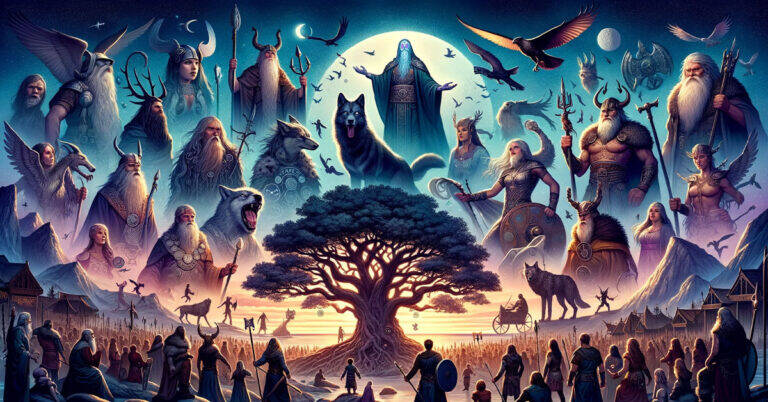
For those new to the subject, Norse religion encompasses the spiritual beliefs and practices of the Germanic peoples, particularly those of the Viking Age. It is a polytheistic faith with a vibrant pantheon of gods and goddesses like Odin, Thor, Freya, and Frigg, each representing different aspects of the cosmos and human experience. It is crucial to understand that Norse religion is not just a collection of fascinating myths, but a practical worldview emphasizing courage, honor, hospitality, and a deep respect for the cycles of nature. At its heart, it teaches us about resilience, self-reliance, and finding our place within the grand tapestry of existence.
Our approach to Norse wisdom
While many resources delve into the historical and mythological aspects of Norse religion, The Altered Goddess offers a unique perspective. We bridge the gap between ancient lore and modern spiritual practice, showing how these timeless principles can be integrated into your life today. We focus on the practical application of Norse wisdom for personal growth, self-empowerment, and fostering a deeper connection with the natural world. Our content is designed for both those taking their first steps into this tradition and those with existing knowledge looking for fresh insights and practical ways to deepen their practice. We aim to present information that is respectful of its origins while also being accessible and relevant to a contemporary spiritual path.

Connecting Norse traditions to your journey
The Altered Goddess believes that Norse religion offers profound lessons in personal sovereignty and the strength to navigate life's challenges. We explore concepts like the Nine Noble Virtues, the significance of runes, and the wisdom embedded in the Eddas, not just as academic studies, but as tools for self-reflection and empowerment. Our perspective integrates Norse traditions into a broader understanding of magick, spirituality, and personal development, allowing you to find parallels and connections with other practices. Join us as we uncover how the sagas and deities of old can inspire courage, wisdom, and a grounded sense of self in our modern lives.
Norse religion was the pre-Christian spiritual system of the Norse people, centered on a pantheon of gods, a rich cosmology, and rituals that emphasized fate, honor, and connection with nature.
Beliefs and Deities
Norse religion is polytheistic, featuring a diverse pantheon. The most prominent deities include
Odin: The All-Father, god of wisdom, war, and death; associated with magic and poetry
Thor: God of thunder and protection, wielding the hammer Mjölnir, defender of humans and gods
Freyja: Goddess of love, beauty, fertility, and war
Loki: Trickster god, associated with chaos and change
Other gods include Frigg, Baldr, Njord, and Heimdall
Norse deities are divided mainly into two groups
Aesir: Gods of power, war, and governance
Vanir: Gods of fertility, nature, and prosperity
Cosmology
The Norse cosmos is structured around Yggdrasil, the World Tree, connecting nine realms, including Asgard (home of the gods), Midgard (humans' world), and Helheim (realm of the dead). The Norse believed in fate (wyrd), and that all beings were part of cycles of creation, conflict, and destruction, culminating in Ragnarök, the prophecy of a final apocalyptic battle followed by renewal
Practices and Rituals
Norse religious practice was largely ritualistic and communal:
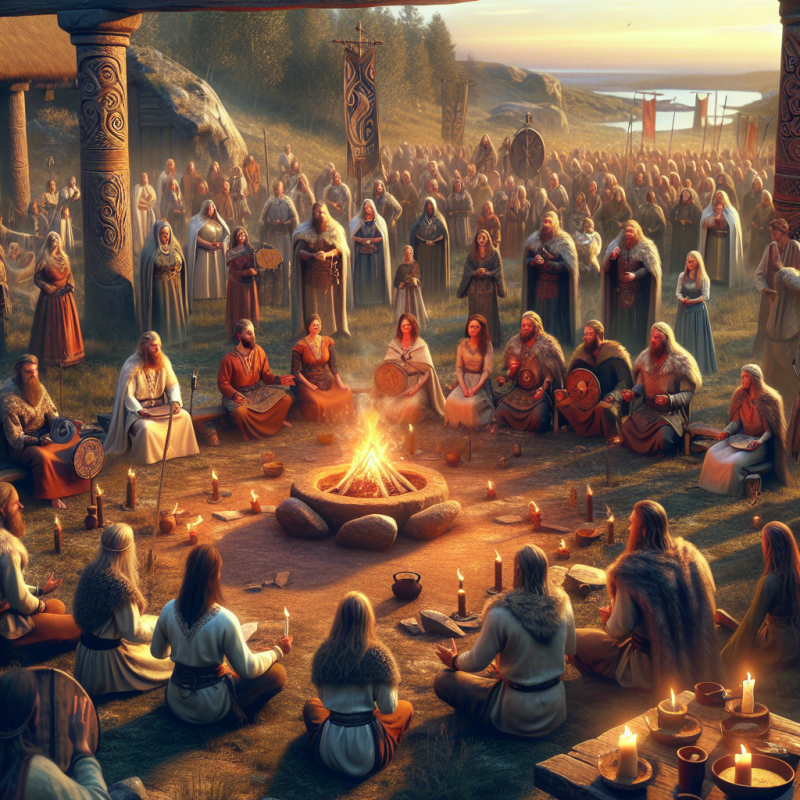
Blóts: Sacrificial rites, often involving animals or symbolic offerings, conducted to honor gods, spirits, or ancestors
Seidr and Galdr: Forms of magic and divination, sometimes performed by skilled practitioners (seers or völvas)
Funeral rites: Burial practices, including ship burials or cremation, reflected beliefs about the afterlife and valor
Temples (hofs) and sacred groves were central places for worship, though private shrines and household rituals were common. Worship often focused on honoring gods and spirits to secure protection, fertility, and prosperity.
Cultural Significance
Norse religion deeply influenced Viking society, from societal norms to storytelling. Myths explained natural phenomena, human behavior, and codified social values like courage, loyalty, and honor. Even after the introduction of Christianity to Scandinavia, elements of Norse beliefs and myths persisted in folklore, literature, and cultural traditions.
Legacy
Today, Norse mythology remains influential in art, literature, and popular culture. Modern revivals, known as Ásatrú or Heathenry, continue to practice aspects of ancient Norse religion, emphasizing the worship of the gods, respect for nature, and cultural heritage
The Norse religious worldview presents a complex interplay of heroism, fate, and cycles of nature, reflecting both the harsh environment and rich imagination of the Viking Age.
Metaphysical Norse Religion
Metaphysical Norse religion refers to the ancient, pre-Christian belief system of the North Germanic peoples — the Old Norse religion — which is now revived and reinterpreted in modern pagan traditions such as Ásatrú (Heathenry) Wikipedia+1. It is a polytheistic, nature-centered spirituality that blends myth, cosmology, ritual, and metaphysical worldview.
Core Beliefs and Cosmology
At its heart is a multi-layered metaphysical framework. The world is structured around Yggdrasil, the World Tree, whose roots and branches connect realms inhabited by gods, giants, elves, dwarves, and humans Wikipedia+1.
Æsir (e.g., Odin, Thor, Baldr) govern social, martial, and cosmic functions.
Vanir (e.g., Freyja, Njord) are linked to fertility, sexuality, and foresight Routes North.
Other beings — jötnar, elves, land-wights — inhabit the realms, each with their own metaphysical roles.
This cosmology is cyclical and interconnected, where gods, nature, and human fate are in constant interaction. Deities are not distant; they are active participants in human and cosmic events, often flawed and mortal Routes North.
Nature and the Sacred
Norse metaphysics sees nature as sacred and animate. Forests, rivers, mountains, and even animals are imbued with spiritual significance. Rituals often took place in groves, lakes, or at cult houses, reflecting a deep reverence for the natural world
Rituals and Practices
Blóts and sumbels: animal sacrifices (often pigs, horses, dogs) offered to gods or ancestors Historiska museet.
Seiðr: a shamanistic form of divination and magic, believed to connect the human and spirit realms Wikipedia.
Burial rites: cremation or inhumation with grave goods, symbolizing the journey of the soul and preparation for the afterlife Historiska museet.
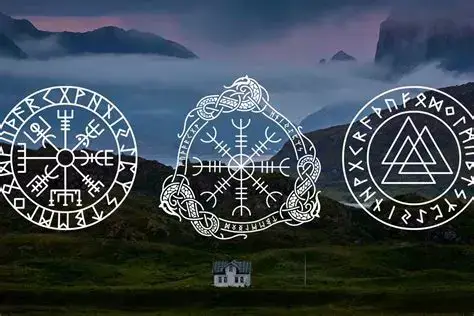
Runes: used for divination, magic, and as a metaphysical tool to channel or interpret the world’s energies Pagan Club.
Modern Metaphysical Revival
Today, Norse metaphysical religion is practiced by Ásatrú groups who seek to reconstruct and live by ancient principles. Followers may:
Worship specific deities as patron/matron gods, integrating them into personal and communal life Routes North.
Use runes for spiritual guidance and metaphysical insight.
Celebrate seasonal festivals (Yule, Midsummer, etc.) as metaphysical markers of cosmic cycles Pagan Club.
Metaphysical Themes
Interconnectedness: All realms and beings are linked through Yggdrasil.
Cyclical time: Ragnarök and renewal are part of the metaphysical order.
Human-divine reciprocity: Rituals maintain balance between mortals and the divine.
Nature as divine: The sacred is found in the living world.
In essence, metaphysical Norse religion is both a historical reconstruction and a living spiritual philosophy, blending mythic storytelling, cosmological vision, and ritual practice to explore the metaphysical dimensions of existence
Modern Norse religion, often referred to as Heathenry or Ásatrú, is a contemporary revival of ancient Norse paganism, focusing on the worship of Norse gods and the reconstruction of pre-Christian beliefs and practices.
Key Concepts of Modern Norse Religion
Heathenry: This term encompasses various contemporary pagan practices inspired by the pre-Christian religions of Germanic peoples, particularly those who spoke Old Norse. Heathenry is characterized by its polytheistic beliefs, honoring a pantheon of deities such as Odin, Thor, and Freyja, and is often practiced through rituals like blóts (sacrificial offerings) and symbel (ceremonial toasting)
Ásatrú: Specifically, Ásatrú means "Faith in the Æsir," referring to the major tribe of Norse deities. It is a modern term that describes a significant branch of Heathenry, particularly in Iceland, where public worship of the Norse gods was revived in the 1970s. Practitioners of Ásatrú often self-identify as Heathens and engage in rituals that connect them to their ancestral traditions
Rituals and Practices: Modern Norse religious practices vary widely but often include seasonal festivals, personal rituals, and community gatherings. Many adherents emphasize a connection to nature and the spirits of the land, reflecting an animistic worldview where the natural world is seen as alive with spiritual significance
.
Historical Context: The roots of these modern practices can be traced back to the Bronze Age and the Viking Age, with influences from archaeological findings and historical texts. While large-scale practice of Norse paganism diminished with the advent of Christianity, elements of these beliefs persisted in folk traditions and have been reinterpreted in contemporary contexts
Diversity of Beliefs: There is no central authority in modern Norse religion, leading to a wide variety of beliefs and practices among practitioners. Some may focus on specific deities or local traditions, while others may adopt a more eclectic approach, incorporating elements from various sources of inspiration
Conclusion
Modern Norse religion, through its various expressions like Heathenry and Ásatrú, represents a vibrant revival of ancient beliefs, adapted to contemporary life. It emphasizes community, connection to nature, and the honoring of ancestral traditions, making it a unique and evolving spiritual path for many today.
Norse religion was a polytheistic belief system deeply intertwined with magic, known as seiðr, which involved divination, prophecy, and influencing events through ritual practice.
Norse Religion Overview
Norse religion, also called Old Norse religion or Heathenry, was practiced primarily in Scandinavia and parts of Northern Europe before the Christianization of the region. It was polytheistic, featuring major gods such as Odin, Thor, Freyja, and Loki, alongside numerous spirits, giants, and ancestors. Cosmology centered on Yggdrasil, the World Tree, connecting nine realms, including Asgard (home of the Aesir), Midgard (humans), and Helheim (the underworld).Key aspects of Norse religion included community rituals, sacrifices (blóts), and offerings to deities for protection, fertility, or victory in war. Storytelling through mythic poems and sagas preserved cosmological beliefs and moral teachings.
Magick in Norse Culture
Magick in Norse society was largely expressed through seiðr, a form of ritualized sorcery. Seiðr allowed practitioners to foresee the future, influence fate, or manipulate natural and spiritual forces. It was closely associated with the goddess Freyja, who taught Odin this craft.Other magical practices included:
- Rune magic: Writing or engraving runes could carry protective, healing, or destructive power. Each rune had symbolic meanings tied to Norse cosmology.
- Galdr: Chanting or singing spells, often inscribed as runes or spoken aloud for a magical effect.
- Divination: Using tools such as casting lots, reading entrails, and observing natural phenomena to predict outcomes or make decisions.
Seiðr was sometimes socially ambiguous; in particular, Viking-age cultures valued strength and warriors’ virtues, and performing seiðr was sometimes viewed as unmanly or ergi when practiced by men, though women could perform it without the same stigma.
The Cultural Role of Magick
Magick was practical and spiritual. Shamans or volva (prophetesses) often held important roles in communities, guiding leaders, performing protective rituals, and breaking curses. Magic often overlapped with religion, emphasizing the interconnection between gods, humans, and fate (wyrd).In Norse myth, gods themselves employ magick—Odin uses seiðr to gain knowledge of the past and future, blurring distinctions between human and divine magical practice.
Modern Interest
Today, modern Heathenry and Asatru revive some Norse religious and magical practices. While historical accuracy varies, enthusiasts study the Poetic Edda, Prose Edda, and archaeological sources to reconstruct rituals, rune-casting, and seiðr-inspired practices.In summary, Norse religion was both a belief system and a practical framework for interacting with unseen forces, where magick served as a respected, albeit sometimes socially complex, aspect of life and spirituality.
Modern Heathenry
Modern heathenry is a contemporary spiritual movement aiming to revive or reconstruct pre-Christian Germanic and Norse pagan traditions, focusing on ancestor veneration, polytheistic worship, and community-centered rituals.
Overview
Modern heathenry, also known as Ásatrú, Heathenism, or Germanic Neopaganism, is rooted in the attempt to revive the religious practices of early Germanic peoples. Practitioners honor the Æsir and Vanir pantheon of gods—such as Odin, Thor, Freyja, and Frigg—as well as spirits of nature, landvættir (land spirits), and deceased ancestors. It emphasizes polytheism, personal responsibility, and connection to heritage.
Beliefs and Practices
- Polytheistic worship: Followers may offer prayers, rituals, and sacrifices (historically including symbolic offerings like mead, food, or flowers) to deities and spirits.
- Ancestral veneration: Honoring family or cultural ancestors is central, reinforcing a sense of lineage and personal responsibility.
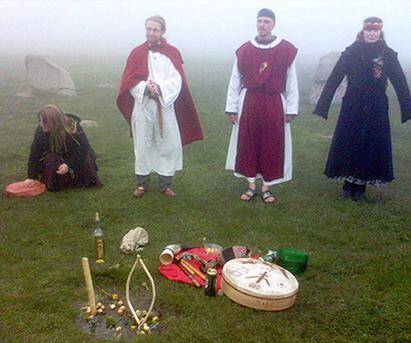
- Rites and rituals: The most common ritual is the blót, a communal or personal offering to gods or ancestors. Ceremonial gatherings may include feasts, storytelling, and seasonal celebrations aligned with natural cycles.
- Ethical code: Heathenry often emphasizes virtues such as honor, courage, truthfulness, and loyalty, reflecting the ethical ideals of historic Norse societies.
- Community-focused gatherings: Heathens often form kindreds or hearths, small groups where rituals, festivals, and learning occur collectively.
Variants and Movements
Modern heathenry is diverse and may include:
- Reconstructionist Heathenry: Focuses on historical accuracy based on archaeology, sagas, and historical texts.
- Folkish Heathenry: Emphasizes ethnic or cultural heritage, sometimes controversially linked to ancestry.
- Universalist Heathenry: Open to practitioners regardless of heritage, prioritizing spiritual practice over lineage.
- Ásatrú vs. Odinism: Ásatrú tends to be more inclusive, while Odinism may focus on Odin-centric worship and heroic ideals.
Contemporary Context
- Modern heathenry arose in the 20th century in Iceland, the United States, and Northern Europe. Iceland formally recognized Ásatrúarfélagið in 1972, allowing legal ceremonies such as weddings.
- In the U.S., it has gained visibility through folk and cultural revivals, literature, and interest in Norse mythology, often blending historical reconstruction with contemporary spirituality.
- Festivals such as Yule, Midsummer (Sumarblot), and seasonal rites are commonly celebrated, offering a cyclical connection to natural and agricultural patterns.
Key Points
- Modern heathenry emphasizes personal spiritual experience, community participation, and ethical living.
- It maintains connections to ancient mythologies and cultural heritage while adapting practices for modern life.
- While some interpretations vary, inclusivity and respect for tradition are important factors for many contemporary practitioners.
Modern heathenry represents a living, evolving spiritual path that combines historical understanding with contemporary ethical and communal values, accommodating both individual and group expression.
Ásatrú
Ásatrú is a modern revival of Old Norse paganism, honoring the gods of the Norse pantheon and practicing rituals inspired by ancient Scandinavian traditions.
Origins and Meaning
Ásatrú, which translates roughly to "faith in the Æsir," originates from the pre-Christian beliefs of Scandinavia and Iceland, centered on the worship of gods such as Odin, Thor, Freyja, and Frigg. The term specifically references the Æsir, the primary group of gods in Norse mythology. Its roots are in the Viking Age and earlier Scandinavian spiritual traditions. The belief system is polytheistic, emphasizing a connection to nature, community, and ancestry.
Beliefs
- Pantheon: Core deities include Odin (wisdom), Thor (protection and strength), Freyja (love and fertility), and others from Norse mythology.
- Values: Courage, honor, hospitality, and loyalty are central virtues.
- Cosmology: The Nine Worlds, Yggdrasil (the World Tree), and the interplay between gods, giants, and humans shape their understanding of the universe.
- Fate and Personal Responsibility: While fate (wyrd) plays a role, followers value personal choice and accountability alongside the guidance of the gods.
Practices
- Rituals: Ásatrúar perform ceremonies called blóts, offerings to deities and spirits, and sumbels, ritualized drinking sessions honoring gods and ancestors.
- Holidays: Some modern observances align with ancient festivals tied to the natural year, such as Yule (winter solstice) and Midsummer celebrations.
- Community: Many adherents participate in kindreds or Ásatrú organizations to celebrate rites of passage, seasonal festivals, and communal rituals.
Modern Revival
Ásatrú was officially recognized in Iceland in 1973, and similar movements exist across Europe and North America. It is part of the wider Heathenry movement, seeking to reconstruct Germanic pagan practices responsibly and respectfully. Modern Ásatrú is diverse, ranging from reconstructionist approaches aiming for historical accuracy to more eclectic spiritual practices inspired by the Norse tradition.
Cultural Significance
Ásatrú emphasizes continuity with ancestral traditions, respect for nature, and community cohesion. It has inspired literature, art, music, and even legal recognition in countries like Iceland and Denmark, enabling public worship and the performance of legally binding ceremonies.In summary, Ásatrú is a living modern pagan religion rooted in Norse mythology, focused on honoring deities, celebrating seasonal cycles, and fostering ethical principles drawn from ancient Scandinavian culture. It blends historical tradition with contemporary spiritual and communal practices.