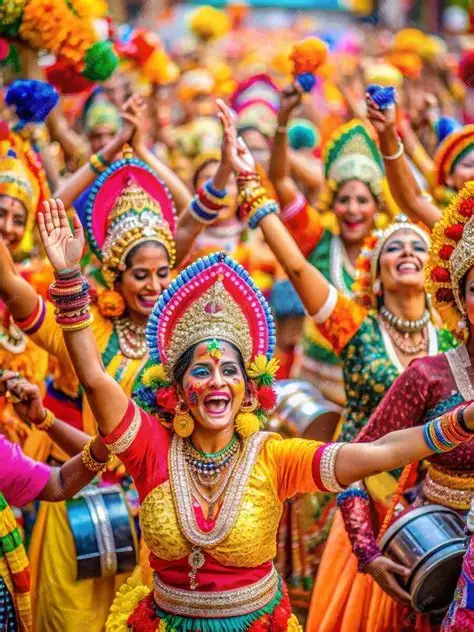
Syncretic traditions are cultural, religious, or philosophical systems that emerge from the blending of distinct beliefs, practices, or traditions into a cohesive whole.
Definition and Concept
Syncretism refers to the combination of different religious, cultural, or philosophical elements. It often occurs when societies, religions, or cultures come into contact through migration, conquest, trade, or colonization. In this process, ideas, rituals, and symbols from different origins are merged, adapted, or reinterpreted to form a new tradition that resonates with multiple communities.
Historical and Cultural Examples
1. Religious Syncretism:
- Vodou (Haiti): Combines elements of West African religions, Roman Catholicism, and indigenous beliefs. The lwa (spirits) are often associated with Catholic saints, creating a hybrid spiritual framework.
- Santería (Cuba): Blends Yoruba religious practices from Nigeria with Catholic saints, ritual objects, and prayers.
- Sikhism: While a distinct religion, it incorporates aspects of Hindu and Islamic devotional traditions and ethical teachings.
2. Philosophical and Cultural Syncretism:
- Hellenistic Philosophy: After Alexander the Great’s conquests, Greek philosophical ideas merged with Eastern traditions, influencing practices such as Stoicism and Neoplatonism.
- Buddhism in East Asia: Mahayana Buddhism integrated elements from local Confucian and Taoist beliefs in China, Korea, and Japan, producing unique regional practices.
3. Artistic and Ritual Syncretism:
- Syncretism extends beyond religion into art, music, and festivals, such as the incorporation of African rhythms into Latin American music traditions or blending indigenous rituals with colonial-era celebrations.
Significance
Syncretic traditions illustrate how human societies adapt and negotiate cultural differences, preserving continuity while allowing innovation. They can serve as a bridge between communities, promoting tolerance and shared identity, but can also be a site of tension when aspects of the original traditions are contested or marginalized.
Key Points
- Syncretism is a fusion process, not mere coexistence.
- It often emerges in environments of cultural contact or oppression.
- Syncretic traditions can produce unique, enduring, and influential cultural systems.
- Understanding syncretism sheds light on how belief systems evolve and interact over time.
Syncretic traditions are therefore central to studies in anthropology, religious studies, and cultural history, highlighting the fluid and dynamic nature of human beliefs and creativity.