Different Types of Witches
TYPES OF WITCHES
New forms and paths continue to pop up and create new spiritual journeys within paganism. With so many possibilities, how do you know which type of practice is best for you?
Different Types Of Witches
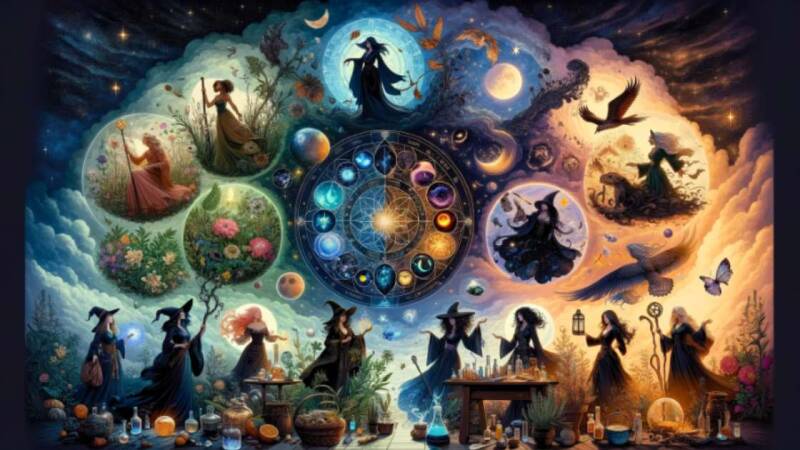
At first glance, it may seem that a Witch is a Witch. But the further you go into learning about the Craft, the more you realize there are lots of different types of Witches.
Even if you have already chosen your path, it’s always a good idea to learn about other possibilities. And if you haven’t chosen a type of practice, here is a great list of different types of Witch traditions and typesthat will help you begin thinking about which one is right for you.
While it can seem overwhelming at first, sometimes it’s a good idea to decide which ones do not fit, rather than trying to find which one does. This will help you narrow your search and over time, you will find the right fit.
TYPES OF WITCHES
Alexandrian
Alex and Maxine Sanders created the Alexandrian tradition as an off of Gardner’s practice. While the two practices are similar in many ways, they are very different paths.
Alexandrian witches are initiated and organized around a High Priestess. The Alexandrian tradition focuses on the ancient archetypes of the Oak and Holly kings who battle and win then battle and lose to bring about the light and dark, warmth and cold. While not as secretive as their Gardnerian counterparts, Alexandrian Witches still place emphasis on tradition and following protocol.
Angel Witch: A witch who works with Angels rather than or in addition to traditional deities
Animist Witch: A witch who believes there is life in all things and sees no distinction between human, plant, animal, or material objects. The animist witch sees the Universe as a living entity and all are connected by it.
Art Witch
A witch who uses art as the medium of their magic.
Augury Witch: A witch who divines omens, signs, and symbols. Augury Witch
Augury witches focus on foretelling future events and delivering prophecies. For this reason, they have another name — “diviners.”
Like shamans, augury witches can serve as a guiding light for those embarking on a spiritual journey. Because their specialty is gleaning information through omens and symbols, people often think of these witches as interpreters of the divine.
Augury witches perform divinations in an altered state of consciousness. To achieve this, they use different items to harness magick energy. While most augury witches call upon tarot cards and crystals in their practice, some include animals as well.
Axis Mundi Witch: A witch who studies the core idea that there is a central pillar that joins Earth to Heaven.
Baby witches, a term you might have seen or heard, are simply beginner witches., I prefer the term beginner witch. They may start out following a certain doctrine, depending on their teacher/s, and then, over time, experiment with other ones.
British Traditional Witch: A witch who focuses on the superstitions and spells that originated in the British Isles.
Celtic Witch: A witch who focuses on Celtic and Welsh deities, mythology, rituals, and earth magic.
Ceremonial Witch: A witch who practices high magick (ceremonial) such as Hermetic, Thelemic, and Enochian with a rigid and step-by-step method.Ceremonial Witch
A ceremonial witch is a term that describes someone who specializes in high magick. In other words, they reach out to the spirit world through special invocations and rituals.
In essence, ceremonial witches have many different practices. They often turn to various occult teachings, such as Enochian magick, Kabbalah, and Thelema. Even so, their magick rituals are veiled in mystery. Most ceremonial witches keep their practice under wraps, and others refuse to identify as witches at all.
Chaos Witch: A witch who has a contemporary practice that incorporates many types of magic and is guided intuitively rather than with strict steps as seen in high magick.
Chthonioi Witch: A witch who practices a variation of the Alexandrian tradition which also includes Greek gods and goddesses.
Correllian Witch: A witch that practices a type of Wicca founded in the late 20th century by Caroline High Correll. She descended from a line of Cherokee Didanvwisgi who intermarried with Scottish Traditional Witches, and Correllian witchcraft was further influenced by Aradian Witchcraft and the Spiritualist Church. Correllian Witch
, this practice initially focused on spiritual healing and herbalism. While seemingly more eclectic and universalist, this practice is quite widespread today.
Cosmic Witch: A witch who focuses on astrology and the placement of planets, stars, and moons when practicing their craft.
The stargazers! Cosmic witches are all about astrology and astronomy, and they are largely focused on the lunar energies of the Moon cycle and spells that amplify or protect against celestial events. They are clued up on star signs and birth charts, but their practice is active, not passive. They seek to change energies by using their knowledge rather than just telling you that Scorpios are secretive! If you feel drawn to the skies above and enjoy the science-y complexities of the working of the universe, you could be a cosmic witch.
Coven-Based Witch
A witch who operates as part of a wider group of witches, perhaps led by a high priestess or priest who combine their magical powers and skills to create stronger, bigger spells and manifest outcomes for the group and beyond. Covens focus more on ceremonial and ritualistic magic.
Crystal Witch
A witch who focuses heavily on crystals in their magic.
Crystal witches are deeply connected to the vibration and power of crystals, gems, rocks, and stones, and they practice crystal magic to manifest, amplify, and attract energy. If you see auras, feel energies, love shiny things, and enjoy making grids, then you could be a crystal witch.
crystals of various colors lie next to each other on a pink background
Dianic Witch: Branching from Wicca, Dianic Witches focus on female deities. Dianic Witchcraft is named after the Roman goddess Diana, ruler of hunting, nature, and the Moon.Dianic Witches predominantly focus on feminism and the supremacy of the Goddess. As it grew out of the women’s movement in the United States, Dianic witches are attuned to the political and social oppression of women as well as the injustices they suffer within their gender.
The hierarchical structure is quite lax and fluid while allowing for growth along one’s own path. Originally created by Zsuzanna Budapest in the 1970s, any coven derived from the original lineage remains female only. However, more recent practitioners have created offshoots that do allow male practitioners.
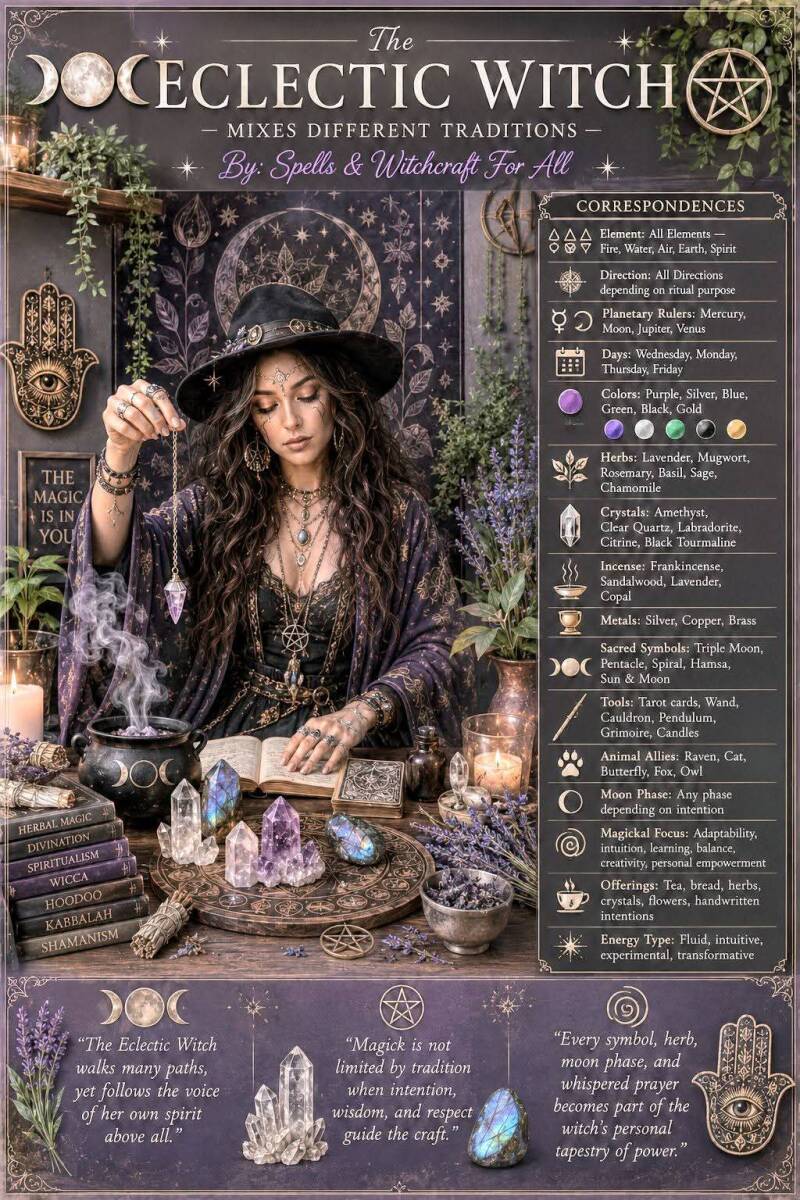
Eclectic Witch: A witch that incorporates many different traditions into their craft; slightly similar to the chaos witch, but they may follow strict guidelines if desired. A little bit of this and a little bit of that! Eclectic witches tend to cherry-pick whatever practices, rituals, beliefs, or ideas feel natural and good to them in the moment. After all, witchcraft is a very personal and unique pursuit. If you don’t want to be tied down to any one practice or area, maybe you’re an eclectic witch. Many baby witches begin as eclectic witches, but many stay that way too!
Egyptian Witch: A witch who follows a path similar to Wicca, but with a focus on the Egyptian deities.
Elemental Witch: A witch who works with the five esoteric elements: earth, air, fire, water, and spirit.
Faery Witch: A witch who works with the Fae rooted in Irish and Scottish culture.
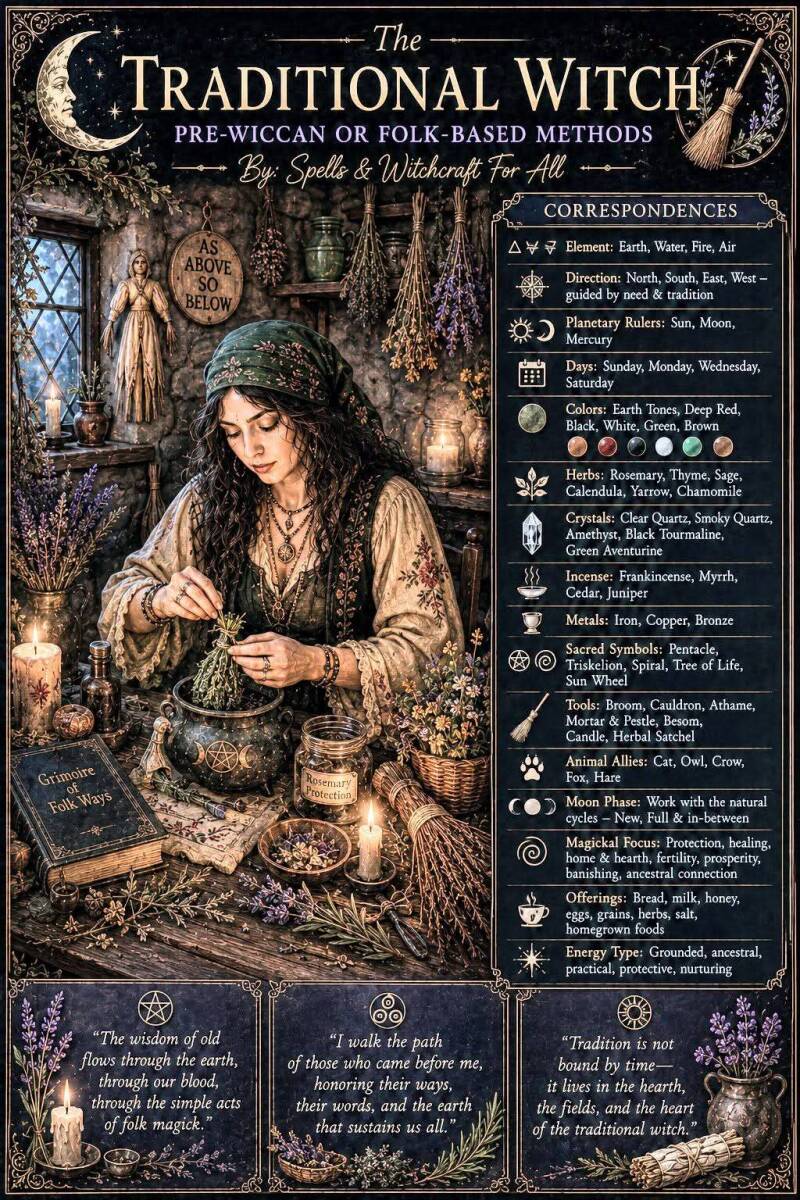
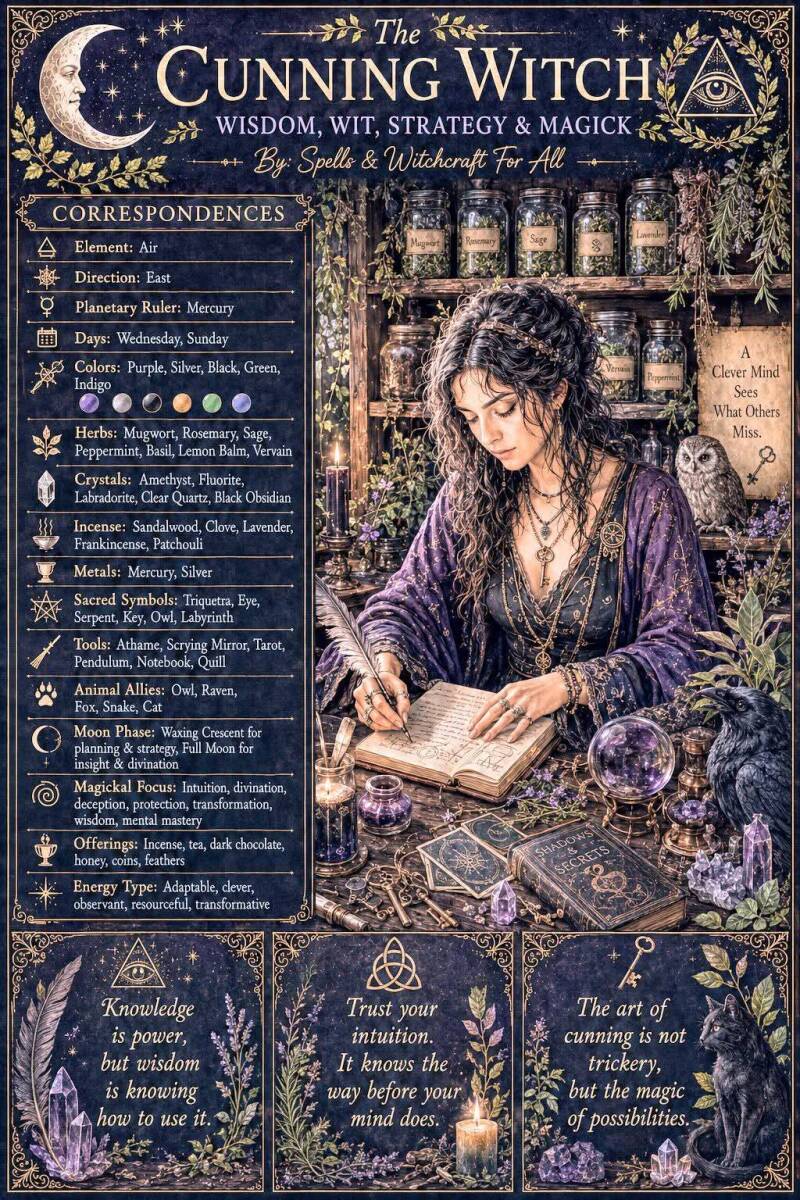
Folk Witch: "Cunning Folk" ; hereditary witches who follow a path similar to British witchcraft and used their magic and skills for practical purposes which were passed down through generations; *not common*A folk witch practices folk magic passed down through their family or through their local community. They often focus on the history and origin of a practice and may work with plants and objects that are native to their location.
Gardnerian Witch: A witch who practiced a secret, formal, and highly structured version of Wicca based on the works of Gerald Gardner, who is credited for the modern witchcraft movement.Gardnerian Witch
The father of Wicca, Gerald Gardner, developed this practice in Britain during the mid-20th century. From his original coven, Bricket Wood, he passed on his interpretation of Witchcraft. As an initiation tradition, only another Gardnerian coven can bring in a new practitioner. This is done in order to trace the lineage of practitioners back to the very first coven. In this practice, covens have 13 members and is led by a High Priestess and High Priest. Gardenerians adhere to the story of the Horned God dying and being reborn each year as the Mother Goddess remains eternally alive. Their rituals are highly elaborate and many of the orthodox covens still practice ritual nudity. Gardnerian covens are quite secretive so it can be a bit difficult to figure out as a new practitioner.
Gray Witch
Gray witches straddle the divide between “white” and “black” magic, using whatever suits the situation. They will use curses and hexes when the situation calls for it, when many witches will not go there—witchcraft typically follows an ethic of working for the highest good. Gray witches typically seek justice and the correction of unfair circumstances, redirecting ~bad~ energy to where it should have gone in the first place. They will often call on the unseen spirit presences to help them. If you are drawn to the darker arts or feel you’re fighting a greater evil in the world, maybe you’re a gray witch.
Green Witch
A witch that uses gardening and herbalism in most of their craft and often focuses on healing work and earth magic.These magickal workers are all about nature, healing, and nurturing. They draw their power, tools, and rituals from the earth and the great outdoors and use plant, flower, and herbal preparations as a primary source of spell ingredients and ritual content. Green witches respect nature above all else (although many other types of witches work with nature too!). If you feel drawn to the natural world, have a gift for healing and soothing, and enjoy gardening and tending to plants and herbs, you could be a green witch.
Hearth Witch: A witch who focuses on magick in the home.A hearth witch focuses on the home and might also be a kitchen witch and/or a green witch. Hearth witchery often involves focusing on objects and rituals used around the home, like herbalism, candle magic, and ritual cleaning.
Hedge Witch: A solitary witch that holds both kitchen and green witch attributes, such as making healing potions and brews in the kitchen; think of the old women in the woods archetype.A hedge witch is very similar to a green witch but is not as solely focused on nature. A hedge witch works alone and doesn’t adhere to any strict dogma—religious, spiritual, or otherwise. Hedge witches develop their own kind of magic, focusing primarily on creating healing remedies and often working with the elements, nature, crafts, and herbalism. Everything is kept simple and basic, and all rituals are non-fussy and minimalist. If you are drawn to solitude and wish to craft your own brand of witchcraft, unique to you, then you might be a hedge witch!
Hellenic Witch: A pagan witch who worships the ancient Greek pantheon of gods and goddesses.
Hereditary Witch: Unique to each family, a hereditary witch learns from their ancestral line.Hereditary Witch
Just like the name sounds, a hereditary witch is someone who inherited their powers or their practice through their family line. As the name would suggest, a hereditary witch is an individual who was born into a family of witches. In a sense, witchcraft is their birthright. Despite their lineage, hereditary witches are not always born with an innate talent for witchcraft. Still, they can choose to follow in their ancestors’ footsteps or develop their own set of magickal practices.
A point often overlooked is that hereditary witches also have a third choice — not to practice witchcraft at all. In that case, they revoke their birthright, and their status as a hereditary witch is a moot point.
House Witch similar to a hearth witch, a house witch focuses on making their house a magical space. Think: cooking, cleaning, and performing homey rituals. Whether you prefer to be called a hearth witch or a house witch, or both.!
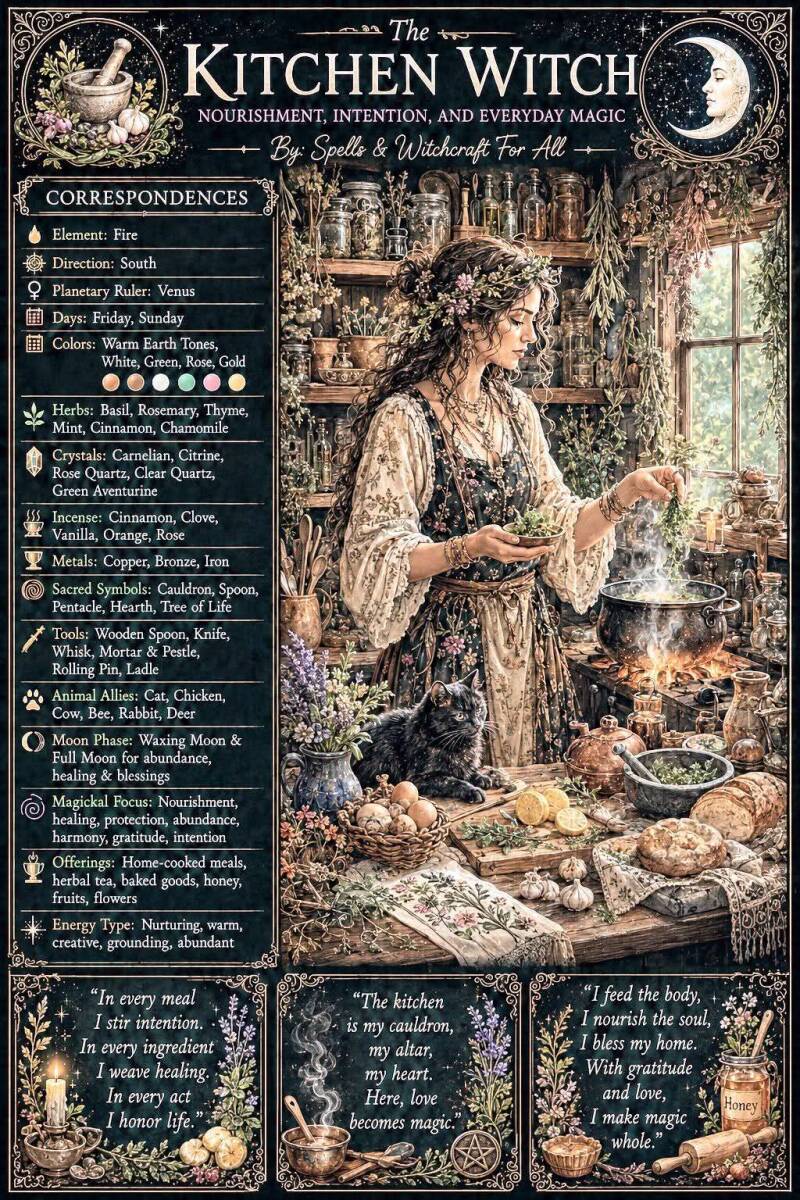
Kitchen Witch: A witch who focuses on magick at home, especially the kitchen. As the name suggests, a kitchen witch focuses on the kitchen! They incorporate magic into cooking and baking, and they might choose herbs for their magical properties just as much as for their taste. Kitchen witches might prepare meals for specific holidays, purposes, or rituals to share with their community or coven.
Left-handed Witch: A witch who often breaks taboos.
Luciferian Witch: A witch who believes Lucifer as the "bringer of light" and reveres the angel for enlightenment, independence, questioning authority, and progressive ideals.
Lunar Witch: A witch that heavily uses the cycles of the moon to do nearly all her magical work.
Music Witch: A witch who uses music as the medium of her magic.
Neo-Pagan Witch: An umbrella term for witches who practice newer forms of the craft such as Wicca, Gardernianism, and all new earth-based customs.
Norse Witch: A witch who centers their craft around Norse tradition of ancient sorcery and deities such as Odin and Freya. Norse Witches honor the ancient practices of Scandinavia. While this is a new path within the Wiccan community, it is predominantly made up of practitioners who decide to work with this pantheon of deities.
There is no hierarchical structure or initiation rites. It is simply an infusion of Nordic traditions within a Wiccan practice. Practitioners weave their own practice with that of ancient Norse traditions in Sabbats and religious cosmology.
Plant Witch
Like green witches, plant witches work with plants! Their practice might focus on a connection with nature. They may study the history, traditions, and cultural associations of different plants and herbs as well as use them in rituals, potions, and spells.
Right-handed Witch: A witch that practices magic that is guided by social norms.
Satanic Witch: A witch that lives by the seven Satanic tenets and is strongly against the constructs of a dictatorial society; has nothing to do with worshiping the Christian's idea of Lucifer. Devil-worshiping does exist elsewhere under the broad realm of witchcraft, neither is exclusive to one another.
Scandinavian Witch: A witch who practices and studies Danish Folklore and some Norse traditions.
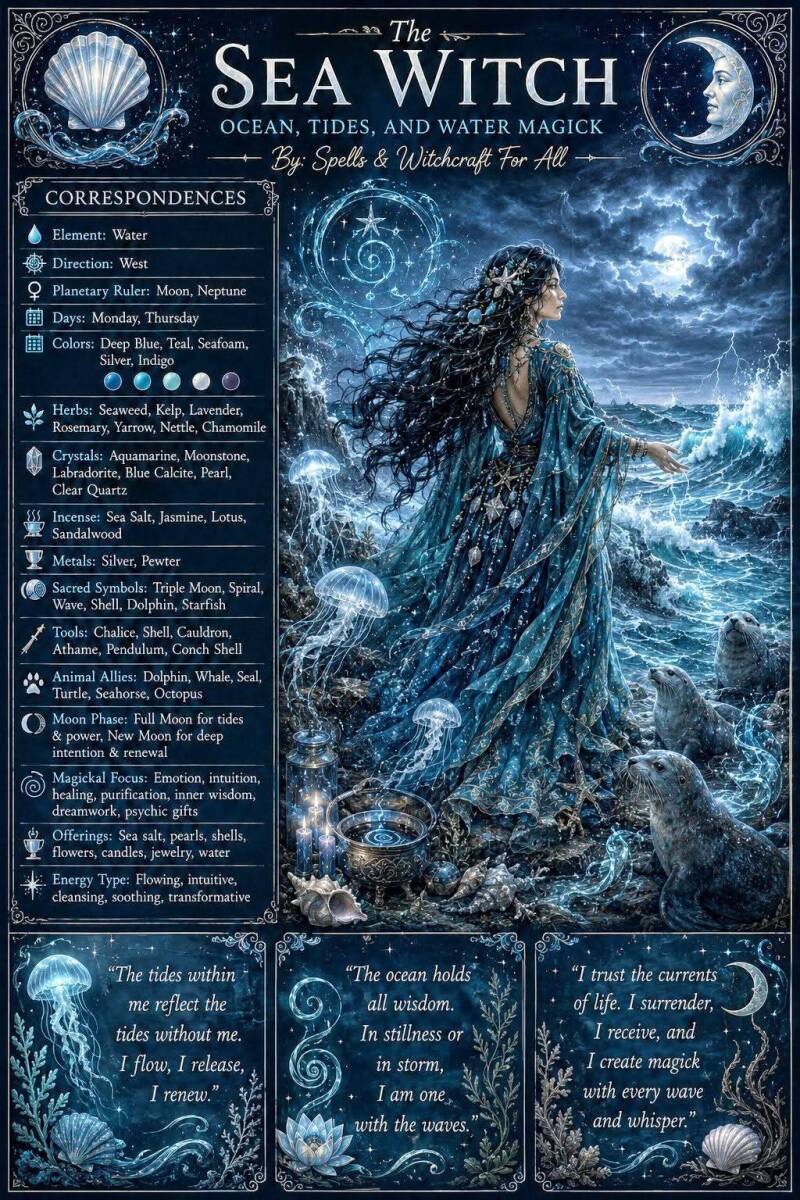
Sea Witch A witch who practices water-based magic and usually lives in a coastal area. A water witch works with lakes, rivers, streams, and is not confound to the ocean. Sea witches have a special connection to the ocean. They might practice water magic, use seawater in their rituals, bring seashells home for their altar, and pay special attention to the Moon (because it controls the tides, after all).
Seax-Wica Witch
Raymond Buckland moved to New York from Britain and brought with him a version of Gardnerian Witchcraft. His practice adapts Gardnerian practice for an American culture. Within the practice of Seax-Wica, there is an emphasis on herbs and divination. Raymond Buckland moved to New York from Britain and brought with him a version of Gardnerian Witchcraft. His practice adapts Gardnerian practice for an American culture. Within the practice of Seax-Wica, there is an emphasis on herbs and divination.This tradition does not include oaths of secrecy, rigid hierarchical structures, or a Book of Shadows. There are no degrees so a democratic approach to coven leadership is established. Self-dedication and open mindedness. This tradition does not include oaths of secrecy, rigid hierarchical structures, or a Book of Shadows. There are no degrees so a democratic approach to coven leadership is established. Self-dedication and open mindedness abound within this practice.
Secular Witch: A witch who practices magick without worshiping any deities, or their deities and witchcraft are kept separate.
A sex witch practices sex magic! What’s sex magic? It involves working with arousal and orgasm during manifestation rituals (either partnered or solo), cultivating self-love in all forms, and working to see sexuality as a sacred thing.
Shamanic Witch: A witch who uses an altered state of consciousness to deliver their magic.
Sigil Witch: Also known as Word Witch, these practitioners use sigils and words weaved into their magic
Solitary Witch:
A witch who works alone and under their own steam rather than with a group of other witches. A solitary witch can follow one particular branch of witchcraft or a combination.
Tech Witch: A witch who does most of her work digitally or with some form of technology; this will become more prevalent over time in modern witchcraft.
Thelema Witch: A witch who uses the occult philosophy founded by Aleister Crowley, which centers around ceremonial magic and Egyptian rituals.
Traditional Witch
A Traditional Witch practices from a historical perspective in following the Old Craft that came before the modern adaptation of Wicca and its many branches. Many Traditional Witches study their ancestry and the folklore attached to it. They want to honor the old ways of worshiping and most often choose a pantheon that aligns with their cultural background. Traditional (Folk) Witch
Traditional witches choose to partake in the folk magick of their ancestors. They base their practices on historical facts and witchcraft techniques that predate Wicca.
On the whole, traditional witches have a wealth of knowledge. They understand the workings of charms, herbal brews, spells, and talismans from centuries ago. Moreover, traditional witches are also acquainted with the spirits and the history of the land they inhabit.
Despite holding traditional customs in high regard, these witches are by no means old-fashioned. In truth, many incorporate modern beliefs, ideas, and tools into their centuries-old craft.
Wiccan Witch: A witchwho practices the modern pagan religion of Wicca introduced by Gerald Gardner.Wiccan WitchAll Wiccans are witches, but not all witches are Wiccans. Wicca honors the Divine and is a religion. Many of us are duotheistic, meaning we worship a female Goddess and a male God. Wicca’s beliefs are very flexible, and we can choose deities that we identify with to worship. We can opt for any pantheon, all the gods of a people or religion collectively; Greek, Roman, Celtic, Norse, etc. ***Note: Wicca is a religion; witchcraft is not a religion, although It can be involved in religious beliefs and should thus be legally protected equally.