Journey into Hellenistic religion
Explore the rich tapestry of ancient Hellenistic beliefs and practices. This page introduces you to a spiritual tradition that embraced diversity and adapted to a changing world, offering a unique perspective on ancient spirituality.
Understanding Hellenistic religion
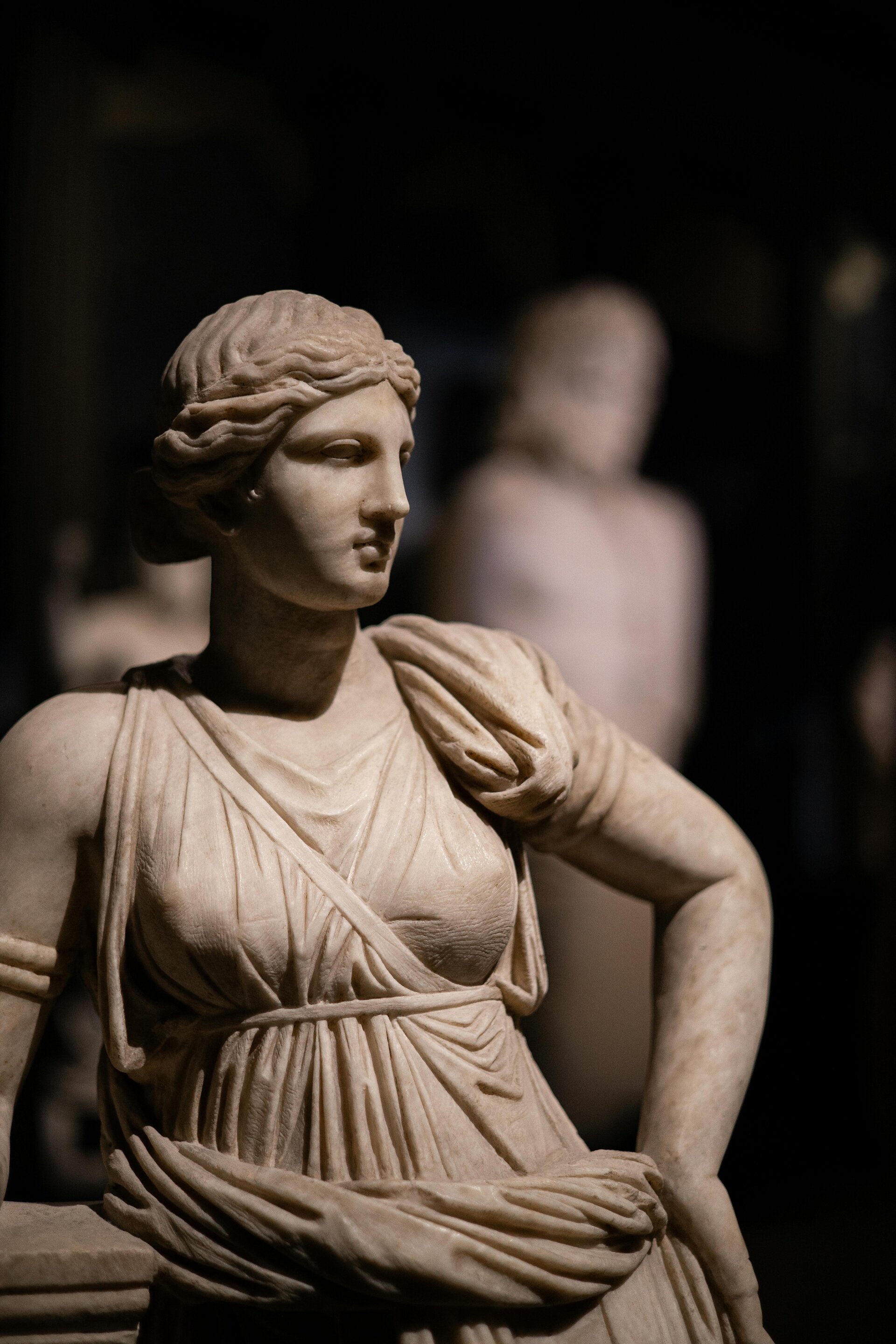
Hellenistic religion refers to the various religious systems and practices of the Hellenistic period (roughly 323 BCE to 31 BCE), following the death of Alexander the Great. It was characterized by a blend of Greek polytheism with influences from the cultures Alexander conquered, particularly Egyptian, Persian, and Mesopotamian traditions. This era saw a significant expansion of philosophical schools and mystery cults, offering personal salvation and deeper spiritual insights beyond the traditional civic worship.
Key characteristics and diversity
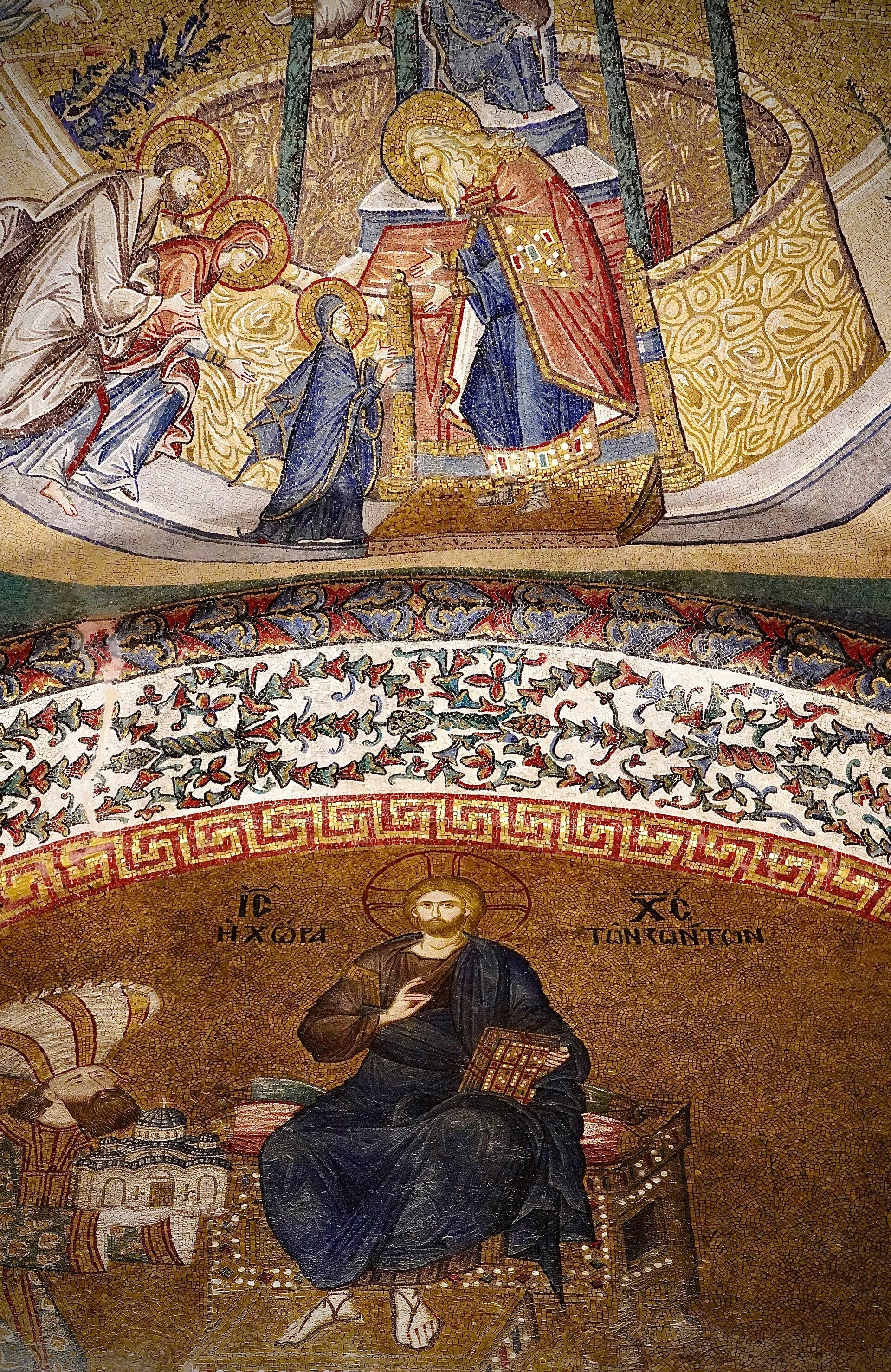
One of the most striking features of Hellenistic religion was its syncretism. Deities from different pantheons were often identified with each other, leading to new forms of worship and expanded religious narratives. For example, the Egyptian goddess Isis gained immense popularity throughout the Greek and Roman worlds, often taking on aspects of Greek goddesses like Demeter or Aphrodite. This adaptability meant that Hellenistic religion was not a monolithic system, but rather a diverse collection of beliefs and practices that coexisted and interacted.

Enduring legacy and influence
The Hellenistic period profoundly impacted later Western religious and philosophical thought. The emphasis on individual spiritual experience, the search for personal meaning, and the blending of cultural traditions laid groundwork for the emergence of new religious movements, including early Christianity. Concepts of fate, free will, and the nature of the divine, extensively debated by Hellenistic philosophers, continue to resonate in contemporary spiritual discussions. Understanding Hellenistic religion provides valuable insight into the evolution of religious thought and its lasting influence on our world.
Greek religion was a polytheistic, practice-based system where humans maintained reciprocal relationships with gods through rituals, sacrifices, and festivals rather than through formal doctrine or sacred texts.
Core Beliefs and Deities
Ancient Greek religion centered on a pantheon of anthropomorphic gods, with Zeus as the supreme deity, alongside Hera, Poseidon, Demeter, Athena, Ares, Aphrodite, Apollo, Artemis, Hephaestus, Hermes, and either Hestia or Dionysus, known collectively as the Olympians . These gods were believed to possess human-like personalities, emotions, and flaws, yet wielded immense power over natural and social phenomena. Lesser deities, spirits, nymphs, and heroes also played important roles, often tied to specific locales, rivers, mountains, or households. Some abstract concepts, such as justice or wisdom, were personified as divine beings .
Rituals and Practices
Greek religion was action-oriented, emphasizing correct performance of rituals over personal belief. Practices included animal sacrifices, libations, offerings, and festivals, which were performed both publicly and privately to secure divine favor, protection, or prosperity.Temples served as sacred spaces connecting mortals with the divine, while city-wide festivals and competitions reinforced communal participation and social cohesion. The principle of reciprocity, often summarized as do ut des (“I give so that you may give”), guided interactions with the gods.
Social and Cultural Role
Religion permeated all aspects of Greek life, influencing politics, art, architecture, and daily routines. Priests managed cults but did not form a formal clergy, and there were no sacred texts; the focus was on piety (eusebeia) and proper ritual (threskeia) . Greek religion also shaped literature and mythology, providing narratives that explained the origins of the world, human behavior, and divine intervention. Its influence extended beyond Greece, impacting Roman religion and later European cultural and artistic traditions .
Local Variations and Flexibility
While the Olympian gods were widely recognized, local cults and imported deities created a diverse religious landscape Practices varied between city-states, yet shared structures and rituals maintained a cohesive cultural framework. This flexibility allowed Greek religion to adapt over centuries, from Homeric times (9th–8th century BCE) to the 4th century CE under Emperor Julian.
Summary
Greek religion was polytheistic, communal, and practice-focused, integrating myth, ritual, and daily life. It emphasized reciprocal relationships with gods, honored through sacrifices, festivals, and temples, and shaped the social, political, and artistic fabric of ancient Greek civilization
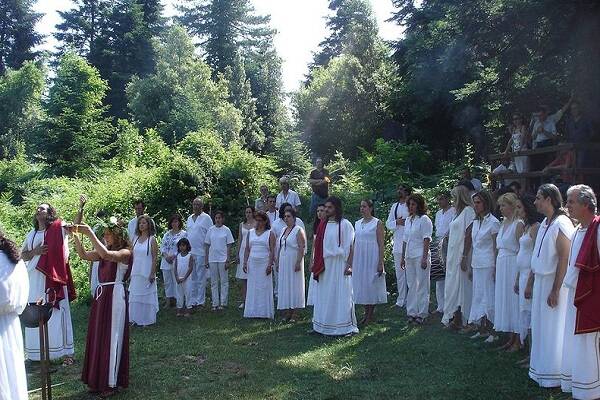
Modern Hellenistic religion is a contemporary revival of ancient Greek religious practices and beliefs, often called Hellenism, aiming to worship the Greek gods and integrate classical spirituality into modern life.
Overview
Modern Hellenistic religion, sometimes referred to as Hellenism or the "Hellenic Reconstructionist" movement, seeks to recreate and adapt the religious traditions of ancient Greece for contemporary practitioners. This includes veneration of traditional deities like Zeus, Athena, Apollo, and Demeter, celebration of festivals, and incorporation of Greek philosophical ethics and ritual practices. Unlike ancient times, modern practitioners often blend historical accuracy with personal spiritual practice.
Beliefs and Practices
- Polytheism: Central to modern Hellenistic religion is the worship of the Greek pantheon. Each deity is linked with specific virtues, domains, or aspects of life, similar to the classical worldview.
- Rituals: Devotional practices include offerings (libations, food, incense), prayer, hymns, and festivals inspired by the ancient Greek calendar, such as Panathenaia or Thesmophoria.
- Community and Ethics: Emphasis is often placed on virtue ethics from classical philosophy (like the works of Plato, Aristotle, and the Stoics) and the cultivation of personal excellence (arete).
- Ancestral Respect and Nature: Some groups incorporate veneration of ancestors and the natural world, echoing the holistic ancient Hellenistic worldview.
Organizational Structures
Modern Hellenistic religion is primarily community-based and often organized through:
- Formal groups or priesthoods that coordinate rituals or educational activities.
- Associations or online networks connecting individuals who may not have access to a physical community.
- Festivals and public gatherings to maintain cultural continuity and community cohesion.
Modern Manifestations
- The Hellenion is an example of a modern organization promoting traditional Hellenic practices in the United States and internationally.
- Reconstructionist efforts involve meticulous research into ancient texts, archaeology, and comparative mythology to maintain historical authenticity.
- Some practitioners integrate Hellenistic religion with modern Pagan or polytheistic movements, giving rise to eclectic spiritual practices.
Cultural and Religious Impact
Modern Hellenism offers a structured spiritual framework for those interested in classical culture, mythology, and philosophy. It also promotes a revival of Greek cultural heritage, moral philosophy, and community-oriented spirituality. The movement is often associated with broader trends in religious reconstructionism and the global resurgence of polytheistic spiritual traditions.In summary, modern Hellenistic religion is a living, adaptive tradition that brings ancient Greek religious and cultural practices into the present, blending historical reverence with contemporary spiritual expression.
The Hellenistic pantheon includes a vast array of deities spanning the primordial, Titan, Olympian, chthonic, and minor categories, each governing aspects of the cosmos, nature, human life, and fate.
Primordial Deities
These were the first beings, often personifications of fundamental cosmic elements:
Chaos – the void from which everything arose
Gaia (Earth) – mother of Titans and all life
Uranus (Sky) – consort of Gaia, father of the Titans
Nyx (Night) – goddess of night, mother of Hypnos, Thanatos, and the Moirai (Fates)
Erebus (Darkness) – born from Chaos, father of Aether and Hemera
Hemera (Day) – daughter of Nyx and Erebus
Aether (Upper Air) – embodies light and the air breathed by gods
Tartarus – primordial abyss, later the dungeon of punishment
Eros – god of love and desire, sometimes primordial
Titans (Pre-Olympian Deities)
Children of Gaia and Uranus, ruling before the Olympians:
Cronus – leader of the Titans, father of the first-generation Olympians
Rhea – mother of Zeus, Poseidon, Hera, Hades, Demeter, and Hestia
Oceanus and Tethys – rulers of freshwater and the oceans
Hyperion and Theia – parents of Helios (Sun), Selene (Moon), and Eos (Dawn)
Coeus, Phoebe, Crius, Mnemosyne, Iapetus, Themis – Titans with domains over intellect, prophecy, memory, law, and mortality
Atlas – condemned to hold up the sky, son of Iapetus
Prometheus and Epimetheus – brothers of Atlas, associated with forethought and afterthought
Olympian Gods
The principal deities residing on Mount Olympus, traditionally twelve in number:
Zeus – king of the gods, sky and thunder
Hera – queen of gods, marriage and childbirth
Poseidon – sea, earthquakes, horses
Demeter – agriculture and the harvest
Athena – wisdom, strategy, and crafts
Apollo – music, prophecy, healing, sun
Artemis – hunt, wilderness, moon
Ares – war
Aphrodite – love and beauty
Hephaestus – craftsmanship, fire
Hermes – messenger, commerce, and guides souls
Hestia or Dionysus – hearth or wine/ecstasy
Chthonic Deities (Underworld)
These gods govern death and the afterlife:
Hades – ruler of the underworld
Persephone – queen of the underworld, goddess of spring
Thanatos – death
Hecate – magic, witchcraft, crossroads
Charon – ferryman of the dead
Muses and Charites (Graces)
Inspire creativity, art, and joy:
Muses: Calliope (epic poetry), Clio (history), Euterpe (music), Erato (lyric poetry), Melpomene (tragedy), Polyhymnia (sacred poetry), Terpsichore (dance), Thalia (comedy), Urania (astronomy)
Charites: Aglaia (splendor), Euphrosyne (mirth), Thalia (good cheer)
Additional Notable Deities
Pan – god of nature, shepherds, and flocks
Eros – later a mischievous god of erotic love
Nike – goddess of victory
Tyche – goddess of fortune
Boreas, Zephyrus, Notus, Eurus – wind gods (Anemoi)
Helios, Selene, Eos – celestial bodies: Sun, Moon, and Dawn
Atlas, Prometheus – Titan figures continuing to act after the Titanomachy
The Hellenistic pantheon therefore encompasses primordial forces, pre-Olympian Titans, Olympian rulers, underworld deities, and a myriad of minor gods and spirits, each associated with natural forces, human experiences, and morality. The lists are vast, and many minor local or personified deities such as river gods, nymphs, and abstract concept personifications (like Moros, Nemesis, and Eris) also play roles in myth and cult practice
.