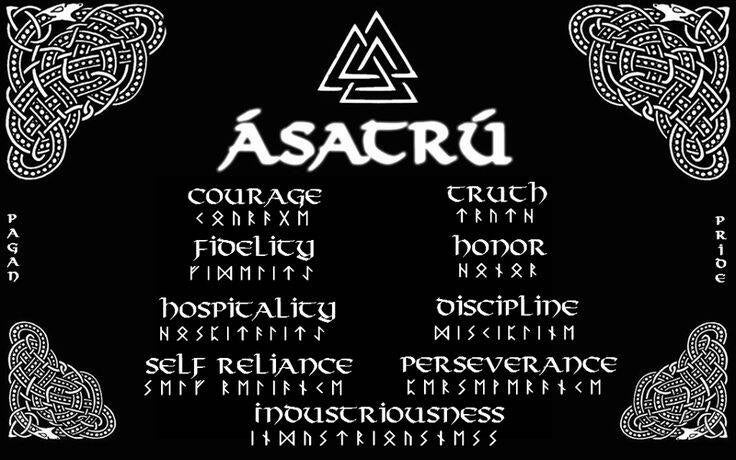
The Nine Virtues of Ásatrú are fundamental ethical principles that guide followers in personal honor, strength, and responsibility, emphasizing values like courage, truth, and loyalty.
Ásatrú, a modern revival of pre-Christian Norse paganism, emphasizes ethical living through the adoption of nine core virtues, which serve as a moral framework and guide for behavior. Each virtue reflects qualities admired by Norse culture and provides practical guidance for personal and communal life.
The Nine Virtues
- Courage (Órœki / Djarverð) – Being brave in the face of adversity, standing up for oneself and others, and facing fear with determination. Courage is central to honor and integrity.
- Truth (Sannleikur / Sannr) – Living honestly and speaking truthfully, avoiding deceit, and maintaining integrity in all interactions. Truth underpins trust and social cohesion.
- Honor (Heiðr) – Upholding personal and family honor, protecting one’s reputation, and acting with dignity and respect in all circumstances. Honor links personal action to social responsibility.
- Fidelity (Tryggð / Loyalty) – Remaining loyal to family, friends, and community, maintaining commitments, and fostering bonds of trust. Fertility of relationships and alliances depends on fidelity.
- Discipline (Dugnaður / Self-Discipline) – Exercising control over one’s impulses, dedicating oneself to personal growth, and cultivating skills and know-how. Discipline allows mastery and consistent ethical action.
- Hospitality (Gestablind / Generosity) – Showing kindness, generosity, and hospitality to guests and strangers, fostering goodwill, and reinforcing community ties. In Norse tradition, hospitality was valued as a mark of civilization.
- Industriousness (Dugnaður / Hard Work) – Diligence and productive effort in work, home, and community roles. Industriousness ensures personal responsibility and contribution to society.
- Perseverance (Þrautseigja / Endurance) – Showing patience, persistence, and resilience through adversity, remaining steadfast in goals and principles despite setbacks. Perseverance maintains long-term stability in life.
- Self-Reliance (Sjálfbjarga / Independence) – Cultivating the ability to provide for oneself and think independently, fostering autonomy and personal empowerment. Self-reliance encourages responsibility and confidence in action.
Application and Significance
The Nine Virtues are not merely abstract ideals; they offer practical guidance in daily life. For example, adhering to courage and truth in decisions supports moral integrity, while hospitality and fidelity strengthen social bonds and community trust. Likewise, industriousness and self-reliance emphasize the value of personal contribution and responsibility. Together, these virtues provide a blueprint for ethical living, resilience, and spiritual cultivation within the Ásatrú framework.Understanding and practicing these virtues allows followers to honor their heritage, cultivate personal character, and contribute meaningfully to the community, reflecting the ethical mindset of Old Norse culture.