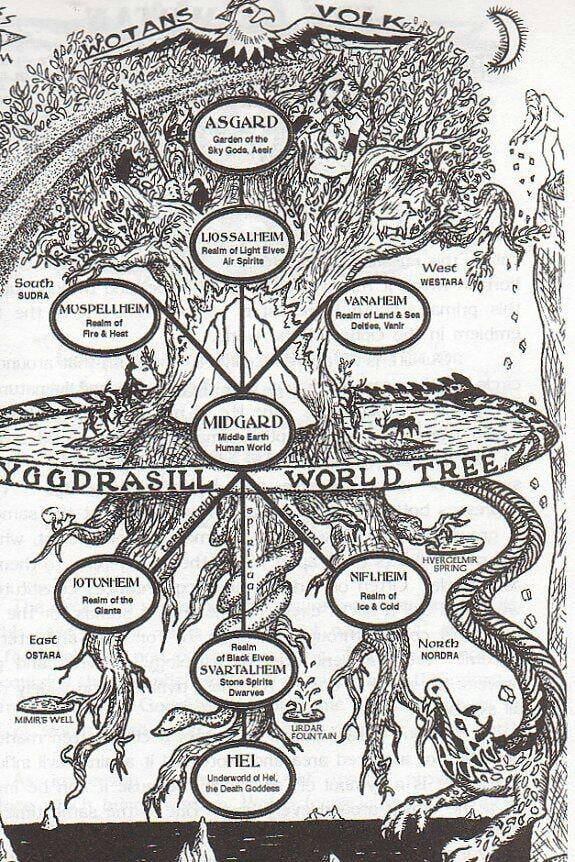
Pronouncing Yggdrasil (the colossal world tree in Norse mythology) comes down to a few standard English approaches or the more traditional Old Norse way.
The two most common English pronunciations are:
- IG-druh-sil (rhymes with big + missile)
- IG-DRAY-zil [
- Ygg-: rhymes with big
- -dras-: sounds like druce or drass
- -il: sounds like ill or ul
If you want to say it more like a native Viking, the Old Norse sounds are closer to UG-dras-il (where the "ug" rhymes with "jug") or EGG-drah-sil. The golden rule for this ancient pronunciation is to put the primary emphasis squarely on the first syllable.
Yggdrasil is the immense and sacred ash tree at the center of Norse cosmology, connecting the Nine Realms and symbolizing life, death, and cosmic order.
Overview
Yggdrasil, often called the World Tree, is a colossal ash tree that forms the axis mundi of the Norse universe, linking all existence and providing structure to the cosmos. Its branches extend into the heavens, while its three roots reach into significant wells: Urdarbrunnr (Well of Fate), Hvergelmir (the Roaring Kettle), and Mímisbrunnr (Mimir’s Well), each representing aspects of destiny, life, and wisdom . The tree is central to the Nine Realms, including Asgard (realm of the gods), Midgard (humans), and Niflheim (underworld), .
Symbolism and Significance
Yggdrasil embodies the interconnectedness of life, death, and rebirth. It is both a source of life and a site of sacrifice: Odin hung himself on the tree to gain mystical knowledge, making it a symbol of wisdom and transformation . The tree’s fate is intertwined with the cosmos, and its trembling is said to precede Ragnarök, the apocalyptic end of the world . Yggdrasil also represents the Norse understanding of cosmic balance and the unity of all realms.
Inhabitants
Several mythological creatures inhabit Yggdrasil:
- Níðhöggr, a dragon gnawing at its roots
- Ratatoskr, a squirrel that carries messages between the dragon and an eagle
- Veðrfölnir, a hawk perched atop the tree
- Four stags: Dáinn, Dvalinn, Duneyrr, and Duraþrór
These beings symbolize the dynamic forces of nature and the constant interaction between life and decay.
Etymology
The name "Yggdrasil" derives from Old Norse: Yggr (a name for Odin, meaning “the Terrible One”) and drasill (“horse”), often interpreted as “Odin’s horse” or “gallows,” referencing Odin’s self-sacrifice on the tree . This etymology highlights the tree’s sacred and fearsome nature, linking it to divine power and cosmic knowledge.
Cultural Context
Yggdrasil is comparable to the tree of life in other mythologies and the tree of knowledge in Abrahamic traditions, reflecting a universal motif of a central, life-giving tree . It is a key symbol in Germanic paganism, representing the sacredness of nature, the cycles of life, and the interdependence of all realms .
In summary, Yggdrasil is not only a physical symbol in Norse mythology but also a profound representation of cosmic order, wisdom, and the eternal cycle of life and death