Connecting with other realms
Step into a world where communication transcends the ordinary. This page explores mediumship and channeling, offering clarity and understanding of these profound spiritual practices. Discover how we can connect with spirits, guides, and higher consciousness.

Understanding mediumship and channeling
The single most important thing to understand is that both mediumship and channeling are about connecting with spiritual energies beyond our physical realm for guidance, healing, or messages. They offer a unique way to access wisdom and perspectives not readily available in our everyday lives, fostering a deeper spiritual connection.

Common questions and feelings addressed
Many people approach mediumship and channeling with a mix of curiosity, skepticism, hope, and sometimes fear. Common questions include: "Is this real?" "Am I opening myself up to something dangerous?" "Can I connect with my loved ones?" "How do I know if the message is authentic?" We aim to address these concerns by providing clear, grounded information, emphasizing safety, discernment, and ethical practice. Our goal is to demystify these practices, replacing apprehension with empowerment and understanding.

The distinction between mediumship and channeling
While often used interchangeably, mediumship and channeling have distinct nuances. Mediumship primarily involves communicating with deceased individuals or spirits from the spiritual realm. A medium acts as a bridge, conveying messages from these spirits to the living. Channeling, on the other hand, is a broader term where a channeler connects with non-physical entities such as spirit guides, ascended masters, angels, or even collective consciousness. The focus of channeling is often on receiving wisdom, insights, or creative inspiration rather than direct communication with a specific deceased person. Both require an open mind and a developed spiritual connection, but their intent and the nature of the entities they connect with can differ significantly.
Mediumship and channeling are practices in which individuals claim to communicate with spirits or higher consciousness, with mediumship typically involving communication with the deceased, and channeling often referring to receiving messages from spiritual entities or guides.
Mediumship
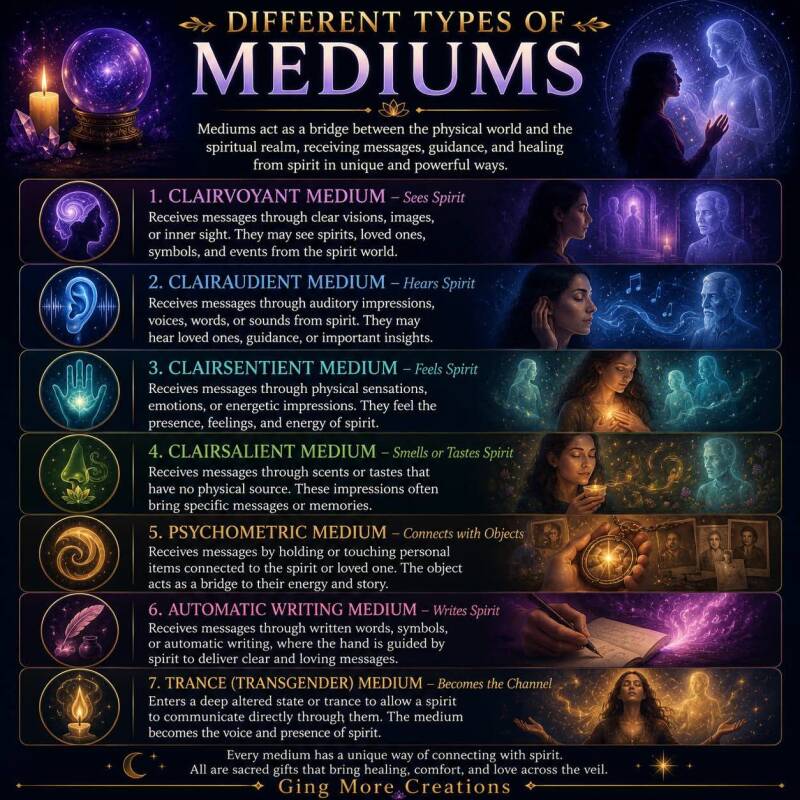
Mediumship is the practice of acting as a conduit for communication between the living and the spirits of the deceased. Mediums may receive messages, visions, or impressions through various modes, including:
- Psychic or mental mediumship: messages are perceived mentally, as thoughts or impressions from spirits.
- Trance mediumship: the medium enters a trance state, in which a spirit may speak or write through them.
- Physical mediumship: involves phenomena such as table-rapping, moving objects, or other physical manifestations attributed to spirit activity.
Historically, mediumship became especially prominent during the 19th-century Spiritualist movement, with mediums demonstrating abilities such as automatic writing or séances. Many spiritual traditions and cultures interpret mediumship as a gift or intuitive ability allowing communication with loved ones who have passed away.
Channeling
Channeling extends beyond communicating with deceased humans and typically involves receiving messages from a wider range of spiritual or metaphysical sources, such as spirit guides, angels, ascended masters, or collective consciousness. Channeling may include:
- Verbal messages: delivered through spoken word during a meditative or trance state.
- Written messages (automatic writing): where the channeler writes messages inspired by spiritual sources.
- Creative or artistic inspiration: some channelers claim that music, art, or teachings are received directly from non-physical entities.
While mediumship often focuses on comforting the living by relaying messages from specific departed individuals, channeling may convey guidance, wisdom, or insights, sometimes relating to spiritual development, life purpose, or global matters.
Key Differences
AspectMediumshipChannelingSource of communicationDeceased humansSpirits, guides, higher consciousness, or non-human entitiesPurposeConvey messages from the deceased, closure, or guidanceGuidance, teaching, spiritual insight, or inspirationCommon formsTrance, physical, mentalTrance, automatic writing, clairaudience, inspirationHistorical rootsSpiritualism (19th century)Broader mystical and New Age practices
Cultural and Scientific Perspectives
While many spiritualist and New Age communities value mediumship and channeling as legitimate spiritual experiences, scientific perspectives view these phenomena as psychological experiences or products of suggestion, cognition, or creativity, rather than verifiable external communication. Mediums and channelers often emphasize ethical practice, discernment of information, and personal responsibility in sharing messages.In summary, mediumship involves communicating with the deceased, often to provide comfort or closure, while channeling involves receiving messages from spiritual or non-physical entities for guidance or insight. Both practices are rooted in cultural, historical, and spiritual traditions and are interpreted differently depending on belief systems and personal experiences.