Self love isn't selfish or narcissistic!!!
Self-love is the conscious practice of valuing, accepting, and caring for yourself physically, mentally, and emotionally, fostering resilience and inner peace.
What Is Self-Love?
Self-love goes beyond self-esteem or confidence; it is a holistic appreciation of yourself, including your strengths, weaknesses, and unique qualities. It involves acknowledging your worth without conditions and prioritizing your own well-being without guilt. Practicing self-love encourages healthier relationships, reduces stress, and improves overall mental health.
Key Components of Self-Love
- Self-Acceptance: Embracing who you are, including imperfections, mistakes, and past experiences, without harsh self-criticism. This allows for emotional freedom and reduces internal judgment.
- Self-Care: Engaging in activities that support your physical, emotional, and mental health, such as rest, proper nutrition, exercise, meditation, or creative outlets.
- Boundaries: Learning to respectfully say “no” and protecting your emotional energy from unhealthy influences. Setting clear boundaries is essential for personal integrity and emotional balance.
- Positive Self-Talk: Replacing self-criticism with supportive, encouraging, and compassionate inner dialogue. This strengthens self-esteem and resilience.
- Forgiveness and Compassion: Letting go of past mistakes and treating yourself with the same kindness you extend to others fosters healing and emotional growth.
How to Cultivate Self-Love
- Daily Practices: Start with small habits like journaling affirmations, daily gratitude, or mindfulness meditation to enhance self-awareness.
- Recognize and Celebrate Achievements: Reflect on small victories and progress rather than focusing solely on outcomes or perfection.
- Engage in Activities You Enjoy: Pursuing hobbies and interests boosts happiness and reinforces that your needs are important.
- Surround Yourself with Supportive People: Positive relationships nurture your sense of worth, while toxic influences can diminish self-love.
- Seek Professional Support if Needed: Therapy or counseling can help address deeper emotional challenges that impede self-love and self-compassion.
Benefits of Practicing Self-Love
- Improved mental and emotional health
- Reduced anxiety and stress levels
- Better decision-making and personal goal achievement
- Stronger, healthier relationships
- Increased sense of fulfillment and happiness
In essence, self-love is an ongoing journey of nurturing your well-being, respecting your own needs, and embracing your authentic self. Regularly integrating these practices can create a foundation for personal growth, resilience, and inner peace.

Self-love involves nurturing a positive relationship with yourself through mindful habits, self-compassion, and intentional care for your mental, emotional, and physical well-being.
Core Principles of Self-Love
Self-love is not narcissism or indulgence; it is about accepting your strengths and weaknesses, treating yourself with kindness, and prioritizing your well-being . It helps improve confidence, emotional resilience, and overall life satisfaction
Key principles include:
- Self-compassion: Forgive yourself for mistakes and release guilt
- Mindfulness: Stay present and aware to reduce anxiety and increase peace.
- Authenticity: Embrace your unique qualities without comparing yourself to others.
Daily Self-Love Habits
Incorporating small, consistent habits can strengthen self-love:
- Gratitude journaling: Write three things you are grateful for each day to boost positivity.
- Positive affirmations: Reinforce self-worth with daily statements
- Mindful meditation: Spend 10–15 minutes meditating to reduce stress and enhance clarity .
- Healthy boundaries: Learn to say no and protect your energy .
- Physical care: Eat nutritious foods, exercise regularly, and prioritize sleep .
- Let go of perfectionism: Focus on progress rather than impossible standards
Self-Love Exercises
Practical exercises can deepen self-acceptance and emotional resilience:
- Self-esteem check-up: Rate your agreement with statements about your self-worth to identify areas for growth .
- Love letter to yourself: Write a letter highlighting your most valued qualities to reinforce self-appreciation .
- Visualize your best self: Imagine the life and person you aspire to be to stay motivated .
- Engage in joyful activities: Regularly do things that bring fulfillment and happiness .
Mindset and Emotional Practices
Developing a self-loving mindset is essential:
- Replace negative self-talk: Transform self-criticism into empowering internal dialogue
- Cultivate patience: Allow personal growth to occur naturally without judgment .
- Live in the moment: Appreciate the present and your existence without constant comparison .
- Seek support if needed: Therapy or coaching can help build confidence and self-esteem
Summary
Self-love is a skill that can be developed through consistent habits, exercises, and mindset shifts. By practicing gratitude, mindfulness, self-compassion, and physical care, you can foster a healthier relationship with yourself, improve emotional resilience, and enhance overall well-being .
Self Love Activities for Adults.
Engaging in self-love activities helps adults nurture self-compassion, boost self-esteem, and enhance overall well-being through intentional, daily practices.
Daily Self-Love Practices
Journaling and Reflection: Spend time each day writing about your thoughts, feelings, and experiences. Prompts like “What am I grateful for today?” or “What positive experiences did I have?” encourage self-reflection and emotional awareness, helping you appreciate your achievements and growth.
Positive Affirmations: Repeating affirmations such as “I choose to be kind to myself” or “I am grateful for who I am” reinforces self-acceptance and counters negative self-talk.
Love Letters to Yourself: Write letters highlighting your strengths, qualities, and accomplishments. This exercise fosters self-compassion and reminds you of your intrinsic value
Mindful Eating and Movement: Practice mindful eating by savoring each bite and noticing textures and flavors. Gentle stretching, yoga, or walking in nature can reduce stress, improve mood, and enhance body awareness.
Visualization: Spend a few minutes imagining positive outcomes for your day or envisioning your goals. Visualization can boost confidence, motivation, and a sense of purpose.
Creative and Relaxing Activities
Home Spa or Self-Care Rituals: Pamper yourself with DIY facials, body scrubs, or aromatherapy. These activities promote relaxation and reinforce the message that you deserve care.
Music and Dance: Play your favorite music and dance freely to release tension and express creativity. This can improve mood and foster joy.
Art and Hobbies: Engage in painting, crafting, or other hobbies that bring fulfillment. Creative expression is a powerful form of self-love that nurtures your inner self.
Emotional and Cognitive Exercises
Emotional Wellness Quizzes: Assess your emotional awareness and management skills to better understand your feelings and improve emotional intelligence.
Self-Esteem Check-Ups: Use worksheets to evaluate your self-esteem and identify areas for growth. This helps track progress and reinforces self-acceptance.
Gratitude Practices: Regularly listing things you are grateful for strengthens positive thinking and emotional resilience
Social and Altruistic Activities
Volunteering or Acts of Kindness: Helping others can enhance your sense of purpose and self-worth, reinforcing the value of your contributions .
Connecting with Nature: Spending time outdoors, whether walking, hiking, or simply observing, reduces stress and fosters a sense of peace and connection .
Structured Resources
For those seeking guided approaches, self-love workbooks and printable worksheets provide structured exercises covering self-care, cognitive restructuring, and understanding personal triggers, helping adults systematically cultivate self-love.
By incorporating these activities into your daily routine, you can build a stronger, more compassionate relationship with yourself, improve emotional well-being, and create a fulfilling, joyful life.
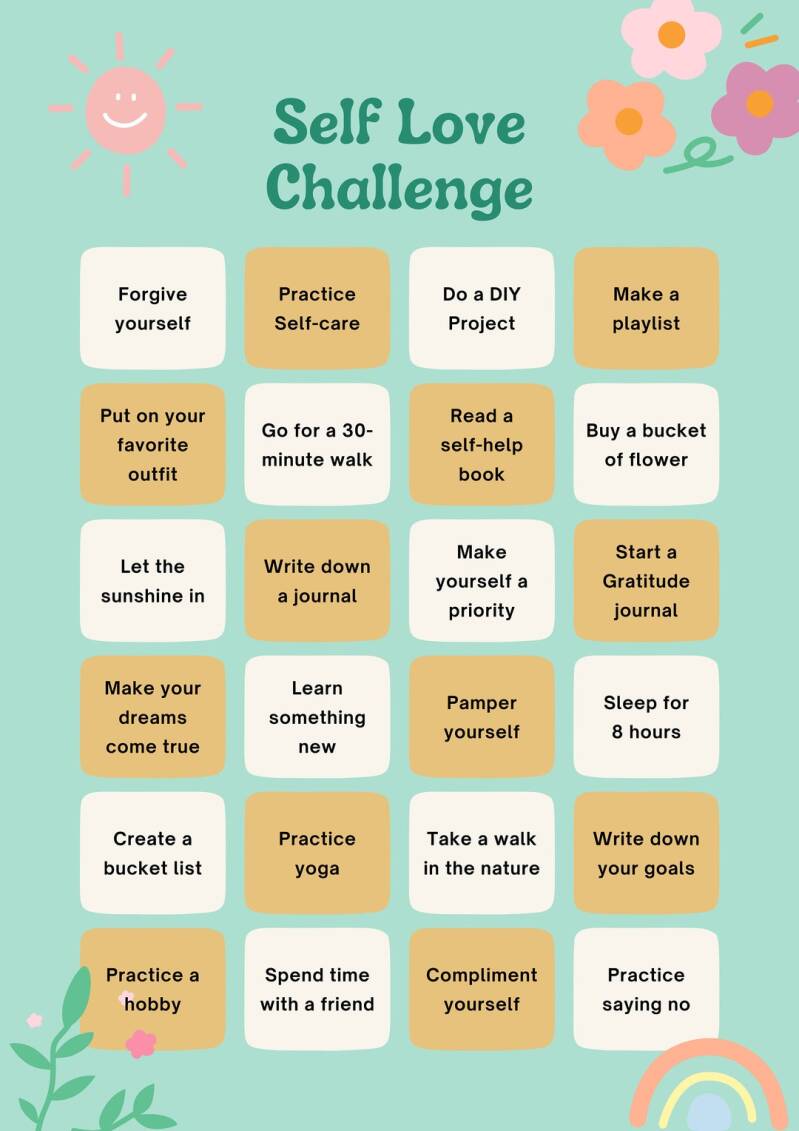


Teaching self-love to children through creative and fun activities helps them build confidence, emotional resilience, and a positive self-awareness that lasts into adulthood
Journaling & Reflection Activities
Self-Love Journal & Heart Map: Encourage children to write daily affirmations, reflect on achievements, or draw things they love about themselves. Heart Maps let them draw or list people, places, and activities that provide them love and happiness
“Things I Like About Me” Exercise: Kids list qualities, talents, or achievements they are proud of. Revisit periodically to reinforce self-worth
Love Letter to Self: Have children write kind letters to themselves highlighting their unique qualities and strengths
Positive Affirmations & Visual Reminders
Mirror Affirmations: Start each day by saying positive statements aloud, such as, “I am kind, I am strong, I am enough”
Affirmation Posters & Cards: Create or color posters with encouraging statements like “I am brave” or “I shine,” then display them in bedrooms or classrooms
Self-Love Artwork: Craft activities like “Superpower Shields” or confidence crowns let children creatively celebrate their strengths
Mindful & Physical Activities
Yoga & Mindfulness: Age-appropriate yoga poses and mindful breathing exercises encourage relaxation, focus, and self-awareness, while supporting both mental and physical well-being
Self-Care Calendar & Daily Rituals: Introduce small daily self-love actions—like drawing, meditation, or gratitude exercises—to help form a routine of kindness to self
Dance Breaks & Movement: Fun, expressive movement promotes body awareness and joy as a form of self-care
Interactive & Social Activities
Compliment & Affirmation Circles: Gather children in a circle to share positive statements about themselves or each other, boosting group and personal confidence
Self-Esteem Games: Activities like Compliment Tag, Positive Relay, or Self-Esteem Bingo introduce play while reinforcing self-worth
Acts of Kindness: Encourage children to perform small acts of kindness for themselves or others, fostering empathy and strengthening confidence
Creative & Project-Based Activities
Self-Love Jar or Toolbox: Kids write notes of encouragement to themselves or create a “toolbox” with items that reinforce self-care and personal strength
Make a Manifesto for YOU: Children develop personal values, goals, and statements that define their character and guide decisions
Gratitude & Positivity Boards: Vision boards or “Board of Happiness” projects display achievements, happy memories, or personal goals, promoting reflection and pride
Outdoor & Generosity Activities: Engage in activities like Marble Run boards or Generosity Day to build problem-solving skills, collaboration, and a sense of contribution
Tips for Encouraging Self-Love Daily
Praise effort rather than outcome, and model self-kindness through your own actions
Combine structured activities with everyday life: mealtime compliments, journaling, or gratitude check-ins reinforce growth mindset and positive self-talk
Adapt the complexity of activities to the child’s age and interests, ensuring that participation remains fun and meaningful
By consistently integrating these activities, children learn to recognize their strengths, celebrate uniqueness, and practice self-kindness—laying a foundation for lifelong confidence, resilience, and emotional health