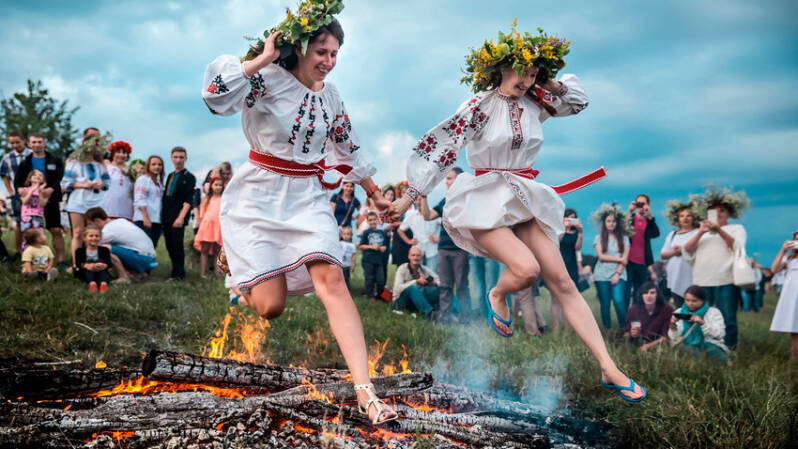
Rodnovery, or Slavic Neopaganism, is a modern revival of pre-Christian Slavic religions, emphasizing the worship of ancestral gods, nature, and folk traditions.
Origins and Historical Context
Rodnovery seeks to reconstruct and revive the spiritual practices of the pre-Christian Slavs, which were practiced across Eastern Europe before the spread of Christianity between the 9th and 12th centuries. Historical sources on ancient Slavic religion are limited, often filtered through Christian chronicles, but they indicate a polytheistic system with a strong emphasis on nature, seasonal cycles, and local spirits.
Beliefs and Deities
Rodnovers generally worship a pantheon of Slavic gods and goddesses, including:
- Perun: god of thunder and war
- Svarog: god of the sky and fire
- Dazhbog: sun deity and provider of wealth
- Veles: god of the underworld, cattle, and commerce
- Mokosh: goddess associated with fertility, earth, and women’s work
The belief system often intertwines deities with natural elements and seasonal cycles, acknowledging spirits in rivers, forests, and household domains. Ancestral worship and respect for lineage are also central to Rodnover practice.
Practices and Rituals
Rodnovers celebrate seasonal festivals tied to the solar and agricultural calendar, such as:
- Koliada: winter solstice festival, emphasizing renewal and light
- Jarilo: spring fertility and harvest rites
- Kupala Night: summer solstice, celebrating water, fire, and fertility
- Dziady: rituals honoring ancestors, ensuring their guidance and protection
Rituals often include sacrifices (traditionally symbolic or animal offerings in historical forms), prayers, songs, dances, and communal feasts. Many modern practitioners perform rituals outdoors, aligning with the emphasis on nature.
Modern Revival and Diversity
Rodnovery is diverse, with national and regional variations across Poland, Russia, Ukraine, Belarus, and other Slavic countries. Groups differ in theology, ritual formality, and historical sources. Some aim for reconstruction based on historical and folkloric evidence, while others adopt neo-romantic or eclectic approaches, integrating yoga, astrology, or modern pagan ideas. The movement has grown alongside a broader interest in ethnic identity and cultural heritage, particularly post-Soviet Union and in Central and Eastern Europe.
Social and Cultural Significance
Rodnovery functions as both a religious practice and a cultural revival, connecting people to folklore, traditional crafts, language, and music. It also fosters community networks and ethical frameworks inspired by ancestral values, emphasizing harmony with nature and respect for ancestors.In summary, Rodnovery is a revivalist Slavic Neopagan spirituality, dedicated to recreating and preserving the belief systems, rituals, and cultural heritage of pre-Christian Slavic peoples, with a focus on gods, nature, seasonal traditions, and ancestral veneration.