Pyromancy: divination by fire
Uncover the ancient art of pyromancy, where the flickering flames reveal secrets and insights. Join us as we explore the history, methods, and mystical power of fire divination.

The ancient art of fire gazing
Pyromancy, derived from the Greek words "pyro" (fire) and "manteia" (divination), is the practice of foretelling the future or gaining insight by observing flames. This ancient method has been used across various cultures for centuries, connecting the diviner to a powerful and transformative element.
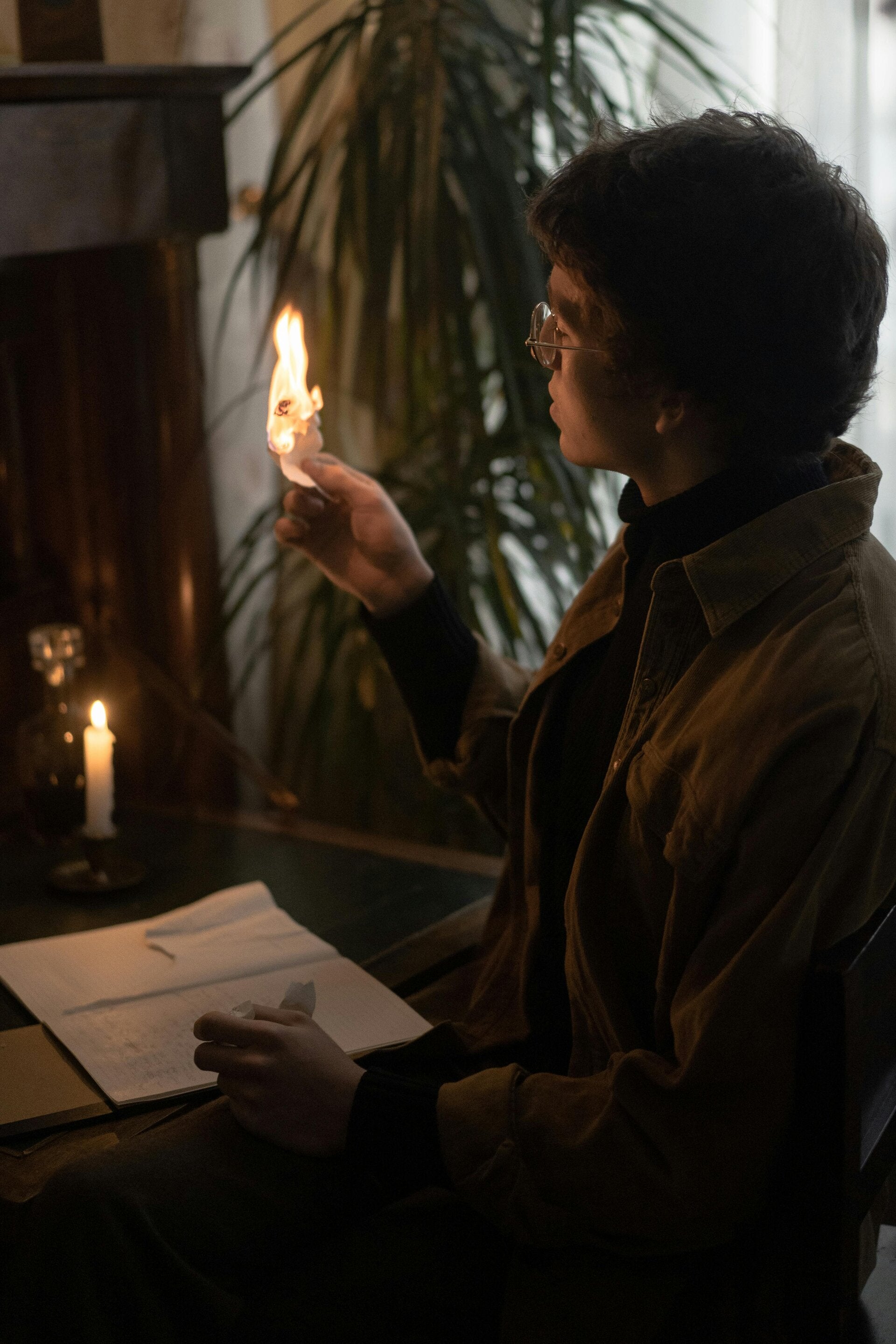
Methods and practices of pyromancy
From observing the shapes and movements of smoke to interpreting the intensity and color of flames, pyromancy encompasses various techniques. Some practitioners use bonfires, while others prefer candles or lamps. Each flicker and dance of the fire holds a potential message, waiting to be deciphered by a skilled eye. This page is for anyone curious about fire's mystical properties and its role in divination.

Fire: a profound divinatory tool
The single most important takeaway from this page is that pyromancy highlights fire's profound and often overlooked power as a divinatory tool. It's not just about heat and light, but about transformation, purification, and direct connection to spiritual insight.
Pyromancy is the practice of divination through fire, encompassing various methods such as interpreting flames, smoke, or the burning of objects, each with its own historical and cultural significance.
Overview of Pyromancy
Pyromancy, derived from the Greek words pyr (fire) and manteia (divination), is one of the classical “forbidden arts” in Renaissance magic, alongside necromancy, geomancy, and hydromancy
. Historically, fire was seen as a living, divine element and was central to divination practices in many cultures, including Ancient Greece, Rome, China, Japan, and Tibet
.
Main Types of Pyromancy
Flame Observation
The simplest form of pyromancy involves observing the shapes and movements of flames from a candle, sacrificial fire, or other sources. Patterns in the fire were interpreted to predict events or divine guidance
Capnomancy
Divination by smoke, where the direction, thickness, or movement of smoke conveyed omens; for example, thin, straight-rising smoke was seen as a positive sign
Alomancy
Divination by salt, one method of which is casting salt into a fire and interpreting the reaction
Botanomancy
The practice of burning plants and interpreting the resulting flames or their effects
Causinomancy
Divination by burning objects in general, where the type of object and reactions of the fire are read for guidance
Daphnomancy (Empyromancy)
Divination by burning laurel leaves, often used in ritualistic or prophetic contexts
Osteomancy
Divination using bones, particularly by heating them to produce cracks which are then interpreted
Plastromancy
Using turtle plastrons (the underside shells) or other shells, typically in China, by heating pits carved into them and interpreting the resulting cracks
Scapulimancy/Spatulamancy
Divination with scapulae (shoulder blades) of animals; in many cultures, the bones were heated in fire and the cracks interpreted, notably in East Asia and North America
Sideromancy
Divination by burning straw with iron, used to observe patterns of sparks or flames
Pyromancy in Fiction and Modern Practices
In contemporary fiction and gaming, "pyromancy" often refers to magical abilities that control or conjure fire, differing from traditional divinatory practices. For example, video games like Dark Souls feature pyromancy as a combat skill rather than a method of divination
. Modern spiritual practitioners may still use candle flames or controlled bonfires to seek insight, emphasizing focus, intention, and symbolic interpretation
.
Understanding these various forms of pyromancy provides insight into how human cultures have historically sought guidance from fire, reflecting both spiritual significance and natural observation.
Pyromancy is the ancient art of divination through fire, and it focuses on interpreting flames, smoke, coals, or other fire-related phenomena to gain spiritual insight or guidance.
1. Understanding Pyromancy
Pyromancy comes from the Greek words pyr (fire) and manteia (divination). Throughout history, it has been practiced in many cultures, including Ancient Greece, Rome, Egypt, China, and Native American traditions. The core idea is that fire can serve as a medium to access hidden knowledge, divine messages, or your own intuition.
The flames and fire-related elements are considered symbols of:
- Transformation: Fire transforms matter, symbolizing personal growth and change.
- Illumination: Fire brings clarity and insight into situations.
- Purification: Fire burns away negativity and stagnation.
- Passion and Energy: The movement and intensity of flames reflect vitality and intention.
2. Preparing for a Pyromancy Session
Choose a Space
- Pick a quiet, safe, and undisturbed location. This could be outdoors (under the night sky) or indoors (with a fireplace or a candle).
- Remove flammable materials nearby and ensure safety measures like water or a fire extinguisher are ready.
Gather Materials
- A safe flame (candle, fireplace, bonfire)
- Comfortable seating
- Journal and pen to record insights
- Optional: Crystals or essential oils to enhance focus or energy
Set Your Intention
- Before lighting the fire, define what you wish to learn or understand.
- Phrase the question clearly, e.g., “What should I focus on to advance my career?” instead of vague questions like “What does the future hold?”
3. Engaging in Fire Gazing
Step-by-Step Practice
- Light the Flame: Light your candle or start your fire. Visualize your intention being infused into the flames.
- Relax and Ground Yourself: Sit comfortably, breathe deeply, and feel connected to the earth.
- Focus Your Gaze: Soften your eyes and look at the flame. Enter a meditative state without straining your vision.
- Observe Patterns: Notice flickers, movements, colors, and shapes within the flames, smoke, or coals. Interpret them as messages related to your intention.
- Steady burn: clarity and strength
- Flickering: uncertainty or decision-making challenges
- Shapes: symbols, figures, or meaningful images
- Smoke moving toward you: positive energy or outcome
- Smoke moving away: obstacles or negative signs
- Record Insights: After 15–30 minutes (or longer), close your eyes briefly and then write down thoughts, impressions, symbols, and feelings in your journal.
4. Variations of Pyromancy
- Candle Flame Scrying: Focus on a candle’s flame for subtle messages.
- Bonfire or Hearth Fire: Use larger fires for communal or more intense energy connections.
- Fire-Scrying Bowls: Use controlled fire in bowls or hearths for concentrated practice.
- Smoke and Coals: Observe how smoke rises or how coals glow and crack for additional insights.
- Objects in Fire: Traditional forms involve burning herbs, laurel leaves, salt, bones, or straw and interpreting the fire’s reaction.
5. Interpreting the Fire
Interpretation relies on intuition and symbolic correspondence. There are no fixed rules; instead, pay attention to:
- Recurring images or symbols over sessions
- Colors of the flame (e.g., blue for spiritual insight, red for passion, white for clarity)
- Flame behavior (steady, flickering, dancing, splitting)
6. Safety Considerations
- Never leave fires unattended.
- Ensure the flame is in a safe container if indoors.
- Maintain a clear, fireproof surrounding area.
- Extinguish flames after your session ends.
7. Integrating Pyromancy Into Your Practice
- Regular sessions deepen intuitive understanding.
- Combine with meditation, journaling, or other divination techniques.
- Share experiences with a community of practitioners for insight exchange.
Conclusion
Pyromancy is both a historical and contemporary method for divination and self-reflection. By careful observation, intention-setting, and recording, you can use fire as a tool to access personal insight, spiritual guidance, and symbolic understanding. Approach the practice intentionally, safely, and with an open mind, allowing the flames to illuminate insights from within and around you.