Embracing the Wheel of the Year

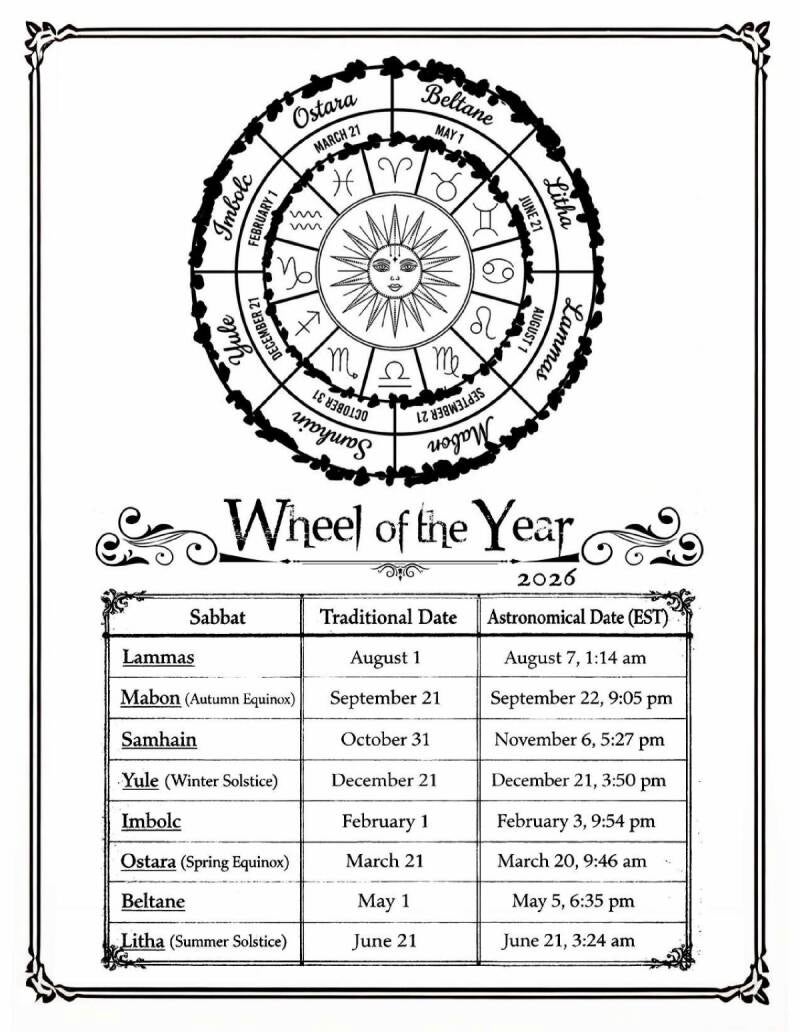
The Wheel of the Year Festivals: Northern Hemisphere

  • Yule: December 20-23

  • Imbolc: February 1-2

  • Ostara: March 19-21

  • Beltane: April 30 – May 1

  • Litha/Midsummer: June 20-22

  • Lughnasadh: August 1-2

  • Mabon: September 21-24

  • Samhain: October 31 – November 1


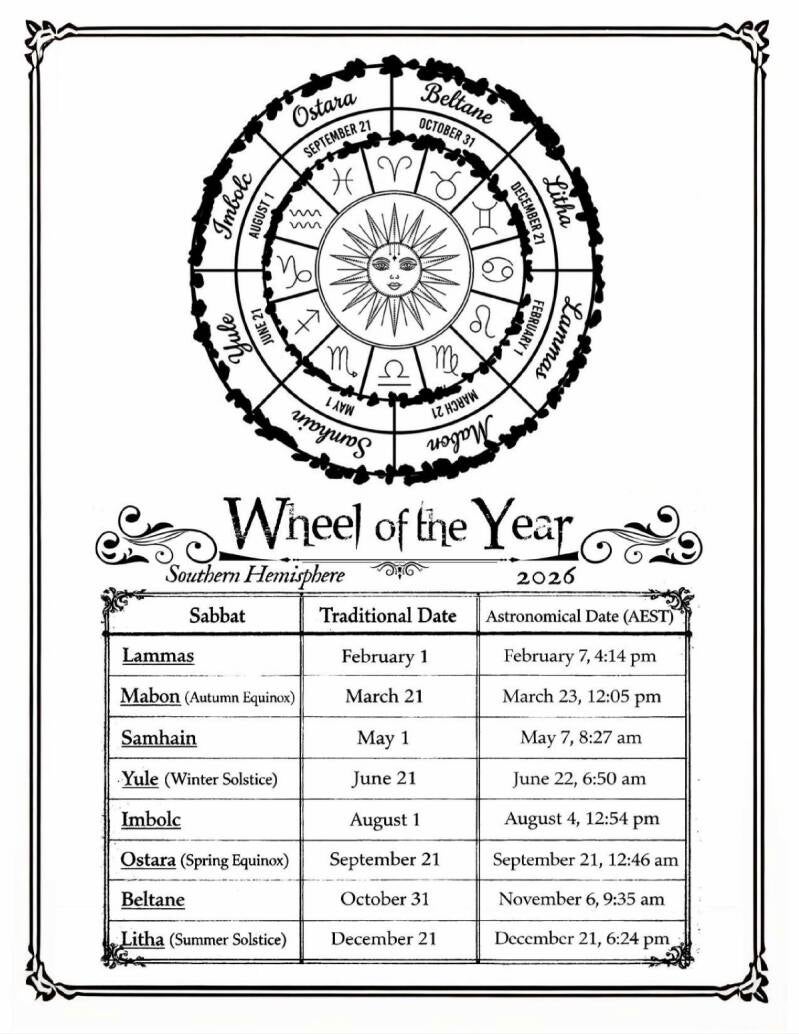
Wheel of the Year Southern Hemisphere

02 February Lammas / Lughnasadh


21 March Autumn Equinox / Mabon


30 April Samhain


21 June Winter Solstice / Yule


02 August Imbolc / Candlemas


21 September Spring Equinox / Ostara


31 October Beltane


22 December Summer Solstice / Litha

Personal connections to the Sabbats

The Sabbats are very special to me at The Altered Goddess. Sabbat gatherings always bring old friends together and create new bonds, fostering a sense of community and shared spiritual journey. These ancient celebrations offer a beautiful way to connect with the changing seasons and our inner selves.

Samhain: The Pagan New Year

Among the eight Sabbats, Samhain holds a particularly profound significance. Also called The Pagan New Year, it is a time to honor the Ancestors. During this period, the veil between the land of the living and the land of the dead is believed to be at its thinnest, allowing for deep reflection and spiritual connection. It marks a time of remembrance and new beginnings.

Below are links to our Sabbats pages.

Rituals: Mabon

SetupItems for this ritual include: Two brown or yellow candles for the altar; Chalice; A basket of apples; enough for the circle boundary (they need not touch each other); Three additional apples; A sharp knife to cut the apples; Several gourds; Blackberry wine or juice; A small bowl of hazelnuts; Vines (real or from a craft store) to decorate your altar (optional); Drum (optional).

Read more »

Rituals: Litha/ Summer Solstice

Whether you’re practicing alone or with your coven, Litha calls for something joyful, golden and alive. This isn’t the time for subtlety — it’s the sun’s main act. So light a flame, crown your head in flowers, and step into your strength. Midsummer has long been considered one of the most powerful times of the year for magic. 

Read more »

Rituals: Yule

Yule/Winter Solstice is celebrated December 19 - 23 for Northern Hemisphere and June 19 -23 for Southern Hemisphere. The Sun (in the Northern Hemisphere), at it's low time, the shortest day, longest night. A celebration known as Yule, Winter Solstice and even called Christmas. The cold and dark are celebrated as the Sun slowly begins to return.

Read more »

Color/ Holiday/Time of YearSignificance

Black/ Samhain/ Black is the primary color of Samhain. Black symbolises the vastness and mystery of the spirit world (and the universe to a greater extent). It also represents the dead and the fading of light in the ‘dark half’ of the year.

Red/Beltane, Yule/Red is symbolic of strength, vitality, sex and passion,as well as of bonfires and other related symbols of the holiday. For Yule, red is symbolic of abundance, prosperity and good tidings.

Gold/Imbolc, Yule/ For Imbolc gold is symbolic of candle flames and light. During Yule, gold is associated with the Sun and gift giving.

White/Imbolc, Yule/White is the primary color of Imbolc. Like gold, it symbolises light and candle flames. It also symbolises the snow, milk and Brigid, along with other symbols of the season.

Dark Green/Yule/Dark green symbolises the evergreen flora which is used to decorate during the holiday – it is symbolic of wealth (gifts), nature and peace. In some traditions, dark green is representative of the Oak King, who conquers the Holly King for dominance in the next half of the year.

Light Green/ Litha, Beltane/light green represents  new spring growth and the balance which nature brings. In Litha, light green is also symbolic of balance and harmony. In Beltane, the colof has similar associations, but also of the wildness and raw energy of nature.

Yellow/Litha, Lughnasadh/Lammas, Ostara/Yellow is one of the most versatile colors, and used in a plethora of holidays. In Litha, yellow is the primary color, and symbolic of the Sun, joy and light.  In Lughnasadh or Lammas, yellow is symbolic of the grain the holiday celebrates and the Sun. In Ostara, it represents flowers and spring. 

Orange/Mabon, Samhain/ In Mabon, orange represents the changing of the season and the fading of light in the darker half of the year. For Samhain, the color comes secondary to black, but has similar associations as in Mabon, and also represents flames and a connection to the spirit world. In some sects the color represents the Sun in rebirth when Yule arrives.

Pink/Ostara/For Ostara, pink is symbolic of the flowers and new spring.

Brown/Mabon/Brown is symbolic of the fallen leaves and changing seasons.


Northern Hemisphere

Southern Hemispere