Air plants thrive with proper light, regular soaking or misting, good air circulation, and occasional fertilization—without any soil.
Light Requirements
Air plants need bright, indirect light to photosynthesize and grow. Place them near east or west-facing windows, or 3–5 feet from a south-facing window to avoid direct sunburn
Xeric (desert-adapted) species tolerate more light than mesic (rainforest-type) species. Artificial fluorescent or LED lighting can be used indoors if natural light is limited
Avoid prolonged direct sunlight to prevent leaf scorching
Savvy Gardening
Watering Guidelines
Air plants absorb water through their leaves, not roots. There are two main methods:
Soaking: Submerge the plant in room-temperature water for 20–30 minutes once a week (increase in drier climates)
After soaking, shake gently and place upside-down to dry completely within a few hours to prevent rot
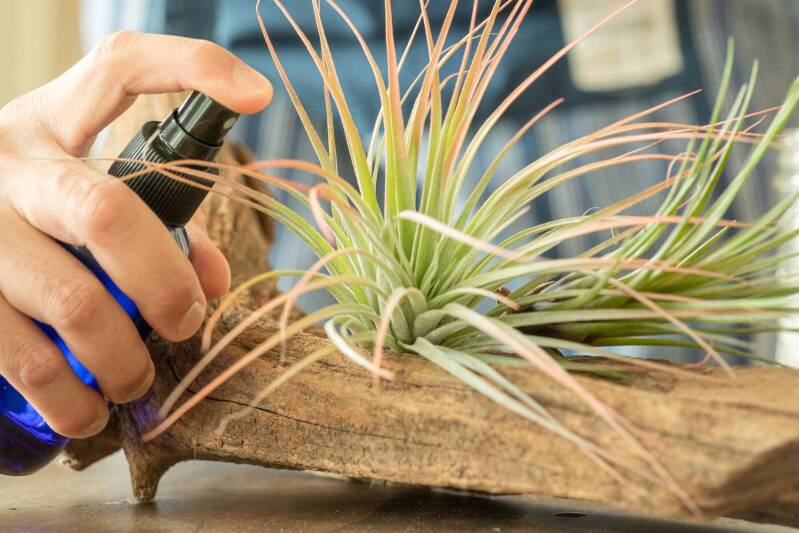
Misting: Supplement soaking by misting 1–3 times per week; fully wetting the leaves is essential. Frequency depends on climate and species, with mesic types requiring more frequent hydration
Water type matters: Use rainwater, spring water, or filtered tap water. Let tap water sit for 24 hours to dissipate chlorine. Avoid distilled or softened water, which can harm to air plants
Signs of dehydration include curling or pale leaves, while overwatering causes soft, dark bases or leaf blackening
Temperature and Air Circulation
Air plants prefer a temperature range of 50–90°F (10–32°C)
They tolerate brief exposure to slightly cooler or warmer conditions but may suffer if exposed to frost below 45°F. Good air circulation is critical to prevent rot; avoid enclosed terrariums without ventilation and allow fresh air to reach the leaves
Fertilization
Fertilize air plants with a Bromeliad or Tillandsia-specific fertilizer, diluted to ¼ strength. Apply monthly during the growing season (spring and summer) in water before soaking
Fertilization promotes healthy leaf growth, flowering, and pup production. Avoid over-fertilizing as it can damage the plants
Display and Mounting
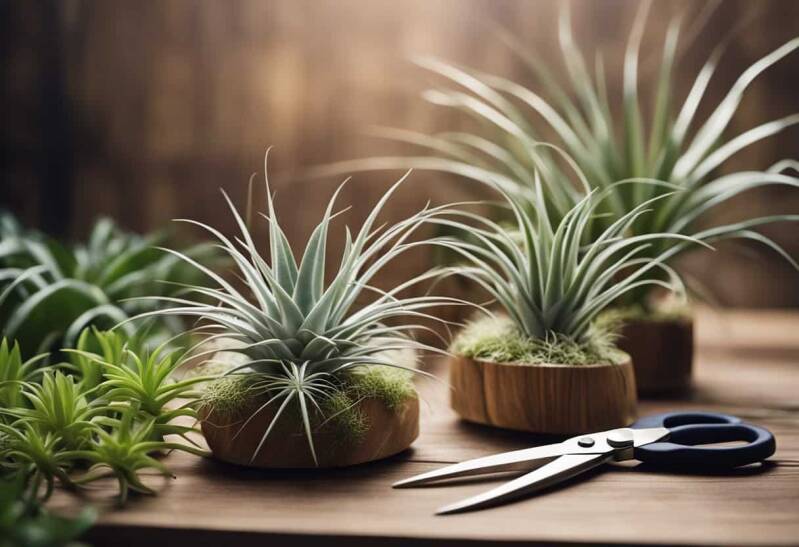
Air plants do not require soil and can be displayed creatively on driftwood, shells, rocks, or in hanging containers. Ensure the plant is secured but has airflow around it
Avoid surfaces that retain moisture, which can cause rot
Propagation and Growth
After flowering, air plants produce offsets called pups. Separate pups when they are 1/3 to 1/2 the size of the mother plant using a gentle twist or sanitized scissors
Leave clumps attached if desired for visual effect, or plant pups individually following the same light and water care.
Pruning and Maintenance
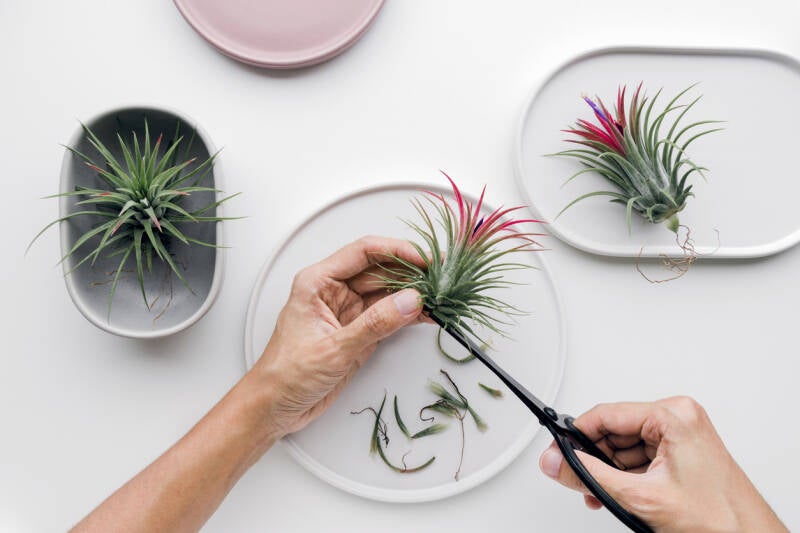
Remove dead or browned leaves at the base to maintain plant health
Trim brown leaf tips with sterilized scissors to maintain aesthetic appeal
Remove dried flower stalks after blooming to encourage pup growth
Common Problems and Pests
Rot: Caused by water collecting in the center; ensure proper drying after soaking.
Sunburn: Brown or black spots appear on leaves; move to filtered light.
Pests: Occasionally infested by mealybugs, scale, or spider mites. Treat with rubbing alcohol on affected areas or insecticidal soap
Summary Tips for Healthy Air Plants
Water weekly (soak 20–30 min) and mist as needed. Adjust for climate and species.
Provide bright, indirect light, avoiding long periods of direct sun.
Maintain 50–90°F temperature range and ensure good air circulation.
Fertilize monthly during active growth with bromeliad-safe fertilizer.
Prune and remove dead leaves, separate pups when appropriate.
Avoid standing water and distilled/softened water.
Following these care instructions will help your Tillandsia thrive indoors or outdoors, encourage flowering, and maintain vibrant, healthy growth