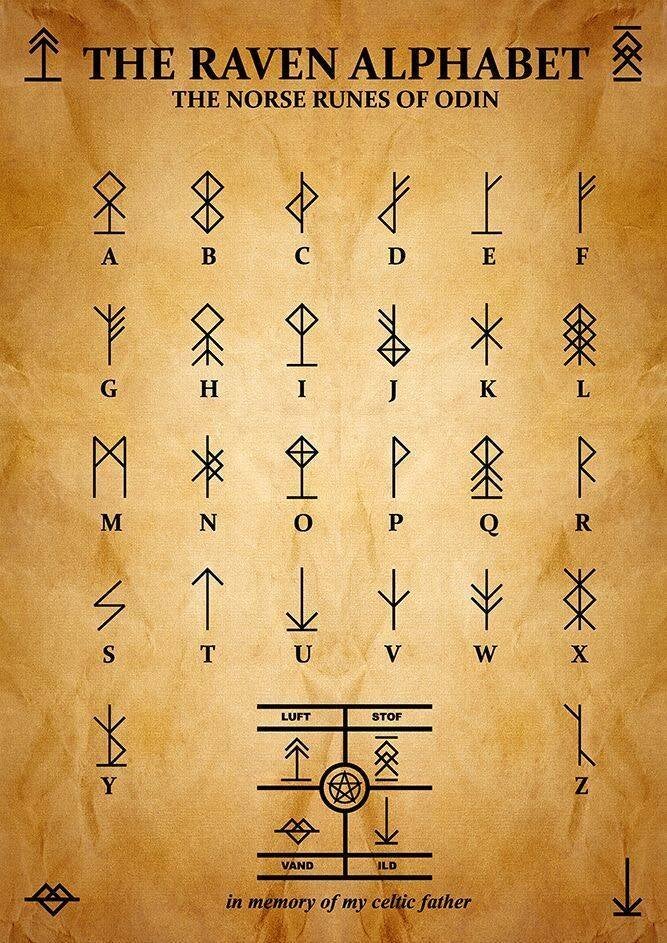
The "Raven alphabet" refers to a specialized variant or mnemonic system of the Anglo-Saxon runes, often associated with the symbolic attributes of the raven and used for divinatory, ceremonial, or educational purposes.
Context and Origins
The Anglo-Saxon runic alphabet, or futhorc, evolved from the Elder Futhark and consisted of 26 to 33 runes used for inscriptions, writing, and magical purposes across early medieval England. Within this tradition, the Raven alphabet (or Hravenfuthark) is not a distinct script but a thematic variant of the futhorc in which each rune is associated with names, symbols, or attributes related to the raven, a bird linked in Germanic mythology to wisdom, prophecy, and the god Odin. The raven was considered a messenger and a facilitator of insight, making it a fitting motif for mnemonic or magical use of the runes.
Function of the Raven Alphabet
The Raven alphabet likely served several interconnected purposes:Mnemonic Tool: Each rune in the system could be paired with a word, sound, or concept connected symbolically to the raven, helping learners memorize the alphabet and its meanings. This approach was similar to the Anglo-Saxon rune poems, which linked runes to natural or mythological ideas for educational purposes.Divinatory or Magical Use: Ravens were seen as supernatural guides in Germanic literature, so a raven-themed rune set could have been used in prophecy, talismanic inscriptions, or ritual contexts, reinforcing the symbolic potency of the signs.Cultural and Literary Symbolism: Ravens frequently appear in Anglo-Saxon and broader Norse mythology as symbols of foresight, intelligence, and war. Linking the alphabet to the raven imbued the writing system with a layer of cultural and spiritual meaning, beyond mere phonetic representation.
Distinct Features
- Raven-themed Names: Each rune might have been assigned a name or gloss that references ravens or their qualities.
- Thematic Arrangement: The runes could be arranged in a way that emphasizes the raven’s attributes, such as insight, stealth, or communication.
- Occasional Manuscript Illustration: Some medieval manuscripts suggest decorative or symbolic annotations featuring birds, including ravens, near rune inscriptions.
Summary Insight
In essence, the Raven alphabet is a symbolic and mnemonic adaptation of the Anglo-Saxon runes, designed to integrate mythological reverence for the raven with the practical and magical functions of the futhorc. While historical evidence is fragmentary, scholarly reconstructions indicate it was meant to teach, inspire, and invoke the spiritual qualities of the raven, aligning literacy and mysticism in early medieval Anglo-Saxon culture.