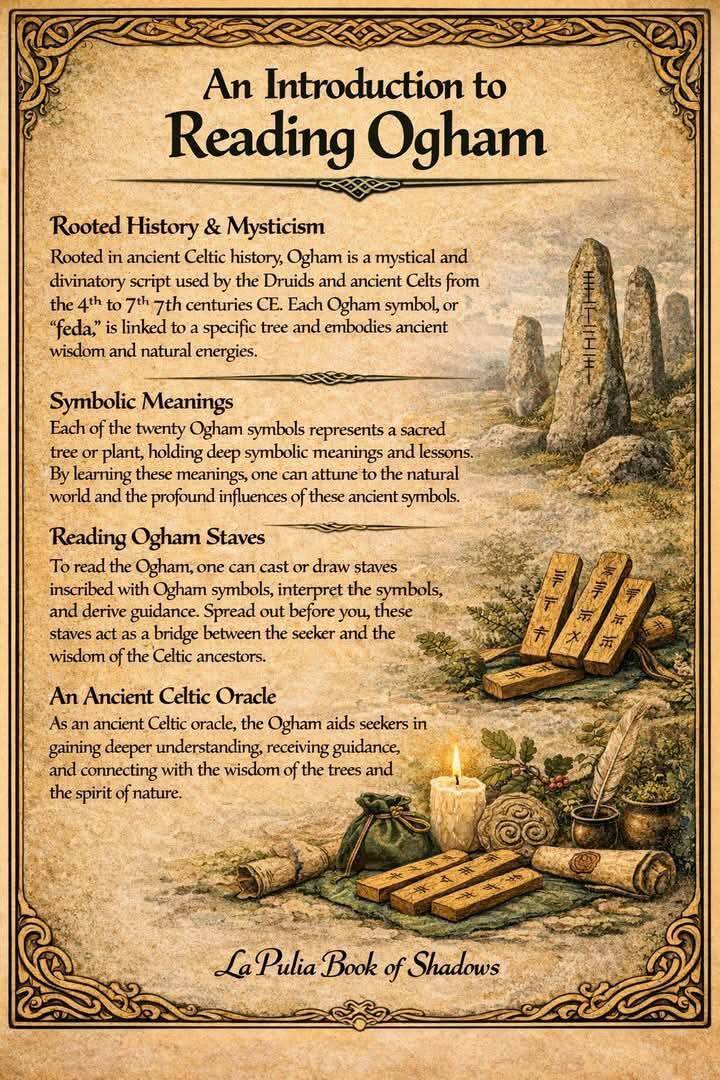
Ogham is an early medieval alphabet used primarily to write the early Irish language, notable for its linear notches carved along stone edges or wood.
Origins and History
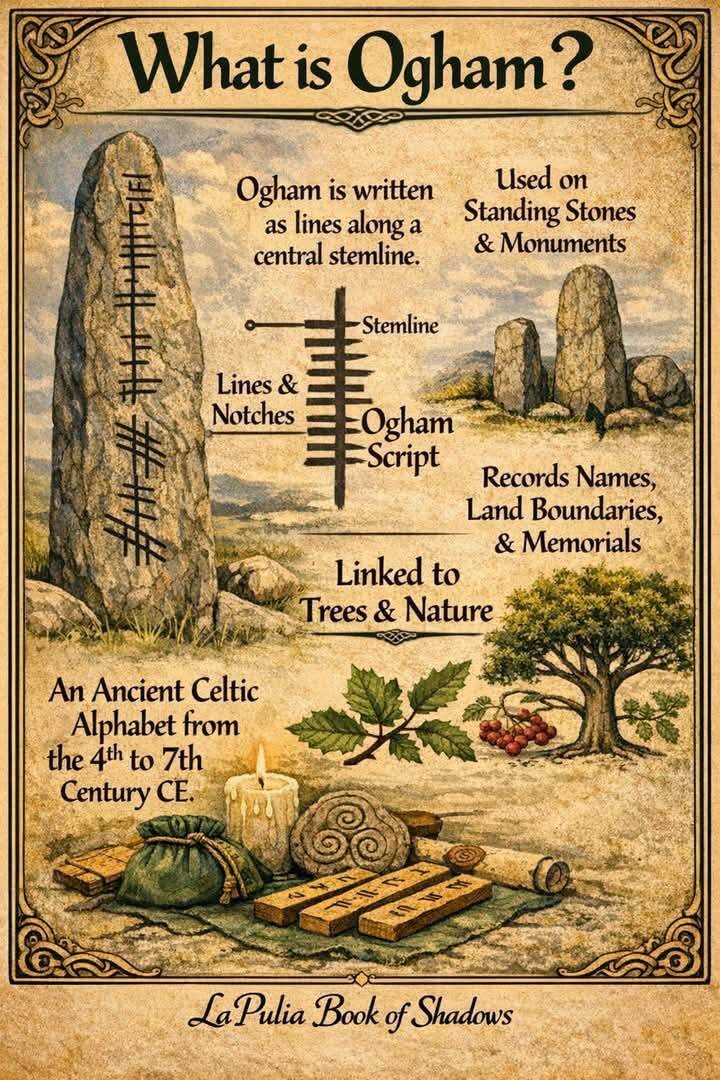
Ogham dates back to around the 4th to 6th centuries CE and is considered the earliest form of writing in Ireland and parts of western Britain. It was primarily used for inscriptions on standing stones and occasionally on wood, usually along the edges of stones to maximize visibility and ease of carving. Scholars believe Ogham may have been influenced by the Latin alphabet, though it likely developed as a distinctly Celtic writing system adapted to the contours of stone carving.
Structure of the Alphabet
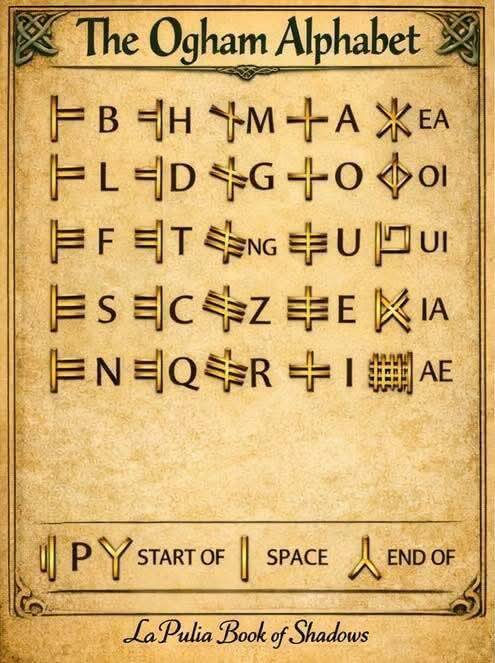
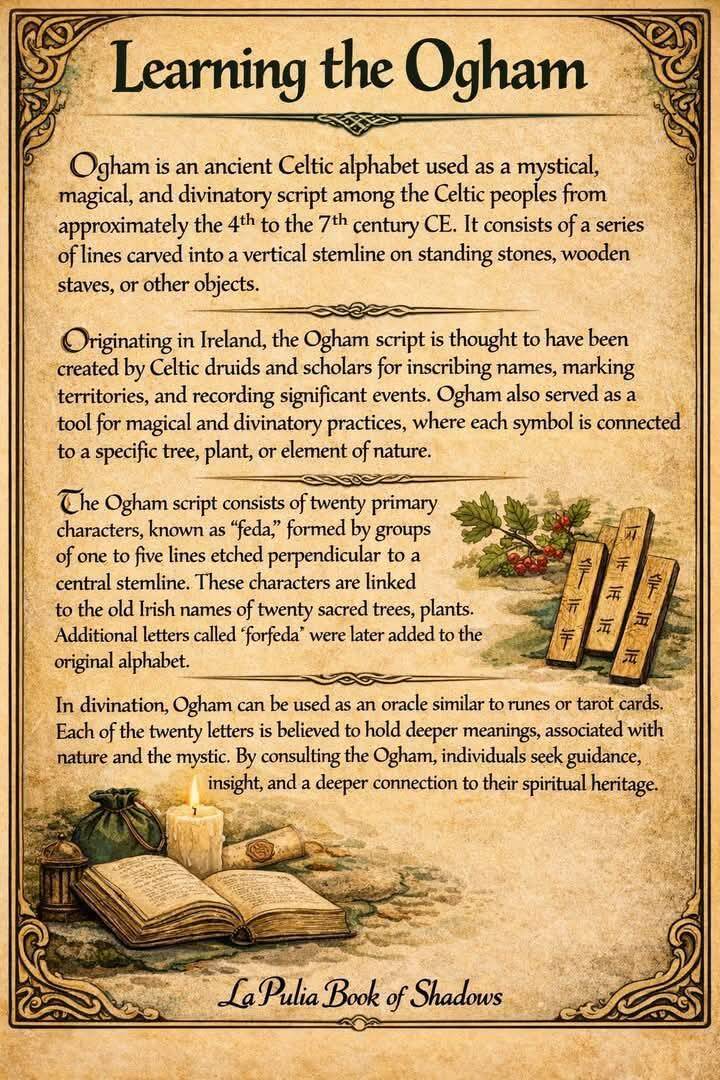
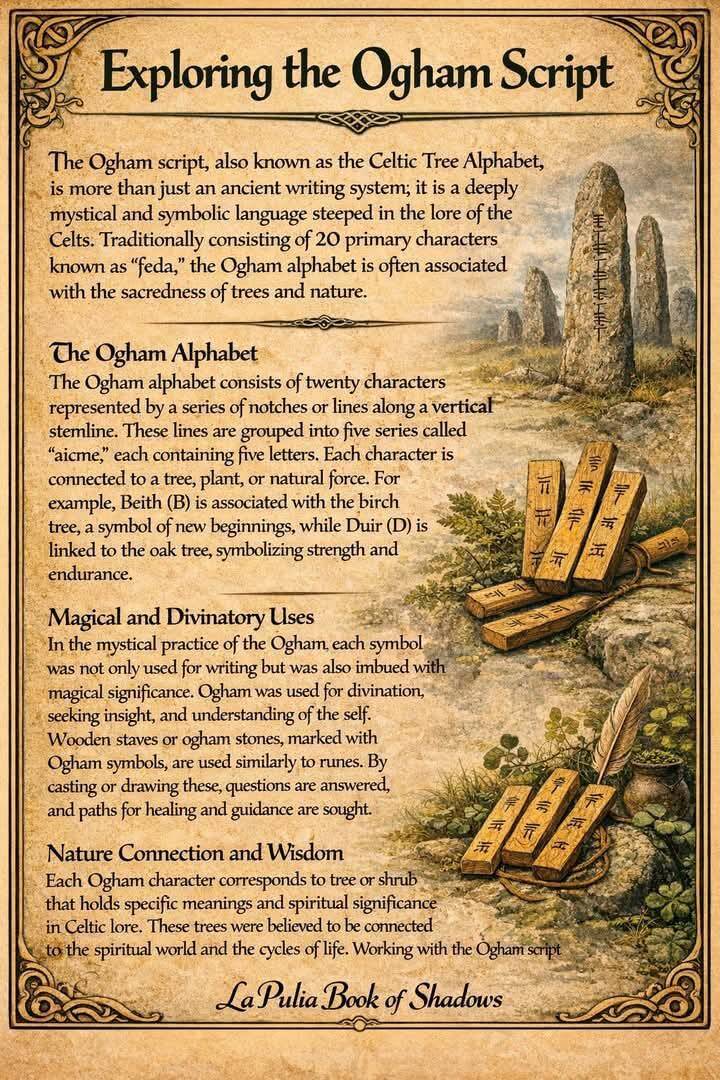
Ogham consists of twenty primary characters, each representing a letter. Each letter is formed by a series of lines or notches arranged relative to a central line or edge of a stone:
- Consonants and vowels are grouped into four categories (aicmes), each containing five letters.
- Marks can appear perpendicular, diagonal, or parallel to the edge line. For example, one to five notches on one side may represent the letters B, L, F, S, and N of the first aicme.
- Later, additional letters were added to accommodate changes in the language, expanding the alphabet for Old Irish sounds.
The arrangement makes Ogham efficient for inscribing short messages, names, or commemorations, especially on rough surfaces.
Uses and Cultural Significance
- Inscriptions on monuments: Ogham is primarily known from standing stones marking graves or land boundaries, often including the name of the person commemorated.
- Numerical or symbolic use: Some theories suggest Ogham may have held magical or ritual significance, possibly related to druids or early Celtic religious practices.
- Recording genealogies and property ownership: The inscriptions also served administrative or social purposes for marking territories.
Modern Interest
Today, Ogham is studied in linguistics, archaeology, and Celtic studies. It is sometimes used decoratively in tattoos, jewelry, or art, often to symbolize heritage or identity. Several modern resources can help people learn to read Ogham or write messages in the script.In summary, Ogham is both a practical writing system and a cultural symbol, preserving traces of Ireland’s early written language and providing a direct link to Celtic history and tradition.