SE. Why were you inspired to write this particular book?
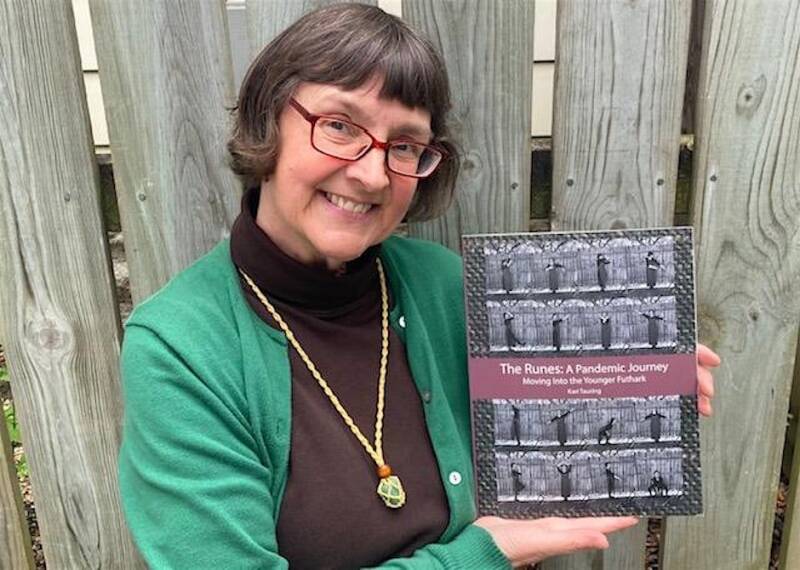
KT. During Covid isolation we were unable to come together to sing and dance Komme Alle and make other runes with the body that require two people to make. The Younger Futhark are all single stav rune and can be made with a single body so I began working with them at this time. I did an on-line course to study them along with the poems from Iceland and Norway and my students were keen to have me write this book.
SE. How many runes does the Younger Futhark have, and what are they?
SE. There are 16 Younger Futhark runes that relate to those of the Elder but with different phonemes and meanings attached. 8 runes disappeared from the set all together.
SE. When and why were the Younger Futhark developed, and how did it replace the Elder Futhark in Scandinavia?
KT. The language changed over time but it was accelerated during the late Iron Age.
SE. Are there regional variants (long-branch vs. short-twig), and what do they tell us about Viking Age culture?
KT. There are many regional variants. Literacy and communication increased with the travels of vikings. Ideas and other letter systems were likely influencing runes (Arabic, Latin, Greek etc.)
SE. What phonological changes in Old Norse led to the reduction from 24 to 16 runes?
KT. Different vowel sounds were represented by single runes rather than having their own runic representation. The D shifted to T in sound and symbol and other consonants shifted and doubled up. We don’t know why these shifts or reductions in runic symbols occurred. Some posit that it was a natural shift over time, some that it was a “top-down” decision by those in power.
SE. How did the transition from Elder to Younger Futhark affect literacy and runestone inscriptions?
KT. There are inscriptions from 600 AC with transitional runes that mark the shift to Younger Futhark. There are many more inscriptions in Younger Futhark as the middle ages began. This would indicate that more people were using them. Sometimes they were used for very mundane messages such as love notes or other graffiti.
SE. What role did Christianization play in the decline of Younger Futhark use?
KT. Latin became the official alphabet and the language of the learned. Though runes were used to write some of our most important manuscripts such as the Codex Runicus, the Latin alphabet eventually replaced the runes.
SE. How does the Younger Futhark differ from the Elder Futhark in terms of sound representation?
KT. With fewer runes to represent phonemes, local dialects had more opportunity to change. The proto-Germanic language roots became obscured - such as the z sound. Hagalaz became Hagl, for example.
SE. What materials were most commonly used for inscriptions in the Younger Futhark?
KT. Memorial stones were still being created. We also find runes on jewelry, sword hilts. and other artifacts. Additionally, vellum (paper made of sheep skin) was available to the wealthy so we have some books written in runic, such as the Codex Runicus and many manuscripts from Icelandic legal documents and other writing.
SE. What types of messages or inscriptions were most common on runestones and other artifacts?
KT. Memorial stones were similarly dedicated to loved ones. The Tyr rune occurs frequently on swords and jewelry.
SE. How was the Younger Futhark used in Viking Age settlements abroad?
KT. Just as the Elder was used, for inscriptions, as farm markers, in legal documents.
SE. What are the most common pitfalls when reading Younger Futhark inscriptions?
KT. One sometimes has to guess which vowel or consonant is meant since so many of them were doubled up. Getting meaning from the context is one way to help. But you will find vastly different interpretations for the same inscription by scholars because so much of it is guess work.
SE. How do you distinguish between similar-looking runes in different style
KT. You have to compare and again, read into the context. I personally do not spend a lot of time with the archeological material trying to interpret inscriptions. There are great linguists in Scandinavia whose work I trust. And, my interest and the point of the new book, is to lean into the Younger Futhark in the here and now, finding sustenance in them for the chaotic times we are in.
SE.What do the runes symbolize in Viking Age belief systems?
KT. They were a writing system and writing has power. The symbols had meanings beyond the phoneme and that adds to the power. They were not “common” or taught to children in “school” so they had mystery in this way also. And remember, a rune can also be a poem. Poetry and word magic were part of Fjölkynngi or mystical knowlege. This word magic was used to manipulate emotions such as love, vengeance, joy, or depression, to cause it or to heal it.
SE. How did the Younger Futhark function as both a practical writing system and a cultural marker?
KT. The changes in language are changes in culture. As culture changes, language changes to describe it. This is as true today as it was in early medieval Scandinavia!
SE. Are there any modern uses or interpretations of the Younger Futhark beyond historical study?
KT. Sure. There are modern interpretations of both Younder and Elder Futhark. In my book I go into the Hafskjold Family Stav system. There gods, animals, and postures are assigned to the Younger Futhark runes. There are some folks who ignore historical and linguistic study all together and “intuit” the meanings of these symbols for themselves. I’m not a fan of that approach. It is important to ground ourselves in historical realities as we create meaning for ourselves today. Rooting in the past lets us know why we are here in the moment. The past gives us context for the now so we can create meaning for the future!
.
SE. Could you describe the process of creating a flute or horn from a fresh plant stem, like the Kvann plant? Its a lovely plant by the way.
KT. I don’t yet know the details about making the fadnu from kvann, you will have to wait until August when I return from Norway. But there are three basic things I need to know for any nature instrument: What makes a good specimen for an instrument? What kind of knife works best? Are there rituals or ways of honoring the plant before I use it?
SE. How do the physical properties of materials (bone, wood, plant stems) influence the sound and tonal range of each instrument?
KT. Interestingly, a tube of any kind will elicit the same range of tones. So the same “nature tonal scale” is available with a willow flute, a cow horn, or a birch bark lur. The length of the tube makes the range higher (for short tubes) or lower (for long tubes). The diameter can make a difference in sound quality but it is really the length that makes the big difference. Instruments with finger holes are a different matter. The notes you will get depend upon the number of finger holes as well as the size of the holes. Larger holes make higher notes and smaller holes make lower notes. Most of the bone flutes with finger holes that have been found are in a five-note pentatonic scale. Medieval music is mostly in this scale. With grass flutes like the lake grass or the kvann, the sound is, well, reedy. People say the lake grass reeds sound like a middle eastern snake charmer.
SE. How do you compose or improvise music specifically for nature instruments?
KT. Most of the music I play on nature instruments is improvised. I feel what the flute wants to say in the moment of playing. There are a few folk songs that I have learned to play on them, but they do not always want to play what “I demand” that they play. Nature instruments can be fickle and moody to play. Sometimes I won’t get much out of them and sometimes they will sing out gladly. They are sensitive to the environment, whether it’s warm, humid, cold, dry, or rainy out. They are sensitive to how hot or cool or moist my breath is. They are unpredictable in many ways.
SE. How do sounds from nature instruments mimic or interact with the natural world, animals, or seasonal cycles?
A. My teacher in Norway, Hans Frederick Jacobsen, said that the success of my playing is determined by whether or not the birds respond. It’s true! These instruments come from nature and are meant to be played in nature. And nature does respond to them. Below is a story about an interaction with a swan while playing my flute. I had an experience with the first PVC flute I made back in 2009 that became a poem. Two white tailed deer had stopped to listen to me. I didn’t know they were there. When I was done playing, they leaped away!
SE. Are there instruments or sounds from Nordic heritage that are at risk of being lost, and how are you working to preserve them?
KT. The fadnu and the plant kvann that it is made from are both in danger of being lost. This is why I am going to Norway in July, to deepen my relationship to this plant that was once so important in Norway that kings thought it a fitting gift for their queens. You could even pay your taxes with this plant! From teacher Øistein Hanssen, I hope to learn more about the importance of this plant in Sami culture and find intersections within Norse culture.
——
SE. If one rune could speak directly to people navigating uncertain times today, which rune would it be and what message would it offer?
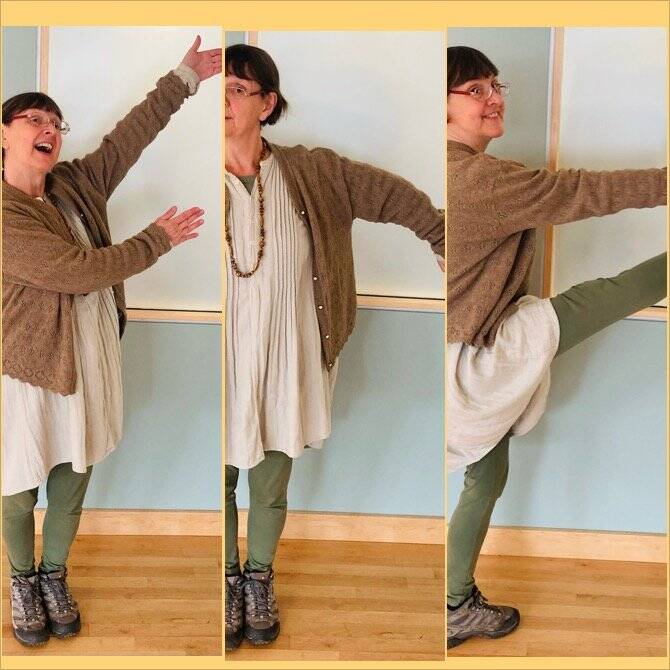
KT. TYR, definitely Tyr. It seems that we are constantly having to face the chaos wolf, the chaos created by the current administration dismantling all the safeguards for the poor, disregarding the customs of polite society, it is as though the Utgard Never is the way of today. The courage of Tyr is really needed right now. During the ICE surge in Minneapolis this past January I found myself curling inward. Embodying this rune forced me to stand up straight, open my arms, and gaze upward towards the heavens. It forced me to “shake off my shoulders what was most shocking” and there was a lot that was shocking. This rune can give us strength in the face of the absurd.
————————————————————————
NATURE INSTRUMENTS
SE. What first drew you to creating and playing instruments made from natural materials?
KT. I grew up loving nature. I suppose we all blew “notes” on blades of grass as kids. My sister brought a cow horn into our lives at some point during the late 1970’s and it fascinated me. I was the one who played it most.
SE. How do nature instruments help us connect with the land and our ancestors?
KT. When I re-create the sounds that my very ancient forebears would have heard it gives me a feeling of connection. Blowing through bones, trees, and horns not only connects me to what they would have heard but the animals and plants that sustained them. There are some flutes and sounds that attract nature to us. And there are some horns (especially billy goat) that drive nature away. I had some real experience with this while playing these instruments in Norway during my explorations of 2023.
SE. What are some of your favorite natural materials to use when making instruments? How do you select materials in a respectful and sustainable way?
KT. I have only made the instruments that I myself play. My favorite flutes are the swan bones because the way these bones came to me is so magical. This particular female swan flew into the electrical wire in the little village of Hjortsjo four months before my arrival as a student of Aksel Striim. On the village FaceBook page they wondered what to do with the swan and the response was, “We must tell Aksel. He will need the wings for his student coming from America.” It was amazing to have access to the swan wings. They are protected in Denmark and to be honest, I was worried I would not be able to take the flutes with me out of the country! The swan is honored in the Eddas, swimming in a pair on Urd’s wellspring lake. The meaning of swans on the lake of öorlog is something I continue to ponder. And the Swan Hide is one of the forms Valkyries take. So there is shape shifting, magic, and mystery surrounding this bird. People have asked if I will make more bone and tree flutes to sell or if I will teach them how to do it. The answer is no to both questions. My purpose in creating them was to experience making them and to play them. Commodifying them through mass production would take the magic out of it for me. Additionally, I was only there learning for one week. I don’t have enough expertise to teach anyone else how to do it. I would, however, love to bring my teacher to the US! The only flute I can teach others to make is the “bored core” overtone flute from PVC pipe. I made one from elderberry and one from PVC in Denmark. This is pretty easy to make. Really a “child’s toy” in most ways. A lot of these flutes were made to entertain children.
SE. Can you describe the process of creating a simple nature instrument?
KT. The bored core style flute mentioned above is very easy to make. Take a tube of PVC pipe, cut a “collar” from one end. Cut a “wind channel” and pace the collar over this to create a wind bridge. Then cut a wooden dowel of the same size to create the mouth piece. Sand it down on all but the top so it will fit snugly into the tube. That’s about it!
SE. What challenges arise when working with natural materials rather than manufactured ones?
KT. Making the bone flutes was a long process. Cutting the ends, boiling them to get the goop out of the middle…they were boiled twice in soapy water and once in salt water. Then using only a knife, I made the “sound ramp” or the hole that the sound will come out of. The mouth piece we made from a combination of rosin and bees wax. This was a really tedious part. I had to pull the plug out several times and start over, getting the wind canal placed in the wax in just the right way so it will hit the sound ramp. Then making the holes for fingers came next. My teacher said to put the holes where ever it felt comfortable. Each bone is so different, so there is no standard placement. Then you make the hole bigger for higher notes and keep it small for lower notes. Tree Flutes: The challenge with making the overtone flutes from natural materials was even more intimidating to me than the bones. These were living branches we cut for this purpose. To make a mistake with them meant cutting more living branches. With the bones, they were…well…not living anymore. Further, the seljefløyte, willow flute, is a “pulled core” flute that can only be made when the sap allows the core to be removed. There is a two or three week window during which you can make this flute. If you miss it, you have to wait until next spring!
SE. What role did nature-based instruments play in Scandinavian and Northern European folk traditions?
KT. There is an unbroken tradition of making and playing seljefløyte. Children learn to do it from grandparents and it goes back into time before memory. And, sheep bone flutes were found in children’s graves. So in many ways, these instruments were created “on the spot” in nature to entertain and comfort children. Other instruments such as the neverlur, birch bark horn, were used primarily for signaling, communicating across the fjords. Every culture that had birch trees used birch bark cones to help their voices carry. From Russia to Finland and throughout Scandinavia, into the Baltics and even as far as Germany and Northern Italy there is a tradition of birch bark horns. They are most often connected with herding since it is from the upper pastures that signals must carry. The Oseberg ship women had a birch bark lur buried with them. I can imagine the sound of the horn across the fjord signaling that the honored ladies were coming in their richly adorned pleasure ship.
SE. How do folklore and storytelling influence the music you create?
KT. In many ways, the folklore and storytelling are more important than the music! Stories of the goat, cow, and swan in the Eddas and other folklore connect these instruments to a mythic past. Instruments made from trees connect to the very creation story of humans who, in Old Norse, were made from trees. Even the process of playing the instruments, blowing through them, is more important than the sounds that come from them. The first two healing goddesses on the mountain of medicine in Svipdagsmal are named Hlif and Hlifthrasa, Breath and Breath Tracker. The god Odin, whose name translates to The Spirit, changed the way the trees we were created from breathed. We began to inhale oxygen and exhale carbon while our tree relatives inhale carbon and exhale oxygen. I’m not saying that the science was known to our ancestors, but the intimacy and kinship to the plant world certainly was respected. There is even a “soul part” called Ferah that humans share with the plant world. And we understood that when we die, we become trees again. While working with the Elderberry branch, I was taught a charm to use before taking anything from the tree. The goddess Mother Hulda (or Freyja in the north) lives within the tree. We need to sing her a song, do a little dance, and ask before we can take anything from her. This ritual is practiced even today and taught to children. It shows how our ancestors understood their place within the natural world…as part of it, not as conquerors or exploiters of it.
SE. How do you use nature instruments in ritual or spiritual work?
KT. We have developed an opening ceremony with the cow horn based on the Havamal. We hail the host (including the indigenous people on whose land we now live), hail the guests (promising to be good guests in the space and on the earth), and hail those who have come before us. We use the blowing horn to send these prayers to the lower, middle, and upper worlds with three separate tones. In another ritual we use “whispered prayers” - passing either the cow or goat horn for participants to whisper into. The cow horn brings things we want deeper into the Ingard. The goat horn sends things to the Utgard, things that do not belong in community. This has been an exceptionally powerful ritual. I have played the overtone flute in ritual to inspire dance and for meditative work. The swan bone flutes bring people to a higher vibration of spiritual experience.
SE. Do different instruments evoke different energies or moods? Have you experienced moments when a natural instrument seemed to deepen a spiritual connection?
KT. I have experienced what folklore has recorded. Some instruments bring nature and nature spirits closer in and some instruments repel them. There are stories about the bear loving to come listen to the flutes, even playing the flutes themselves. They are repelled by the neverlur and the billygoat horn…they will run away at those sounds. While sitting by Drammen Fjord in Norway, I was playing the flutes for a group of swans. One swan broke off from the group and came frighteningly close to me, bobbing his head up and down and looking me right in the eye. I told my musical colleague, Sonja, that I was getting uncomfortable with the swan. She said, “well let’s just see how he likes the bukkehorn.” Within a few notes the swan flew off back to the group.
SE How can sound help people become more present and grounded?
KT Sound and breath settle the nervous system. Intentional breathing with song and wind instruments like the horns and flutes align our spiritual and physical bodies through vibration. Sound, in quantum physics, is said to travel inter-dimensionally. Creating sound with intention is very powerful. It is said that light condensed is sound, sound condensed is matter. There are sounds that can align and ground us, there are sounds that can shake us, sounds that bring up ancient memory, and sounds that bring us forward in our own lives with confidence. Sound heals in many ways.
SE What is the easiest nature instrument for beginners to make and play?
KT Playing rhythm with sticks is the easiest and most accessible way to create connections of sound with the world tree. That’s why it is such an important part of Völva Stav. Anyone can play with staff and stick and use their breath and voice. The overtone flute made of PVC is probably the easiest wind instrument (as described above). Though, even blowing a blade of grass through our thumbs is a simple and accessible way to create nature sounds!