
Goddess Durga

Durga’s Weapons
Trishul: trident, from Shiva
Sudarshan Chakra: discus, from Vishnu
Lotus: given by Brahma
Vajra: thunderbolt, from the weather god Indra
Spear: from the fire god Agni
Sword: from Ganesha
Bow and arrow: from the wind god Vayu
Shankha: conch shell, from the water god Varuna
Axe: from the divine craftsman Vishvakarma
Snake: given by Shiva
Goddess Athena

Correspondences of Goddess Athena
Use these associations when designing rituals, altars, offerings, spells, or devotional practices dedicated to Athena.
Element:
Air (wisdom, intellect, clarity)
With strong ties to Fire as well (strategy, courage, protection)
Symbols:
- The owl — sight in darkness, knowledge, intuition
- The spear and shield — protection, discernment
- The olive tree — peace, prosperity, longevity
- The snake — transformation, sacred knowledge
- The helm or armor — sovereignty, boundaries
- The loom — craftsmanship, creation, weaving destiny
Herbs + Plants:
- Olive leaves
- Bay leaf
- Sage
- Rosemary
- Mint
- Juniper
Colors:
- Silver
- Gold
- White
- Deep blue
- Bronze
Crystals:
- Lapis lazuli (truth, wisdom, authority)
- Tiger’s eye (strategy, clarity, protection)
- Labradorite (insight, intuition, foresight)
- Clear quartz (mental clarity)
- Hematite (strength, grounding, focus)
Offerings:
- A bowl of clear water
- Olive oil or olives
- Fresh herbs
- Written intentions or plans
- Handmade items (symbolizing craftsmanship and skill)
- Candles in gold, white, or blue
- Feathers, especially owl imagery
Sacred Qualities of Athena’s Energy:
- Purposeful decision-making
- Logical thinking blended with intuition
- Leadership without ego
- Power without aggression
- Deep inner stillness
- The courage to stand alone in truth
- Holding boundaries with grace
Goddess Sekhmet

Sekhmet for Modern Women:
There are many reasons you might choose to work with the energies and powers of Sekhmet. Here are but a few:
*Protection
*Banishing
*Dealing with anger, fury, rage
*Dealing with depression
*Working through menopause
*Developing willpower, strength, courage
*Increasing assertive behavior, standing up to people
*Sexual energy
Correspondences to Sekhmet
Color: red
Element: Fire
Directions: South and North
Aspect: Crone
Other: Blood, menstruation or menopause, red wines, the sun, wilderness, the desert, snake, lion, heat, red clothing, sexual passion, healing, trance and altered states, solar plexus chakra, willpower
Goddess Bastet

Offerings
Offerings to Bastet can include:
- Alcohol, especially good wine. Historically, lioness deities were appeased with feasts of intoxication.
- Meat.
- Catnip, catnip flowers, or catnip tea.
- Fragrant ointments or solid perfumes.
- Images of cats and kittens.
- Any of the crystals associated with her.
- Music.
- Dance.
- Incense, like kyphi.
Crystals Associated with Bastet
Any crystals associated with cats or feline energy are similarly tied to Bastet. These can include cat’s eye stones (either man-made or natural varieties, like sapphire with inclusions of rutile) and tiger’s eye.
Bastet is also connected to alabaster. Many ancient sculptures of her were crafted from alabaster, and even the word “alabaster” may derive from her name through a very convoluted etymology.
Crystals that are connected to her powers or domains can also help. Black tourmaline and smoky quartz, for example, help get rid of negative energy. Citrine and sunstone are both solar stones, which tie into her as a solar deity.
Herbs Associated with Bastet
Bastet is associated with catnip, an herb thought to trigger intoxication in felines by mimicking the scent of specific pheromones.
While this herb is a popular choice for her, it isn’t the only one out there — she’s also associated with vervain and cinnamon.
Some worshippers associated Bastet with cannabis, but this is a controversial viewpoint. Use your own judgment to determine if this is an appropriate addition to your practice.
Goddess Mazu

Mazu, the revered Chinese goddess of the sea, is honored through a variety of offerings and rituals that reflect the deep respect and gratitude of her followers.
Offerings
Food and Livestock:
Incense and Candles
Lanterns and Decorations
Performances and Music
Paper Offerings
Goddess Benzaiten

Associated with Benzaiten
- The biwa: A traditional Japanese lute, the biwa highlights Benzaiten’s deep association with music, poetry, and cultural refinement. It symbolises inspiration, artistic talent, and eloquence.
- Snakes or dragons: These creatures are linked to her myth involving the dragon of Enoshima, and they reflect her connection to water, transformation, and protective strength.
- White robes: Often shown wearing flowing white garments, Benzaiten embodies purity, wisdom, and spiritual authority.
- Jewels: Frequently depicted with a sacred jewel, she’s believed to hold the power to control tides or grant wishes, aligning her with themes of prosperity and divine generosity.
Attributes and Symbolism
Benzaiten embodies all that flows: water, time, music, knowledge, and art.
Personality and Influence
Benzaiten is depicted as wise, graceful, and inspiring, serving as both a protector and a muse.
Goddess Yemaya

Ileke: These consist of seven clear or white beads, seven blue beads, one clear or white bead, and one blue bead, repeated seven times in a repeated pattern. Coral beads can make a nice addition in between sequences.
• The number 7 belongs to her, representing the seven seas; her devotees wear seven silver bracelets, and she is often seen wearing full skirts with seven blue-and-white layers.
• The Moon: According to some stories, Yemayá created the moon to save the sun from becoming extinct. In her association with the seas, Yemayá, through the moon and its phases, together with the force of the wind, which stirs the waters, would control the tides.
• Cowrie shells: Besides being used in divinations (casting shells), their white color indicates purity and good character. The cowrie shells symbolize wealth, because they were once a medium of economic exchange. They are also a symbol of the mind that God puts into the head at birth. The Yoruba use the head as a metaphor for supremacy and chieftainship.
• Colors: Sky blue, silver, white, green, especially a blue dress with full skirt of 7 layers to represent ocean waves or the seven seas.
Goddess Epona

Epona is the Celtic goddess of horses, fertility, and protection, widely worshipped across the Roman Empire as a patron of cavalry and nurturer of equine life.
Origins and Name
Epona’s name derives from the Gaulish word epos, meaning “horse,” combined with the suffix -ona, signifying greatness or divinity, effectively translating to “Great Mare”. She was primarily a Gallic and British goddess, though her cult spread widely across the Roman Empire, which is unusual for a Celtic deity. Her worship likely evolved from ancient horse-totem traditions, with horses symbolizing majesty, nobility, and fertility in Celtic culture.
Goddess Cerridwen

Moon: The moon undergoes different phases and expressions, similar to the Goddess’s shapeshifting and transformation abilities. As a Moon Goddess, Cerridwen may be represented by the lunar cycle (New Moon to Full Moon and back) as a symbol of eternal transformation and renewal.
White sow: Among the Celts, Cerridwen was also known as the sow goddess. The pig was associated with the moon and with fertility and perceived as a gift from the otherworld. Some people believe her name means “White Sow” (although the exact meaning of the name is unknown).
Grain: In Cerridwen’s myth, Gwion shapeshifts into a grain of wheat. As a Goddess of fertility and harvest, different types of grain are associated to Her.
Associations: Magic, fertility, wisdom, poetry, creativity, herbalism, and the harvest.
Role: Cerridwen is the Keeper of the Cauldron, the mother of transformation and change. She brings inspiration, wisdom and the gifts of prophecy to those that work with her. She is seen in Welsh legend as being a crone Goddess, creating a triad with Blodeuwedd and Arianrhod.
Colors: Green.
Animals: Crow, hen, white sow, pigs, hare.
Genealogy: Wife of Tegid Voel. Mother of Morfran, Creirwy and Afagddu.
Cauldron: A symbol closely associated with the Divine Feminine, it is a vessel for transformation which symbolizes rebirth and renewal. Cerridwen’s cauldron represents the womb of the Great Mother Goddess, from which all life is born, and then born again. It’s also a cauldron of wisdom, knowledge and inspiration.
Dark Moon: In modern worship, Cerridwen is sometimes called “Dark Goddess of Transformation” and associated with the dark moon. Her connection with the dark side of Magic and Witchcraft has to do with her role in the poem of Taliesin, where She is not a goddess but rather a sorceress or witch with destructive powers. Also, Cerid- can be translated as “bent” or “crooked”, but it could also mean “poetry” or “song.”
FAVORED PEOPLE: Horse breeders, horse traders, horse whisperers, horse doctors, equestrians, cavalry
ICONOGRAPHY: There are several hundred statues, statuettes, bas-reliefs and painted depictions of Epona. She has been depicted riding side-saddle, or upon a mare accompanied by a suckling or sleeping foal, or standing between two or four horses or shown as a tamer of horses.
ATTRIBUTES: A key, cornucopia, basket of fruit, the cloth once traditionally used to start horse races.
COMPANIONS: Mothers
SACRED to EPONA: Horses, dogs, birds, geese and ravens. Roses, apples, carrots and oats. Her shrines were often decorated with garlands of roses.
SACRED DAY: December 18 Her Roman feast day
OFFERINGS: Cakes, fruit, and something for Her horses
Goddess Boann

Boann Goddess Symbol
- Water: Representing renewal, inspiration, and the constant flow of life.
- The Hazel Tree: A Celtic symbol of wisdom, often associated with the Well of Segais.
- The White Cow: Linked to fertility, nurturing, and abundance.
- Rivers: Emphasising transformation and the boundary between the physical and spiritual worlds.
Celtic Goddess of Inspiration and Creativity
Sites Associated with Boann
Brú na Bóinne (Newgrange)
Brú na Bóinne, a UNESCO World Heritage Site,
Wells and Springs
Wells and springs dedicated to Boann were places of pilgrimage and reverence.
Goddess Brigid
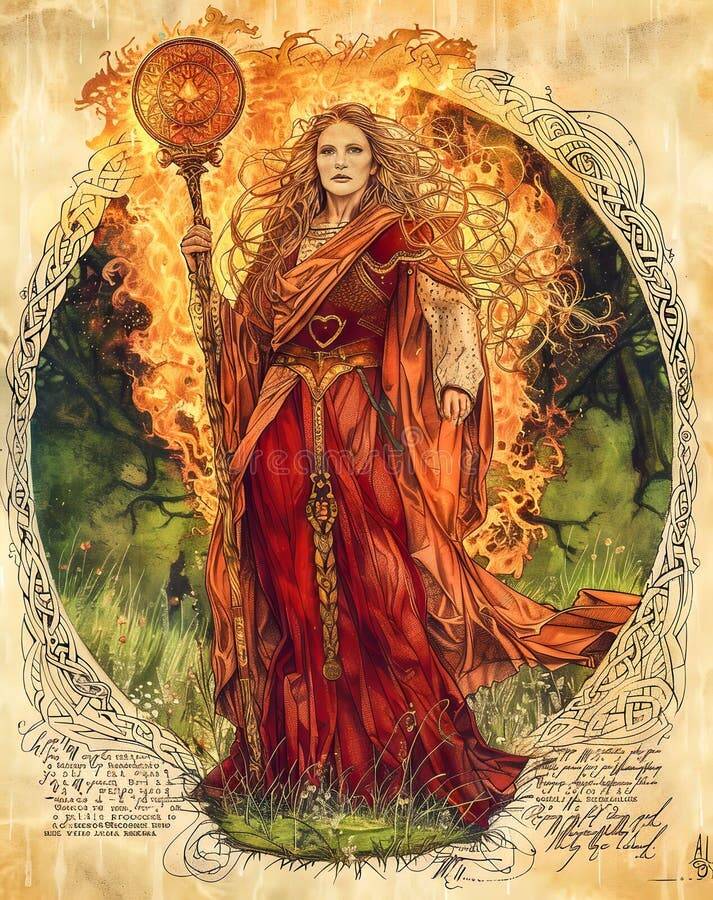
Goddess Brigid Correspondences
- Element: Fire and Water.
- Food: Milk and water.
- Plants: Dandelion, snowdrop, crocus, trillium, acorns and oak tree, corn, oat, sage, pumpkin. seeds, chamomile, broom, shamrock, rushes, straw, and all field flowers.
- Herbs: Heather, rosemary, thyme, and bay.
- Animals: Lambs and ewes, dairy cows, serpents, farm animals, and domesticated creatures.
- Gems: Gold, brass, silver, carnelian, agate, copper, amethyst, jasper, and fire agate.
- Colors: Green, white, yellow, and blue.
- Planet: Venus.
Goddess Persephone
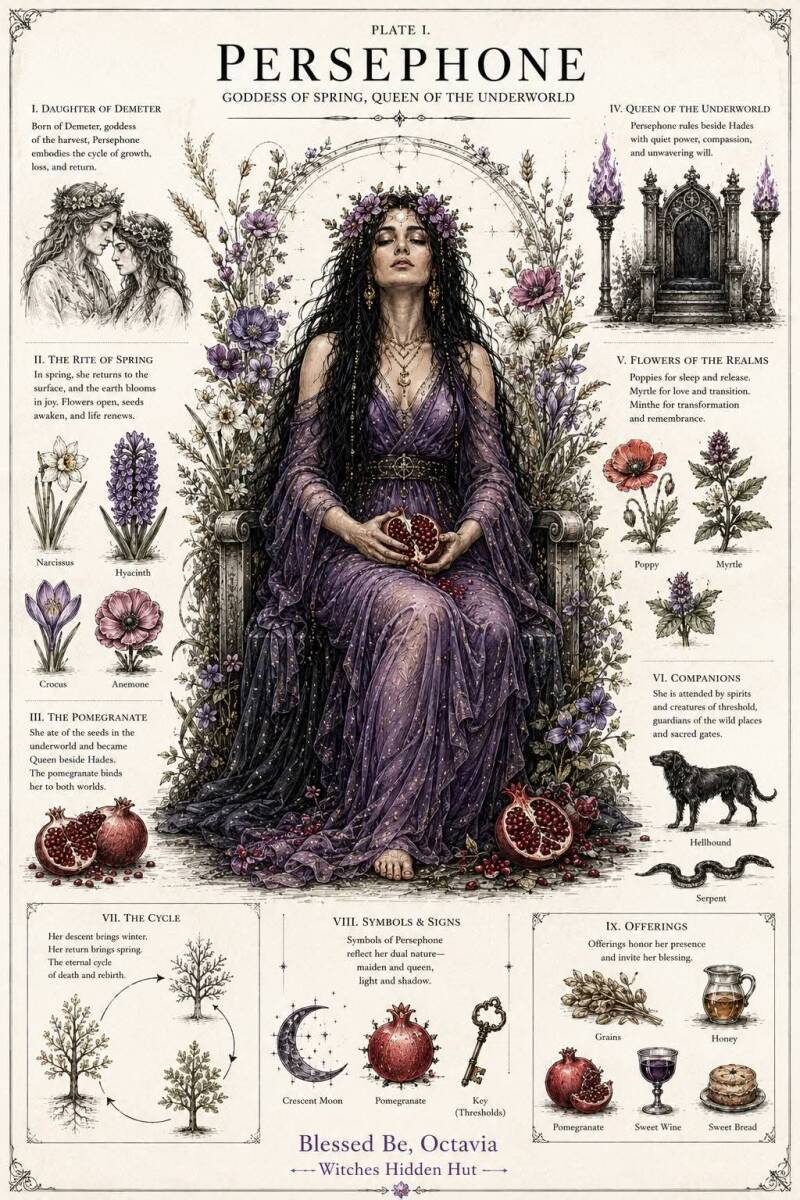
Persephone is the Greek goddess of spring and queen of the underworld, embodying the cycle of life, death, and rebirth.
Mythology and Origins
Persephone, also called Kore (“the Maiden”), is the daughter of Zeus and Demeter, the goddess of agriculture and harvest. She became the queen of the underworld after being abducted by her uncle and later husband, Hades. Her story explains the changing seasons: when Persephone descends to the underworld, the earth experiences winter, and her return brings spring and the renewal of vegetation. Her name may derive from ancient words meaning “thresher of grains,” reflecting her agricultural role.
The Morrigan

The Morrigan is a powerful Celtic goddess of war, fate, and sovereignty, often depicted as a shapeshifter and a prophetic figure who influences the destiny of warriors and kingdoms.
Overview
The Morrigan, sometimes called Mórrígan, is a central figure in Irish mythology, particularly within the Ulster Cycle and the Mythological Cycle. She is a member of the Tuatha Dé Danann, a supernatural race, and is often portrayed as a triple goddess, alongside Badb and Macha, with some accounts including Nemain or Anand as part of the triad. This triple aspect symbolizes the mystical power of three, a motif deeply revered in Celtic tradition, and reflects her roles in life, death, and the land itself.
Goddess Diana

Diana is the Roman goddess of the hunt, the moon, and nature, often associated with wildlife, chastity, and protection of women.
Origins and Identity
Diana is a central figure in Roman mythology, revered as a virginal huntress and a protector of the natural world. She is often considered the Roman counterpart to the Greek goddess Artemis, sharing many attributes, myths, and symbols . Diana was also associated with the moon and was sometimes identified with the lunar goddess Luna, highlighting her celestial aspects
Goddess Nyx
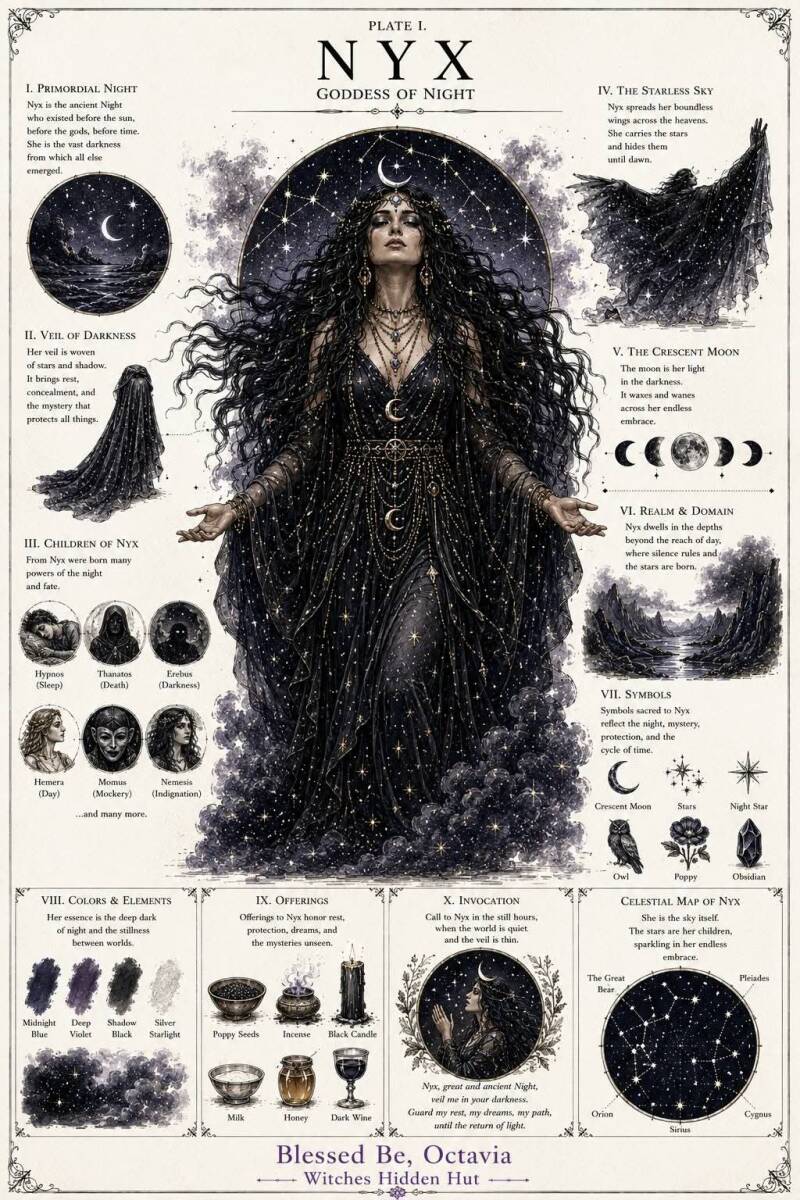
Goddess of night
Nyx is the goddess of night in Greek mythology, representing darkness, mystery, and the profound aspects of the night. She is a primordial deity, feared even by Zeus, and is known for her immense power and influence over various aspects of life, including sleep and dreams. Nyx is often depicted as a black-robed goddess who drives through the sky in a chariot pulled by horses. Her offspring include various personifications of negative and neutral forces, such as sleep and death. Nyx's significance in mythology highlights her as a fundamental aspect of the universe, preceding both the Titans and the Olympians.
Goddess Èriu

Ériu is the eponymous goddess of Ireland, embodying the land, sovereignty, and prosperity of the island itself.
Mythological Background
Ériu, pronounced “AIR-yoo,” is a central figure in Irish mythology and a member of the Tuatha Dé Danann, the supernatural race of deities, heroes, and scholars in Celtic lore. She is one of three sister goddesses—alongside Banba and Fódla—who collectively represent the spirit and mystical life force of Ireland. While all three sisters are significant, Ériu’s name was chosen by the Milesians, the mortal invaders in the Lebor Gabála Érenn (The Book of Invasions), to represent the land, cementing her primacy as the personification of Ireland.
Role and Symbolism
Ériu is primarily associated with sovereignty, fertility, and the land itself. She embodies the sacred connection between the people and the island, ensuring that rulers who acknowledge her authority gain legitimacy to govern. Her presence is not confined to mythological stories alone; she is a living symbol of Ireland, reflected in its landscapes, hills, rivers, and sacred sites. Ériu’s influence extends to prosperity and renewal, representing the cycles of nature that sustain life.
Goddess Freya

Freya’s favorite offerings
- Amber, gold jewelry, and coins
- Mead or sweet wines
- Roses, especially red and pink
- Honey and cream
- Artistic creations: poetry, embroidery, music
- Candles in gold or rose tones
Freya’s symbols?
- Cats and lynxes
- The falcon cloak
- Amber and gold
- The boar (Hildisvíni)
- Roses and bees
- The Brísingamen necklace (her treasured magical jewelry)
Goddess Frigg
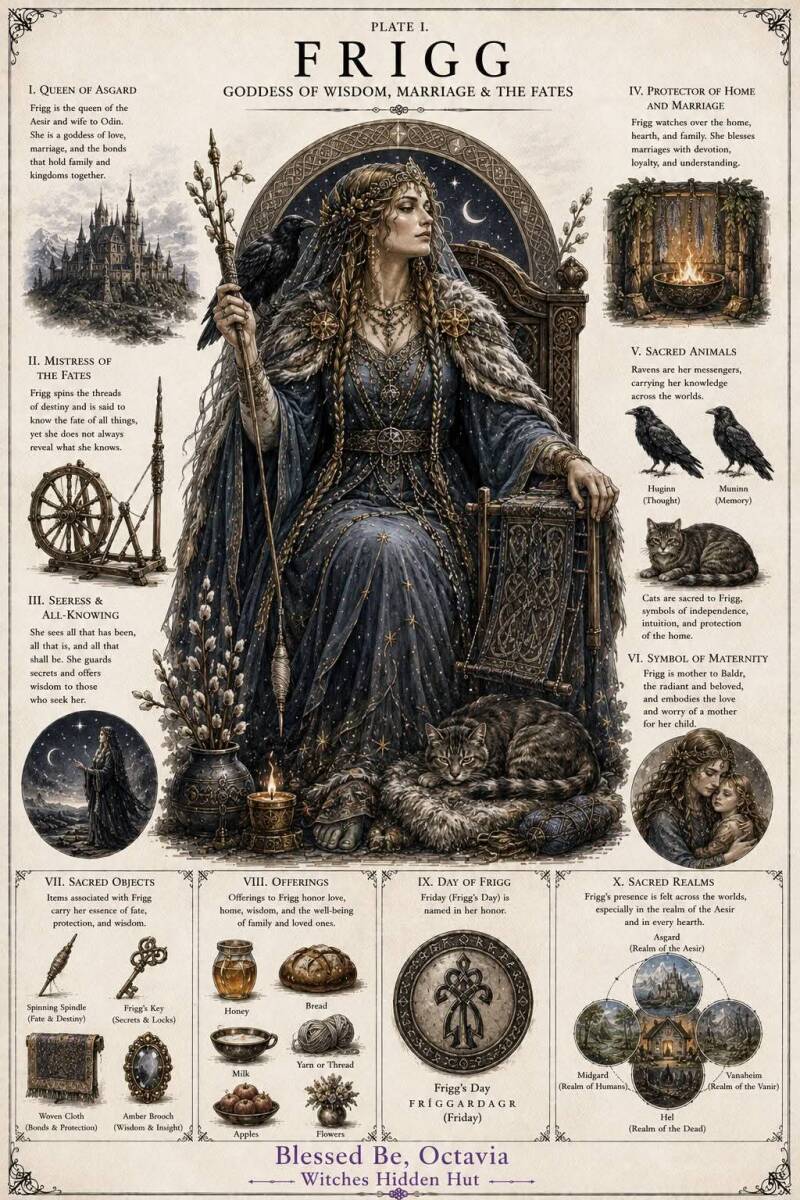
Frigg is the Norse goddess of marriage, motherhood, and prophecy, and the wife of Odin, revered as the highest-ranking female deity among the Aesir.
Frigg, sometimes spelled Frigga, is a central figure in Norse mythology, known as the queen of the Aesir gods and the wife of Odin, the chief god. She is primarily associated with marriage, fertility, motherhood, and foresight, and is considered a powerful seeress capable of discerning the fates of all beings. Her name is linked to the Proto-Germanic Frijjō, meaning "beloved" or "free," and the English weekday Friday is named after her.
Goddess Lilith.
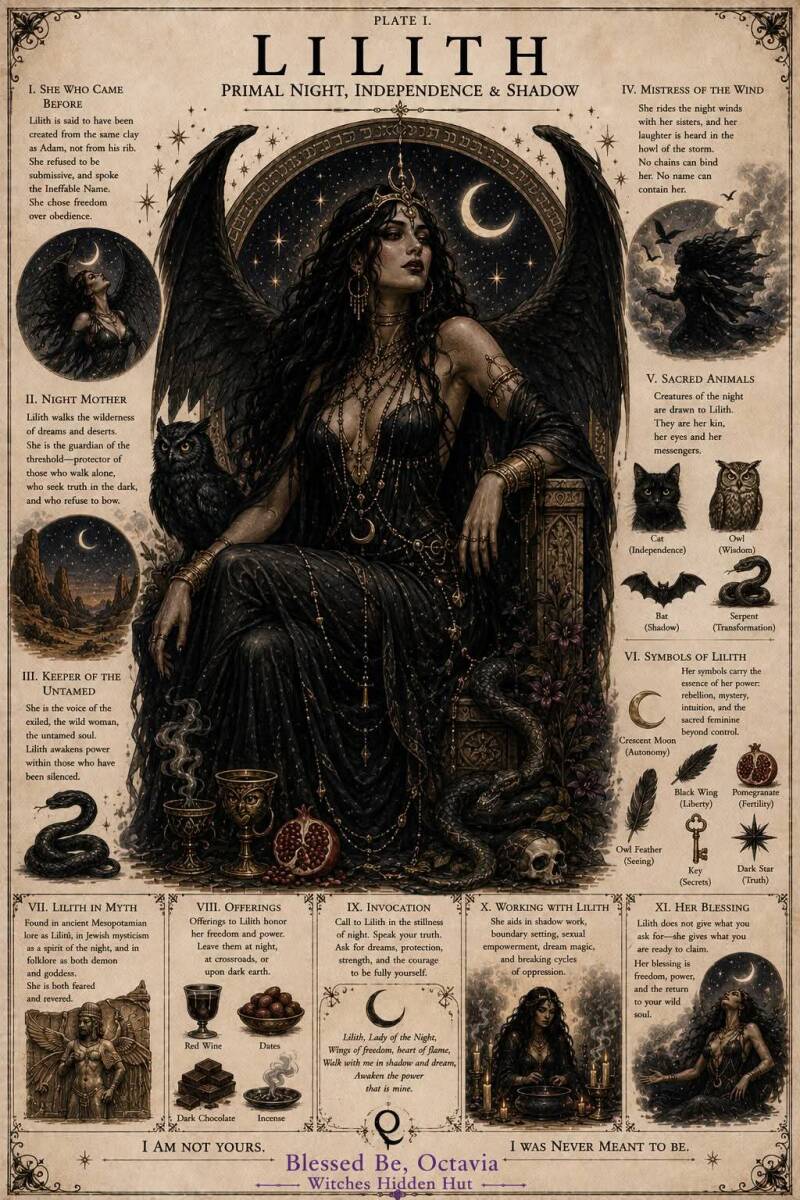
Lilith is a complex mythological figure, regarded as both a demon and a goddess, symbolizing independence, feminine power, and rebellion against patriarchal norms.
Origins and Mythology
Lilith's roots trace back to ancient Mesopotamian mythology, where she appears as a winged night demon associated with storms, wind, and the night, often preying on infants and pregnant women. Her name derives from the Akkadian word lilītu, meaning "female demon" or "night spirit," and in Hebrew, Lilith (לִילִית) is linked to laylah, meaning "night". In Jewish folklore, particularly in the medieval text The Alphabet of Ben Sira, Lilith is described as Adam's first wife, created from the same earth as him. Unlike Eve, she refused to be subservient, asserting equality and autonomy, which led to her departure from the Garden of Eden.
Goddess Quan Yin

Correspondences of Goddess Quan Yin
Use these correspondences for devotional rituals, spells, offerings, and meditation practices.
Element:
Water (healing, purification)
Air (prayer, compassion)
Colors:
- White
- Pastel pink
- Soft green
- Pale blue
- Gold
Crystals:
- Rose quartz (self-love)
- Jade (prosperity & health)
- Moonstone (emotional balance)
- Selenite (purification)
- Amethyst (spiritual healing)
Animals:
- White dragon
- Phoenix
- Doves
- Fish
- Cats
Offerings:
- Fresh flowers
- Clean water
- White candles
- Simple prayers
- Acts of compassion
- Soft music
- Incense (jasmine, sandalwood
Herbs & Flowers:
- Lotus
- Jasmine
- Peony
- Lavender
- Sandalwood
- White tea
Symbols:
- Lotus flower
- Vase of healing water
- Willow branch
- White robes
- Compassionate gaze
- Thousand arms (aid to all)
Goddess Circe
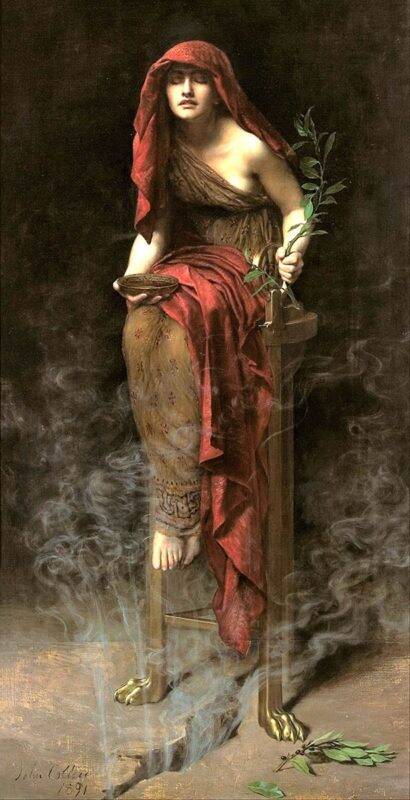
Correspondences of Goddess Circe
Element:
Water (emotion and intuition) & Fire (magic and transformation)
Colors:
Deep purple, gold, midnight blue, crimson
Crystals:
Amethyst, labradorite, obsidian, moonstone, smoky quartz
Herbs & Plants:
Mugwort, mandrake, rosemary, bay leaf, sage, hemlock (symbolically), lavender
Symbols:
Wand, cup, herb bundle, loom, animals, cauldron
Animals:
Lions, wolves, pigs, hawks, serpents
Offerings:
Wine, honey, herbs, incense, bread, dried flowers, spells written with intention
Goddess Nuit

Nuit is the Egyptian sky goddess and cosmic mother, representing infinite space, stars, and the cycle of creation and renewal
Origins and Mythology
Nuit, also spelled Nut or Nu, is the ancient Egyptian goddess of the sky, daughter of Shu (air) and Tefnut (moisture), and sister and wife of Geb, the earth god. She is often depicted as a naked woman arched over the earth, her body adorned with stars, symbolizing the night sky. In Egyptian mythology, she swallows the sun each evening and gives birth to it each morning, embodying the cycle of death and rebirth. She is also the mother of Osiris, Isis, Set, and Nephthys, born during the five epagomenal days added to the Egyptian calendar.
Goddess Kali

.
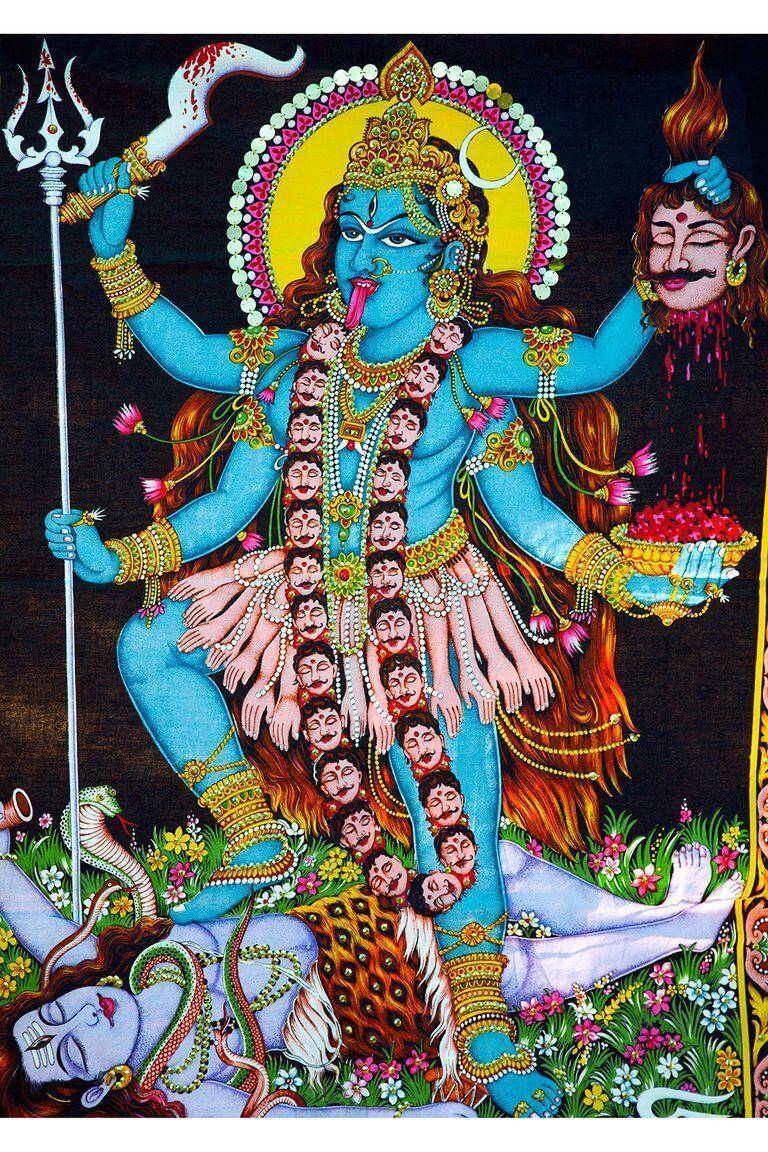
Goddess Kali is a significant deity in Hinduism, often associated with destruction, renewal, and the transformative power of time. She is an incarnation of Goddess Parvati and is revered primarily in Shaktism, where she is considered the Supreme God. Kali is depicted with multiple arms, a garland of skulls, and a protruding tongue, symbolizing her omnipotence and the destruction of ego. She is known for her fierce nature, having emerged to defeat demons like Rakthabija and Mahishasura. Despite her terrifying appearance, she embodies the protective aspects of motherhood, representing the duality of creation and destruction. Her worship is particularly popular in regions like West Bengal, Assam, and Odisha
Goddess Aphrodite

Painting by Herbert James Draper,
"The Pearls of Aphrodite"1907
Who is Aphrodite?
In Greek mythology, she was a presence that aroused reverence because she caused mortals and gods to fall in love and conceive a new life: she represented passion, she was irresistible, the erotic attraction, the strong sexual instinct that she first lived naturally in the present. It inspired poetry, persuasive words and represented the power of transformation and the creation of love.
What are Aphrodite’s favorite offerings?
In ancient times, animals were sacrificed in the name of Aphrodite, especially those animals considered sacred to her like doves, sea urchins, tortoises and more. Their sacrifice was used to cleanse and purify temples with their blood but then this practice was abandoned. You can go for other offerings to honor Aphrodite in an easy but also cruelty-free way!
You can offer:
- Sea water (as she was born there)
- Sea salt (as it’s linked to the sea)
- A rose (the symbol of love)
- A pink quartz (all about feminine energy and love)
- A shell (as that was her very first home, like the womb of a mother)
- A beauty or love sigil or a sigil dedicated to her
- An image of those animals sacred to her
Goddess Hecate

HEKATE (Hecate) was the goddess of magic, witchcraft, the night, moon, ghosts and necromancy. She was the only child of the Titanes Perses and Asteria from whom she received her power over heaven, earth, and sea.
Hekate assisted Demeter in her search for Persephone, guiding her through the night with flaming torches. After the mother-daughter reunion became she Persephone's minister and companion in Haides.
Three metamorphosis myths describe the origins of her animal familiars: the black she-dog and the polecat (a mustelid house pet kept by the ancients to hunt vermin). The dog was the Trojan Queen Hekabe (Hecuba) who leapt into the sea after the fall of Troy and was transformed by the goddess. The polecat was either the witch Gale, turned as punishment for her incontinence, or Galinthias, midwife of Alkmene (Alcmena), who was transformed by the enraged goddess Eileithyia but adopted by the sympathetic Hekate.
Goddess Oya

Element:
Wind, Storm, Fire
Colors:
Maroon, purple, deep red, earth tones, black, and storm-gray.
Crystals:
Garnet, amethyst, smoky quartz, obsidian, carnelian, hematite.
Herbs & Plants:
Cinnamon, hibiscus, rosemary, allspice, peppers, palm leaves, yams, purple basil.
Symbols:
Wind, tornado, lightning, machete, buffalo horn, marketplace items, the cemetery gate.
Animals:
Buffalo, horses, blackbirds, vultures, owls, windswept animals.
Offerings:
Red wine, plums, eggplant, dark grapes, spicy foods, copper items, fresh air, movement, dance.
Some goddesses bring comfort.
Some bring serenity.
Some bring warmth and gentle wisdom.
But Oya?
Oya brings storms.
She brings the winds that uproot the old life.
She brings the lightning that cracks the sky open.
She brings the power that forces change long overdue.
She is the goddess who appears when a woman is standing at the edge of transformation — tired of pretending, tired of shrinking, tired of carrying what is not hers. Oya arrives when something must shift, when something must end, when the next chapter cannot begin until the old one is burned to ash.
Oya is not destruction for destruction’s sake.
She is the necessary storm.
The cyclone that clears the path.
The wind that blows open doors you were too afraid to touch.
The fire that transforms the world and your place in it.
She is the Yoruba Orisha of storms, change, truth, death, renewal, marketplace, winds, and personal sovereignty. She rules the cemetery gates — not as a goddess of death itself, but as a guardian who understands the most sacred truth:
Before anything can be reborn, it must be released.
Oya is the goddess of endings, transitions, courage, and transformation. She is the one who says:
“Let it fall apart.
Let what is meant to leave, leave.
Your next life begins where your fear ends
Oya is the patron of women who:
- walk away
- stand up
- speak loudly
- rebuild themselves
- end cycles
- initiate change
- survive storms
- reinvent their lives
She is a goddess for the brave — and also for the woman who does not feel brave yet, but is ready to become so.
Goddess Medusa

Offerings For Medusa
- Seashells or coral
- Hag stones
- Depictions of serpents or snake figurines
- Petrified wood
- Sand dollars or starfish
- Beach sand
- Silver
- Snakeskin that has been naturally shed
- Aquamarine, malachite, or moonstone
- Pearls
- Seawater or sea salt
- Cool water incense
- Seafood
- Wine
Symbols Of Medusa
- Snakes, particularly two intertwined
- Silver and green
- Eyes
- The Aegis: an image of Medusa’s head adorning Athena’s shield
- “Divine eyes” – or Gorgon eyes, sometimes drawn as concentric circles or spirals.
- Medusa herself is a symbol of feminism and divine femininity
Goddess Asherah

Correspondences of Goddess Asherah
Element:
Earth (primary)
Water (secondary)
Colors:
- Green
- Brown
- Deep blue
- Gold
- Terracotta
Crystals:
- Moss agate
- Jade
- Tree agate
- Malachite
- Aventurine
- Petrified wood
Herbs & Plants:
- Olive
- Cedar
- Date palm
- Fig
- Willow
- Pomegranate
- Rose
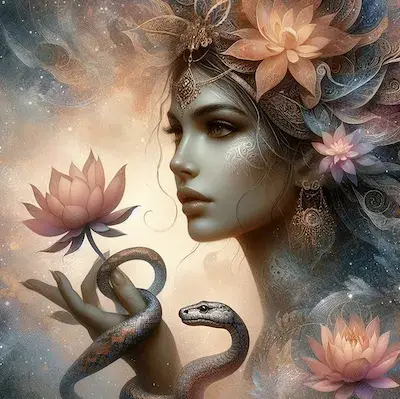

Symbols:
- Sacred tree
- Wooden pole
- Lioness
- Two pillars
- Crescent moon
Animals:
- Lions
- Cows
- Doves
- Goats
Offerings:
- Bread or cakes
- Olive oil
- Wine
- Pomegranates
- Flowers
- Water poured at the base of a tree
Asherah is not a goddess of thunder or fire.
She empowers through steadiness.
She teaches:
You do not have to rush.
You do not have to shrink.
You do not have to earn rest.
You do not have to apologize.
You do not have to disappear to be loved.
She wants you nourished.
She wants you grounded.
She wants you sovereign.
She wants you whole.
Her story mirrors the story of women who were forgotten, dismissed, or erased — yet who continued to grow in secret, waiting for the right moment to rise again.
That moment is now.
Asherah stands beside you like a great tree, reminding you:
“Even if they tried to cut you down,
your roots were always deeper than their fear.”
You are not small.
You are not lost.
You are not broken.
You are a woman rediscovering herself—
rooted, rising, unstoppable.
And Asherah walks with you.
Goddess Isis

Correspondences of Goddess Isis
Isis is known for:
- her unparalleled magical abilities
- her deep compassion
- her devotion to love
- her relentless strength
- her intelligence and cunning
- her healing skills
- her power over life and death
She is a goddess who does not simply influence the world — she reshapes it.
Element:
Water (healing)
Air (magic)
Goddess Artemis
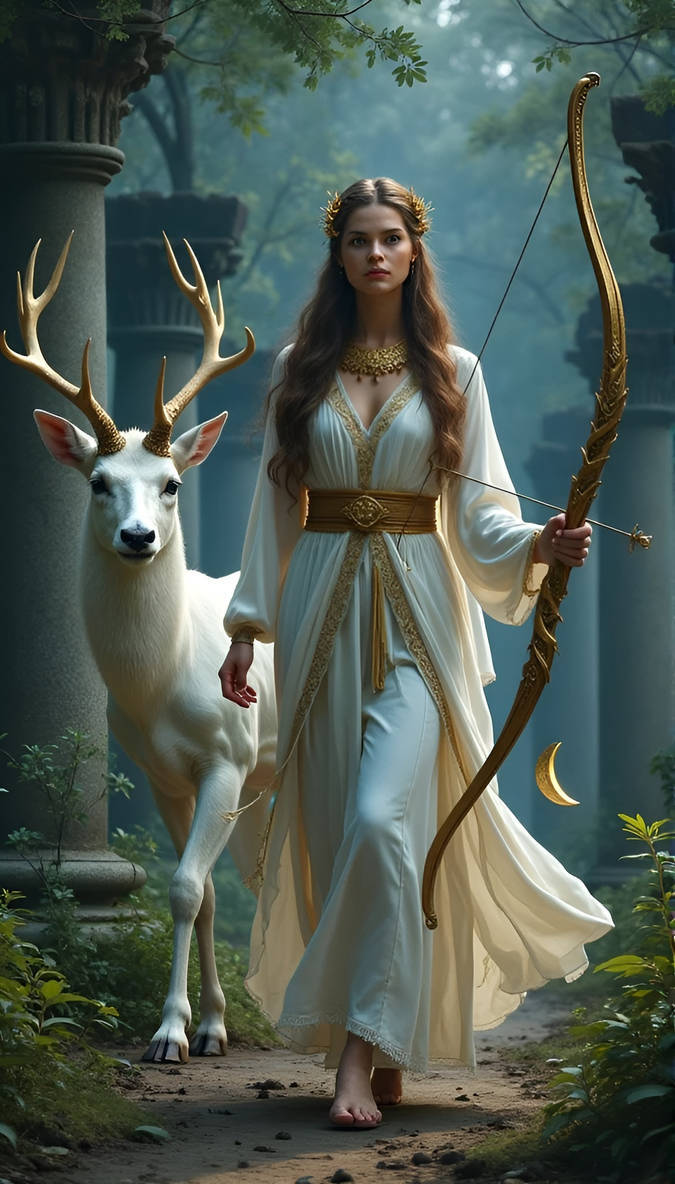
Correspondences of Artemis
Artemis’s energy is lunar, forested, quiet, and fierce. She is associated with the crescent moon, silver light, pine forests, mountains, and wild animals who know how to survive without being tamed.
Her colors are the silver-white of moonlight, the green of deep woods, the earthy brown of bark, and the cool blue of midnight sky. Crystals that resonate with her include moonstone, smoky quartz, clear quartz, labradorite, and aventurine — stones that sharpen intuition, protect energy, and ground the spirit.
Her plants are those that thrive on mountainsides and forest floors: cypress, mugwort, pine, juniper, lavender, and wild herbs touched by moonlight. Her animals are deer with watchful eyes, wolves who travel in loyalty and strength, bears who embody protective femininity, and owls who see what others cannot.
To honor Artemis is to honor wilderness — the wilderness within you and the wilderness around you.
Goddess Eos
.

Eos is the Greek goddess and personification of the dawn, heralding each new day with her radiant presence..
Eos, daughter of the Titans Hyperion and Theia, is the sister of Helios, the sun god, and Selene, the moon goddess, forming a celestial trio that governs the daily cycle of light and night. She rises each morning from her home at the edge of the river Oceanus, driving a chariot drawn by her winged horses, Lampus and Phaëthon, to scatter the first light across the earth. Her most famous epithets, Rhododactylos ("rosy-fingered") and Erigeneia ("early-born"), reflect the soft hues of dawn and her role as the herald of the sun.
Appearance and Symbolism
Eosis often depicted as a beautiful woman with wings, a flowing gown, and a diadem or tiara, sometimes scattering flowers or dew to symbolize the freshness of morning. She embodies hope, renewal, and the promise of a new beginning, representing the transition from night to day and the cyclical rhythm of life.
Goddess Gaia

Animals:
- Snakes
- Cows
- Bees
- Wolves
- Deer
- Turtles
Offerings:
- Fresh water
- Seeds
- Flowers
- Herbs
- Bread
- Eco-conscious acts
- Giving back to nature
Correspondences of Goddess Gaia
Element:
Earth (primary)
All elements (secondary, as she embodies everything)
Colors:
- Green
- Brown
- Deep blue
- Gold
- Earth tones
Crystals:
- Moss agate
- Malachite
- Jasper
- Obsidian
- Smoky quartz
- Aventurine
- Petrified wood
Herbs & Plants:
- Oak
- Willow
- Sage
- Lavender
- Rosemary
- Ivy
- Patchouli
- Cedar
Symbols:
- Spiral
- Mountains
- Trees
- Rivers
- Stones
- The globe
- Seeds
Goddess Tyche

Tyche was the Greek goddess of luck, chance, and the fortune of cities, embodying both prosperity and misfortune.
Overview
Tyche (Ancient Greek: Τύχη, meaning "fortune" or "luck") was revered as the deity governing the fate and prosperity of individuals and entire cities. Unlike Olympian gods who controlled natural or moral order, Tyche influenced the unpredictable aspects of life, such as sudden success, failure, or disasters. She became especially prominent during the Hellenistic period, reflecting the era's social and political uncertainties, where people attributed events beyond human control—like floods, wars, or political upheavals—to her will.
Goddess Demeter

Demeter is the Greek goddess of agriculture, grain, fertility, and the cycle of life and death, best known for her role as the mother of Persephone and her influence on the seasons.
Origins and Family
Demeter is the daughter of the Titans Cronus and Rhea, making her the sister of Hestia, Hera, Hades, Poseidon, and Zeus. Like her siblings (except Zeus), she was swallowed by Cronus at birth and later rescued. She became the mother of Persephone, a central figure in Greek mythology, through Zeus. Other children include Ploutos, Philomelus, Despoena, and Arion, fathered by both gods and mortals such as Iasion and Poseidon.
Goddess Pavarti
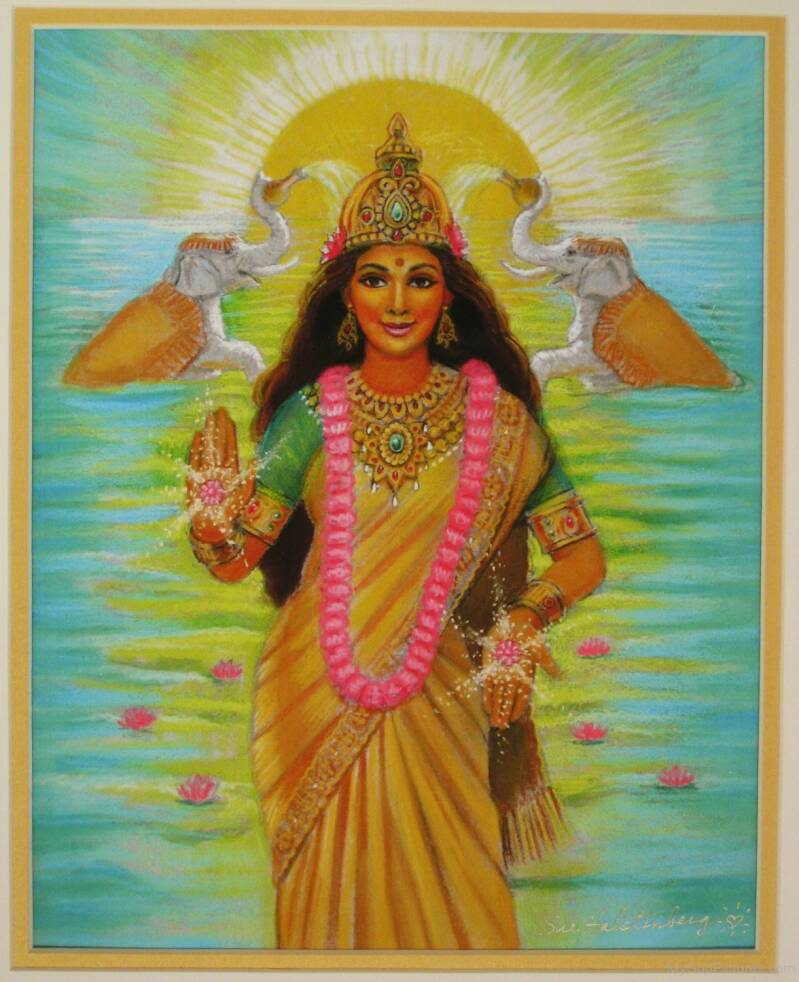
Parvati is the Hindu goddess of love, devotion, motherhood, and divine power, and the consort of Shiva.
Parvati, also known as Uma, Gauri, Shakti, Durga, and Kali, is one of the principal goddesses in Hinduism, revered for her nurturing, creative, and protective qualities (Wikipedia; Britannica). She is the daughter of Himavan, the personification of the Himalaya Mountains, and his wife Mena, earning her the epithet “Daughter of the Mountain” (Her name derives from the Sanskrit word3 parvata, meaning mountain, reflecting her origin and connection to nature.
Forms and Attributes
Parvati manifests in multiple forms, ranging from gentle and nurturing to fierce and protective. As Durga and Kali, she embodies warrior and destructive aspects, protecting the righteous and destroying evil (WorldHistoryEdu). As Annapurna, she provides nourishment and abundance, while as Kamakshi, she is associated with love and desire (Wikipedia). She is often depicted with a parrot, crescent moon, or in the company of Shiva, symbolizing her multifaceted nature and cosmic significance
Goddess Kali Ma
Animals:
- Lions
- Tigers
- Snakes
- Crows
- Jackals
Offerings:
- Fire or candles
- Red flowers
- Spices
- Honest emotion
- Courageous action
- Drumming or ecstatic dance
Correspondences of Goddess Kali
Element:
Fire (transformation)
Air (truth)
Colors:
- Black
- Red
- Dark blue
- Gold
Crystals:
- Obsidian
- Black tourmaline
- Garnet
- Ruby
- Bloodstone
- Hematite
- Smoky quartz
Herbs & Plants:
- Hibiscus
- Red rose
- Pomegranate peel
- Black pepper
- Cloves
- Bay leaf
Symbols:
- Sword
- Flames
- Severed head
- Tongue
- Skull necklace
- Crescent moon
- The void
Mother Mary – Mari of Basque

Animals:
Horses
Eagles
Crows
Wolves
Serpents
Offerings:
Spring water
Bread
Local fruits or grains
Handmade items
Written commitments to truth or integrity
Mari is the supreme goddess of Basque mythology — a powerful Earth Mother associated with mountains, storms, weather, justice, fertility, and spiritual authority.
Correspondences of Mari (Basque Mother Goddess)
Element:
Earth (primary), Storm (secondary), Lightning (truth)
Colors:
Deep green, brown, black, gold, storm-grey, fiery red
Crystals:
Obsidian
Hematite
Smoky quartz
Carnelian
Moss agate
Herbs & Plants:
Oak
Heather
Mugwort
Rosemary
Thyme
Sage
Symbols:
Mountains
Caves
Lightning
Storm clouds
Shepherd’s staff
Fire in the sky
Goddess Oshun
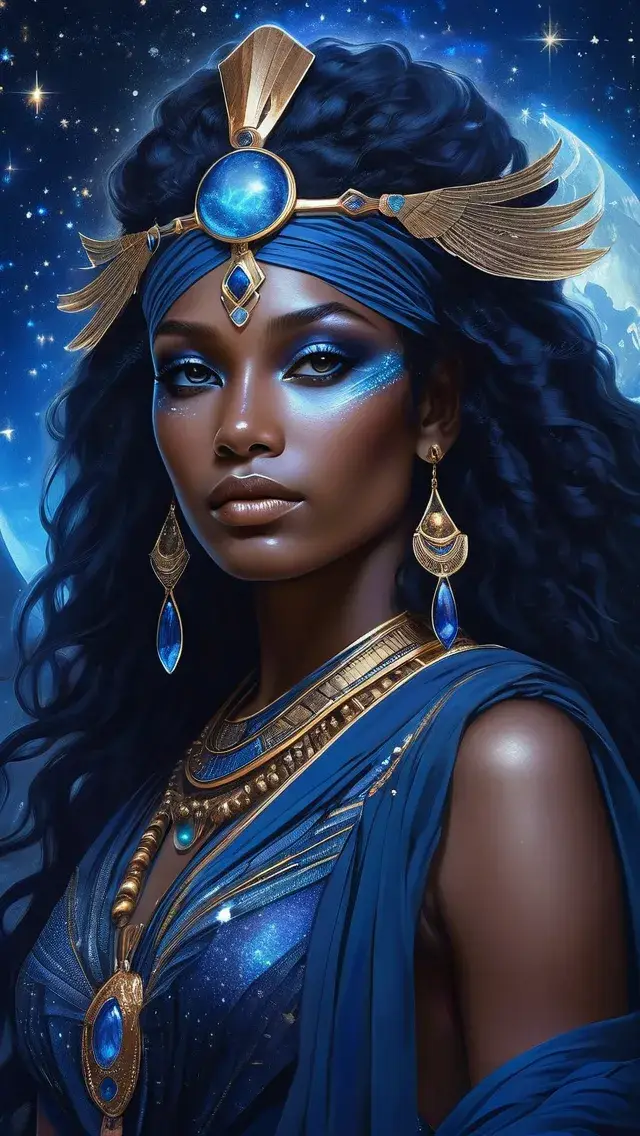
Correspondences of Oshun
Element:
Water (rivers, flow, emotions)
Colors:
Gold, yellow, amber, copper, orange
Crystals:
Citrine, amber, carnelian, honey calcite, rose quartz
Herbs & Offerings:
Honey, cinnamon, oranges, basil, hibiscus, champagne, sunflowers
Symbols:
Rivers, mirrors, fans, honey pots, gold jewelry, peacocks, vulture
Animals:
Peacock, vulture, river fish, deer
Plants & Flowers:
Sunflowers, marigolds, roses, cinnamon bark, orange blossoms
Goddess Erzulie
Animals:
Doves, snakes, black roosters (Dantor), cats
Offerings:
Perfume, flowers, jewelry, sweets, candles, champagne, spicy foods, heartfelt songs or prayers
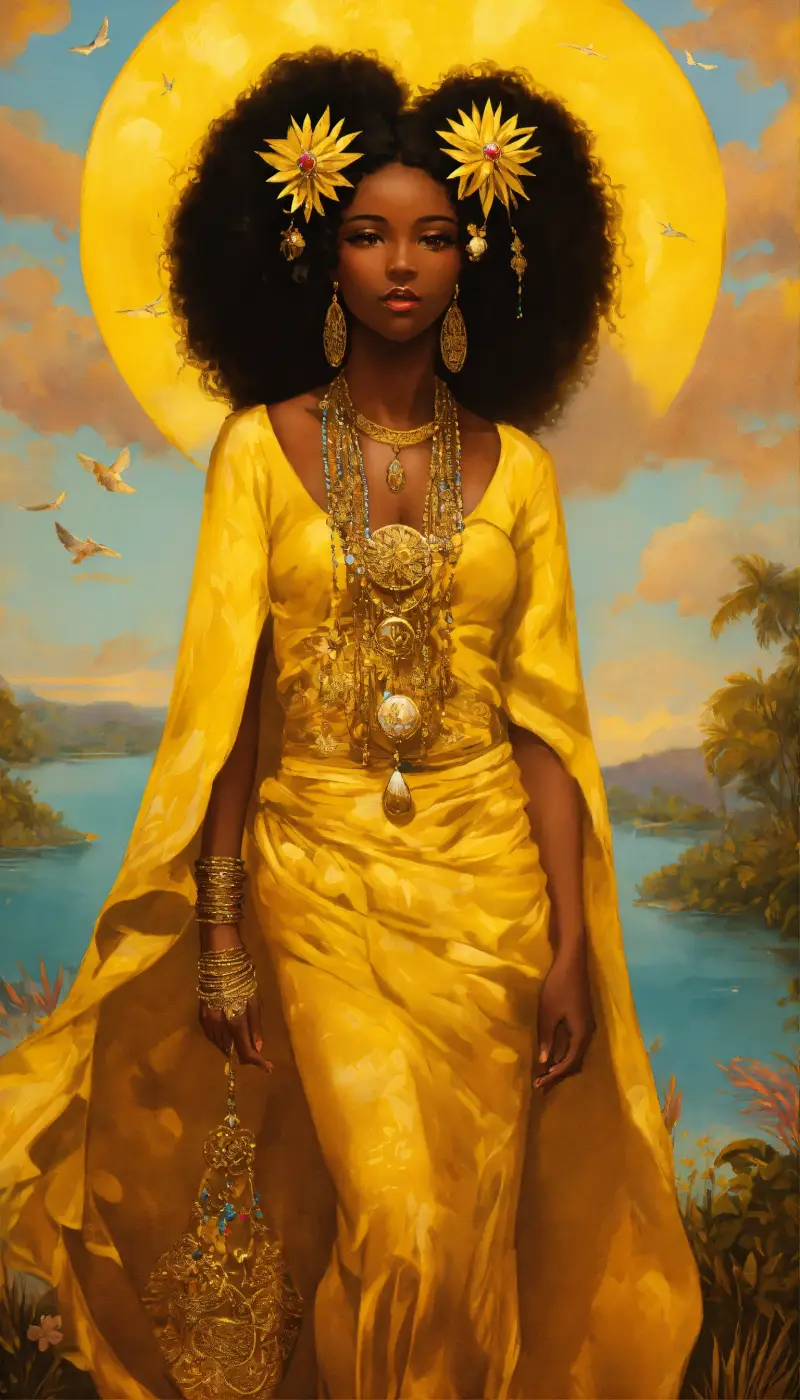
She is beauty, desire, sensuality, emotional truth, compassion, luxury, passion, justice, and unapologetic longing. She is the woman who knows her worth, the lover who demands authenticity, the mother who nurtures fiercely, the queen who accepts only what honors her spirit.
In Haitian Vodou, she is not simply a goddess —
she is a lwa, a powerful spirit who actively walks with those who honor her. She is beloved, respected, feared, adored. Her presence fills entire rooms with warmth, perfume, emotion, and brilliance.
Correspondences of Erzulie
Element:
Water (emotion)
Fire (passion and protection)
Colors:
Pink, gold, red, deep blue, black (for Dantor)
Crystals:
Rose quartz, garnet, pink tourmaline, carnelian, pyrite, obsidian
Herbs & Botanicals:
Roses, cinnamon, hibiscus, basil, honey, vanilla
Symbols:
Hearts, mirrors, knives (Dantor), dolls, jewelry, perfume, silk, river water
Goddess Dahu

Correspondences of Goddess Dahut
Use these correspondences for spells, rituals, or altars dedicated to her.
Element:
Water (primary) — intuition, emotion, mystery, cleansing
Moon (secondary) — cycles, femininity, shifting tides
Colors:
- Deep teal
- Ocean blue
- Silver
- Aquamarine
- Pearl white
- Midnight blue
Herbs/Plants:
- Seaweed
- Jasmine
- Lotus
- Water mint
- Yarrow
- Salt (sacred cleanser)
Symbols:
- Seashells
- Keys
- Sea serpents
- Mermaids
- Seafoam
- Tidal gates
- Waves and storms
- Pearls
- Moons reflected on water
Animals:
- Seals
- Dolphins
- Crabs
- Sea snakes
- Seahorses
- Orcas
- Seabirds
Offerings:
- A key (symbolic of sovereignty returned)
- Shells or sea glass
- Saltwater
- A handwritten affirmation of freedom
- Music sung near water
- Blue or silver candles
- Fresh flowers released into the sea
Crystals:
- Aquamarine — ocean attunement, emotional flow
- Moonstone — feminine intuition
- Pearl — reclaimed worth, inner beauty
- Larimar — peace, emotional healing
- Labradorite — shadow work, magic
- Blue calcite — calming emotional storms
Goddess Persephone
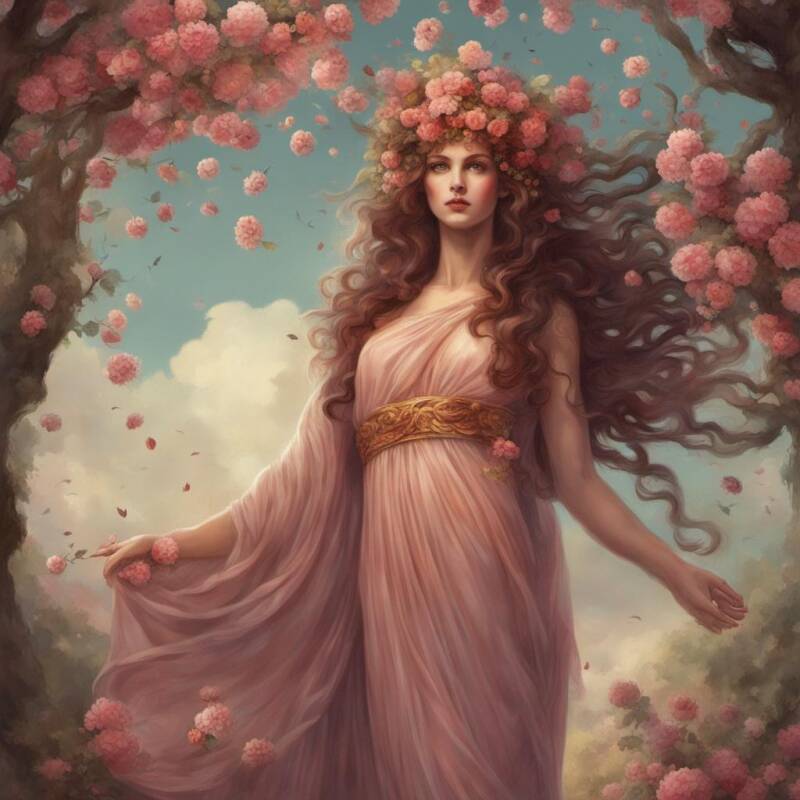
Persephone, Greek Goddess of Spring 1
by Raven Jovan on DeviantArt
Animals:
- Bats
- Butterflies
- Snakes
- Wolves
- Ravens
- Deer
Offering
- Fresh flowers
- Seeds
- Pomegranates
- Honey
- Dark chocolate
- Candles (black, white, or red)
- Journaling pages
- Poetry
- Personal vows of transformation
These correspondences can be used for altars, rituals, offerings, and spellwork.
Element:
Earth (roots, rebirth)
Water (emotion, intuition)
Colors:
- Black
- Deep red
- Pomegranate
- Spring green
- White
- Pink
- Gold (for transformation)
Crystals:
- Obsidian (shadow work, protection)
- Garnet (rebirth, grounding)
- Moonstone (intuition, feminine power)
- Rose quartz (inner healing)
- Amethyst (spiritual journey)
- Rhodonite (heart trauma healing)
Herbs & Plants:
- Pomegranate
- Mint
- Willow
- Rose
- Myrrh
- Lavender
- Narcissus
- Wheat
- Yew
Symbols:
- Pomegranate seeds
- Wheat sheaf
- Torches
- Flowers
- Keys
- The Underworld throne