Ostara Correspondence

Ostara: the spring equinox and new beginnings

As the earth awakens, so too do we. Join The Altered Goddess in celebrating Ostara, a time of rebirth, balance, and the vibrant energy of spring. Discover the ancient roots and modern practices of this beautiful sabbat.

Embracing the awakening earth

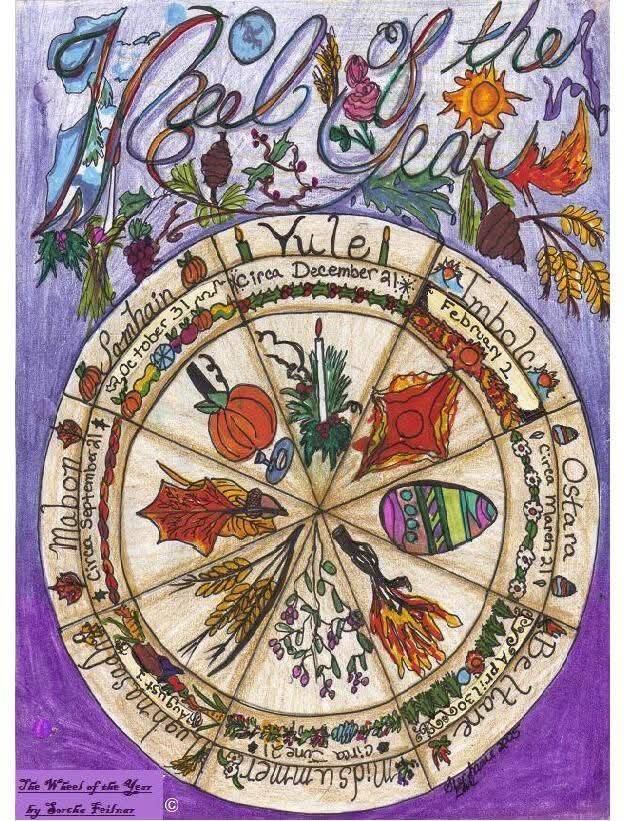
Ostara, also known as the Spring Equinox, marks a pivotal moment in the Wheel of the Year. It is when day and night stand in perfect balance, signaling the triumphant return of light over darkness and the fertile awakening of the earth. For The Altered Goddess, Ostara is a deeply personal celebration of hope, renewal, and the powerful magic of fresh starts. It's a reminder that even after the longest winter, life finds a way to blossom anew.

For seekers of ancient wisdom and modern magic

This page is crafted for anyone drawn to the rhythms of nature, the wisdom of pagan traditions, or simply seeking inspiration for personal growth and spiritual connection. Whether you are a seasoned practitioner of witchcraft, a curious newcomer to the Wheel of the Year, or someone looking to infuse their life with more intention and meaning, you will find a welcoming space here. If you are interested in folklore, seasonal rituals, or understanding the deeper symbolism behind nature's cycles, this exploration of Ostara is for you.

May you find balance and fertile ground

When you read about Ostara on The Altered Goddess blog, we hope you feel a profound sense of peace, renewal, and inspiration. We want you to take away the message that balance is not just an ideal, but a tangible state achievable both in nature and within ourselves. May you feel encouraged to plant seeds of intention for your own growth, celebrate the return of vital energy, and embrace the promise of new beginnings. Let this page be a gentle reminder of the magic inherent in the natural world and in your own spiritual journey.

OSTARA AND CORRESPONDENCES

The Ostara or the Spring//Vernal Equinox is sacred to sunrise, youth, the morning star, the element of air and the East. The Saxon Goddess, Eostre (Ostara) – from whose name we get “Easter” – and the Greek Goddess, Eos – from whose name we get the direction East – are dawn Goddesses. Just as dawn is the time of new light, so the Vernal Equinox is the time of new life. From this moment on, the Sun God begins his journey across the sky, his light and warmth overtaking the darkness of Winter, until his power peaks at the Summer Solstice in June.

Ostara Correspondences

(oh-star-ah) – Lesser Sabbat – Spring/Vernal Equinox, March 20-21st – when the Sun enters Ares

Other Names: Ostre, Oestre, Eostre, Rites of Spring, Eostra’s Day, Lady Day, First Day of Spring, Easter, St. Patrick’s Day, Alban Eiler, Bacchanalia, Mean Earraigh, Pasch, Caisg, Pess

Date: Spring Equinox March 19–23 in Northern Hemisphere.

Symbolism: The beginning of spring, new life and rebirth, the God and Goddess in Their youth, balance, fertility

Goddesses: all love, virgin, and fertility Goddesses; Anna Perenna (Roman), Aphrodite (Greek), Astarte (Canaanite, Persia, GrecoRoman), Athena (Greek), Cybele (Greco-Roman), Blodeuwedd, Eostre (Saxon Goddess of Fertility), Flidais (Irish), Gaia (Greek), Hera, Ishtar (Assyro-Babylonian), Isis (Egyptian), Libera (Roman), Minerva (Roman), The Muses (Greek), Persephone (Greek), Renpet (Egyptian), Venus (Roman), Ostara (the German Goddess of Fertility), Kore, Maiden, Isis, Youthful Goddesses. Faerie Queen, Lady of the Lake(Welsh-Cornish), the Green Goddess

Gods: all love, song & dance, and fertility Gods; Adonis (Greek), Attis (Greco-Roman), Cernunnos (Celtic), The Great Horned God (European), Liber (Roman), Mars (Roman), Mithras (Persian), Odin (Norse), Osiris (Egyptian), Thoth, Pan (Greek), the Green Man, Hare, Youthful Gods, Warrior Gods, Taliesin, Lord of the Greenwood (English), Dagda(Irish),Adonis (Greek)

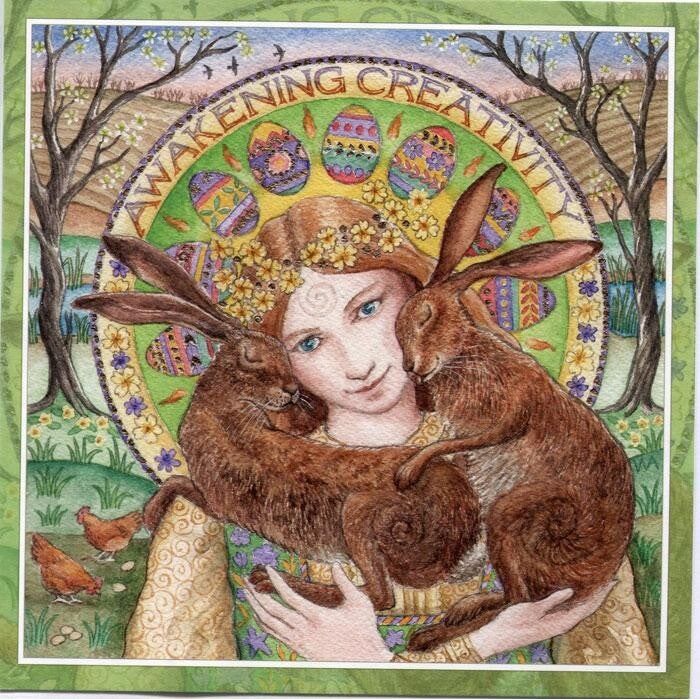
Symbols: Eggs, rabbits, similar to easter symbols.

Purpose: Plant and animal fertility, sowing

Meaning: The God comes of age, sexual union of the Lord & Lady, sprouting, greening, balance of light and dark

Essence: Strength, birthing, completion, power, love, sexuality, embodiment of spirit, fertility, opening, beginning

Customs: Wearing green, new clothes, celtic bird festival, egg baskets coloring eggs, collecting birds eggs, bird watching, egg hunts, starting new projects, spring planting

Foods: Hard-boiled eggs, honey cakes, fresh seasonal fruits, milk punch, leafy green vegetables, dairy foods, apples, nuts, flower dishes, sprouts, fish, maple sugar candies, hot cross buns, sweet breads, milk, punch, egg drinks

Plants & Herbs: Acorn, celandine, cinquefoil, crocus, daffodil, dogwood, Easter lily, Irish Moss, ginger, hyssop, linden, strawberry, gorse, honeysuckle, iris, jasmine, jonquils, narcissus, olive, peony, rose, tansy, violets, woodruff and all spring flowers

Incense and oils: African violet, jasmine, rose, strawberry, lotus, magnolia, ginger, sage lavender, narcissus, broom

Colors: Light green, lemon yellow, pale pink, pastels, gold, grass green, robin’s egg blue, lemon yellow.

Stones: Amethyst, aquamarine, rose quartz, moonstone, bloodstone, red jasper

Animals and Mythical Beasts: Rabbits/Easter bunny, snakes, pegasus, unicorns, chicks, swallows, merpeople

Decorations: Daffodils, tulips, violet, iris, narcissus, any spring flowers, eggs, butterflies, cocoons

Spell/Ritual Work: Garden/plant blessings, seed blessing, spellcrafting, balance, growth, communication, invention, new growth, new projects

Planetary Ruler: Mars

Element: Air

Gender: Male

Threshold: Dawn

Resources:

Cunningham’s Encyclopedia of Magical Herbs by Scott Cunningham

Circle Round: Raising Children in Goddess Tradition by Starhawk

My personal Book of Shadows

Naturally Dyed Eggs

Decorating eggs is one of Ostara’s most beloved traditions, symbolizing fertility and the promise of new life. Skip the chemical dyes and craft vibrant, all-natural colors from items in your kitchen.

What you’ll need:

  • Eggs (white eggs will give you the brightest results)

  • Large pots for boiling

  • Ingredients for natural dyes (see below)

  • White vinegar

Natural Dye Ingredients and Colors:

Red: Beetroot, pomegranate juice or hibiscus tea

Yellow: Turmeric or onion skins

Blue: Red cabbage leaves

Green: Spinach or parsley

Orange: Paprika or more onion skins

How to make the dyes:

  1. Place your chosen ingredient in a pot with 2–3 cups of water. The more material you use, the richer the color.

  2. Add 1–2 tablespoons of white vinegar to the pot to help set the dye.

  3. Bring the mixture to a boil, then simmer for 20–30 minutes. Strain the liquid into a bowl and let it cool.

  4. Submerge hard-boiled eggs in the cooled dye for at least 30 minutes—or leave them overnight in the fridge for deeper colors.

Pro tip: Wrap leaves, flowers or herbs around the eggs before dyeing and secure them with nylon stockings for a beautiful stenciled effect

Rituals: Mabon

SetupItems for this ritual include: Two brown or yellow candles for the altar; Chalice; A basket of apples; enough for the circle boundary (they need not touch each other); Three additional apples; A sharp knife to cut the apples; Several gourds; Blackberry wine or juice; A small bowl of hazelnuts; Vines (real or from a craft store) to decorate your altar (optional); Drum (optional).

Read more »

Rituals: Litha/ Summer Solstice

Whether you’re practicing alone or with your coven, Litha calls for something joyful, golden and alive. This isn’t the time for subtlety — it’s the sun’s main act. So light a flame, crown your head in flowers, and step into your strength. Midsummer has long been considered one of the most powerful times of the year for magic. 

Read more »

Rituals: Yule

Yule/Winter Solstice is celebrated December 19 - 23 for Northern Hemisphere and June 19 -23 for Southern Hemisphere. The Sun (in the Northern Hemisphere), at it's low time, the shortest day, longest night. A celebration known as Yule, Winter Solstice and even called Christmas. The cold and dark are celebrated as the Sun slowly begins to return.

Read more »