Lughnasdh/Lammas Correspondence
Also known as Lammas, or First Harvest, the name of this festival as Lughnasadh is Irish Gaelic for “Commemoration of Lugh”.
At Lughnasadh we see the fields of corn being cut, and for some this is the true time of the festival. In the fields John Barleycorn, who laid with the Lady in the woods at Beltane, has grown old, and now stands bent and bearded with a crooked cane. He looks to the Sun as he has changed from green to gold, and he known that his time has come. His life will feed the people, and it is this sacrifice that we honour at Lughnasadh.
(Loo-nas-ah) Major Sabbat (High Holiday) – Fire Festival August 1, 2
Other Names: Lunasa (meaning August), Lughnasaad, Lughnasa Celtic),First Harvest, August Eve, Feast of Cardenas, Feast of Bread, Tailltean Games(Irish), Teltain Cornucopia (Strega), Ceresalia (Ancient Roman) Harvest Home, Thingtide (Teutonic), Lammas (Christian). Laa Luanys, Elembious, Festival of Green Corn (Native American)
Animals and Mythical beings: Griffins, Basilisks, Roosters, Calves, Centaurs, Phoenix
Gemstones: aventurine, citrine, peridot, sardonyx, yellow diamonds, citrine
Incense and Oils: wood aloes, rose, rose hips, rosemary, chamomile, eucalyptus, safflower, corn, passionflower, frankincense, sandalwood
Colors: red, orange, golden yellow, green, light brown, gold, bronze, gray
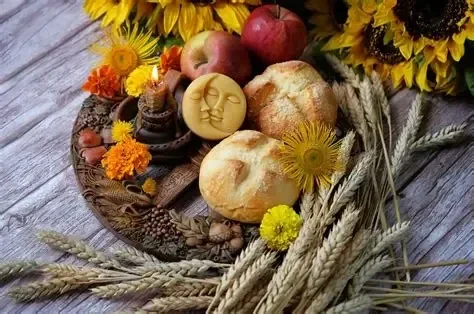
Tools, Symbols, and Decorations: corn, cornucopias, red, yellow flowers, sheaves of grain (wheat, barley, oats), first fruits/vegetables of garden labor, corn dollies, baskets of bread, spear, cauldron, sickle, scythe, threshing tools, sacred loaf of bread, harvested herbs, bonfires, bilberries, God figures made of bread or cookie dough, phallic symbols
Goddesses: The Mother, Dana (Lugh&’s wife & queen ), Tailltiu (Welsh-Scottish), Demeter (Greek), Ceres (Roman grain goddess .. honored at Ceresalia), the Barley Mother, Seelu (Cherokee), Corn Mother, Isis (Her birthday is celebrated about this time), Luna (Roman Moon Goddess), other agricultural Goddesses, the waxing Goddess
Gods: Lugh (Celtic, one of the Tuatha De Danaan), John Barley Corn, Arianrhod’s golden haired son Lleu (Welsh God of the Sun & Corn where corn includes all grains, not just maize), Dagon (Phoenician Grain God), Tammuz/ Dummuzi (Sumerian), Dionysus, plus all sacrificial Gods who willingly shed
blood/give their life that their people/lands may prosper, all vegetation Gods & Tanus (Gaulish Thunder God), Taranis (Romano-Celtic Thunder God), Tina, (Etruscan-Thunder God), the waning God
Essence: fruitfulness, reaping, prosperity, reverence, purification, transformation, change, The Bread of Life, The Chalice of Plenty , The Ever-flowing Cup , the Groaning Board (Table of Plenty)
Meaning: Lugh’s wedding to Mother Earth, Birth of Lugh; Death of Lugh, Celtic Grain Festival
Purpose: Honoring the parent Deities, first harvest festival, first fruits grains & drink to the Goddess in appreciation of Her bounty, offering loaves of sacred bread in the form of the God (this is where the Gingerbread Man originated)
Rituals and Magicks: astrology, prosperity, generosity, continued success, good fortune, abundance, magickal picnic, meditate & visualize yourself completing a project you’ve started
Customs and Activities: games, the traditional riding of poles/staves, country fairs, breaking bread with friends, making corn dollys, harvesting herbs for charms/rituals, Lughnasadh fire with sacred wood & dried herbs, feasting, competitions, lammas towers (fire-building team competitions), spear tossing, gathering flowers for crowns, fencing/swordplay, games of skill, martial sports, chariot races, hand-fastings, trial marriages, dancing ’round a corn mother (doll)
Foods: loaves of homemade wheat, oat, & corn bread, barley cakes, corn, potatoes, summer squash, nuts, acorns, wild berries (any type), apples, rice, pears, berry pies, elderberry wine, crab apples, mead, crab, blackberries, meadowsweet tea, grapes, cider, beer
Herbs: grain, acacia, heather, ginseng, sloe, cornstalks, cyclamen, fenugreek, aloes, frankincense, sunflower, hollyhock, oak leaf, wheat, myrtle
Element: Fire
Gender: Female
Resources:
Cunningham’s Encyclopedia of Magical Herbs by Scott Cunningham
Circle Round: Raising Children in Goddess Tradition by Starhawk
My personal Book of Shadows